View methods side by side.
Choose up to four methods. Add them using the search and share the comparison by copying its link.
| Criterion |  Facilitation Power Interest Grid | 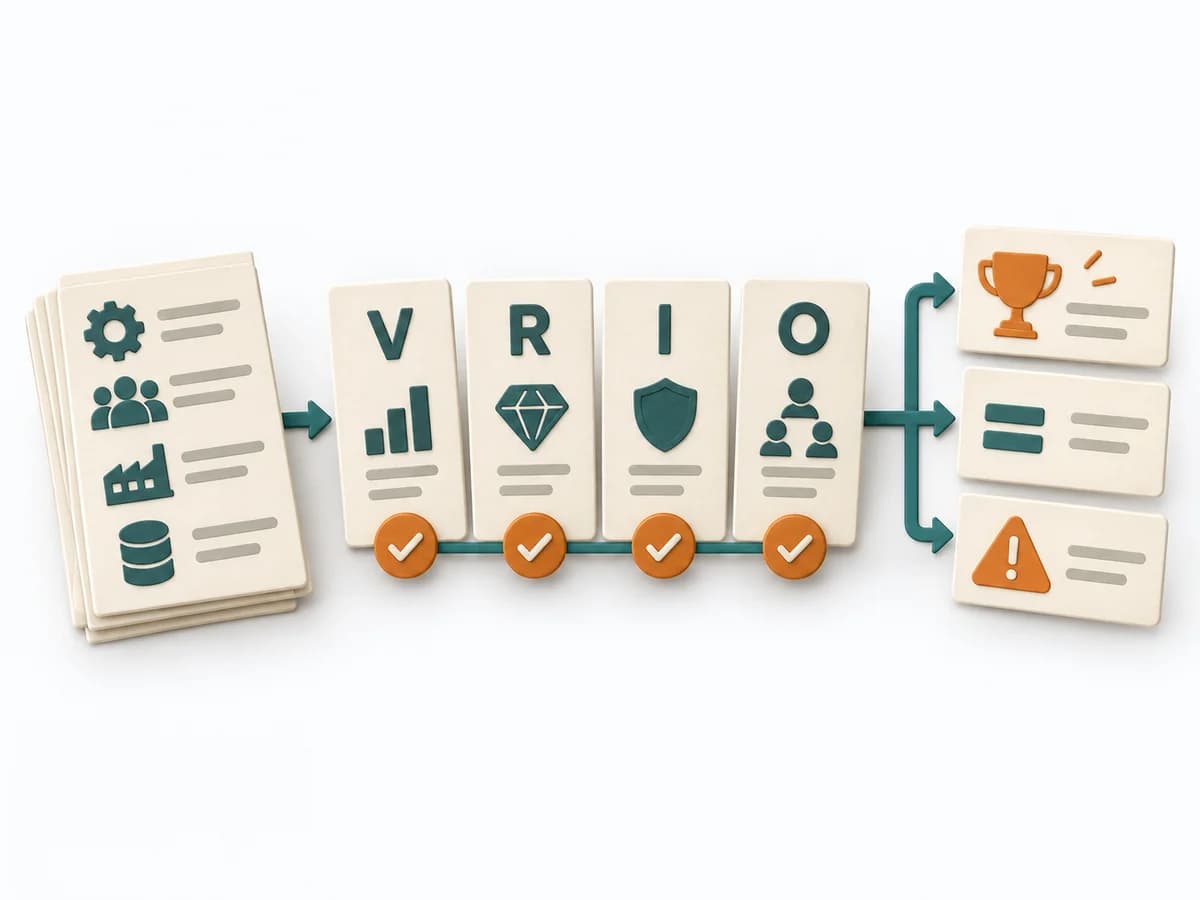 Business Strategy VRIO Framework |  Facilitation Expectation Mapping |  Facilitation Alignment Mapping |
|---|---|---|---|---|
Purposedifferent | When many stakeholders compete for attention at once, the Power Interest Grid sorts them by influence and stake. It turns individual contributions into a visible selection. The result is captured as a Power Interest Grid and a stakeholder-specific strategy. | The VRIO Framework rates resources and capabilities on whether they are Valuable, Rare, Inimitable, and Organized. It compares strengths, risks, market logic, and courses of action. The result is captured as a VRIO table and strategic actions. | When roles, interfaces, or projects fail because of differing expectations, Expectation Mapping surfaces these differences. It shows what each side takes for granted and where the pictures diverge. | When several people work toward one goal but hold different mental maps, Alignment Mapping makes the discrepancies visible. It arranges goals, assumptions, and priorities so shared direction becomes verifiable. |
Complexitydifferent | Low | Medium | Low | Medium |
Timedifferent | 30-60 min | 90-180 min | 45-90 min | 1-2 h |
Participantsdifferent | 2-8 | 3-6 | 3-12 | 4-12 |
Formatsame | Workshop | Workshop | Workshop | Workshop |
Outputdifferent | Power Interest Grid, Strategy per Stakeholder | VRIO Table, Strategic Actions | Expectation Map, Alignment Notes, Agreements | Alignment Map, Open Issues, Decision Questions |
Tagsno overlap | StakeholdersFacilitationAlignmentPlanning | StrategyDiagnosisBusiness modelCapability | AlignmentStakeholdersTeam | AlignmentStakeholdersStrategyFacilitation |