View methods side by side.
Choose up to four methods. Add them using the search and share the comparison by copying its link.
| Criterion |  Systems Thinking Polarity Mapping | 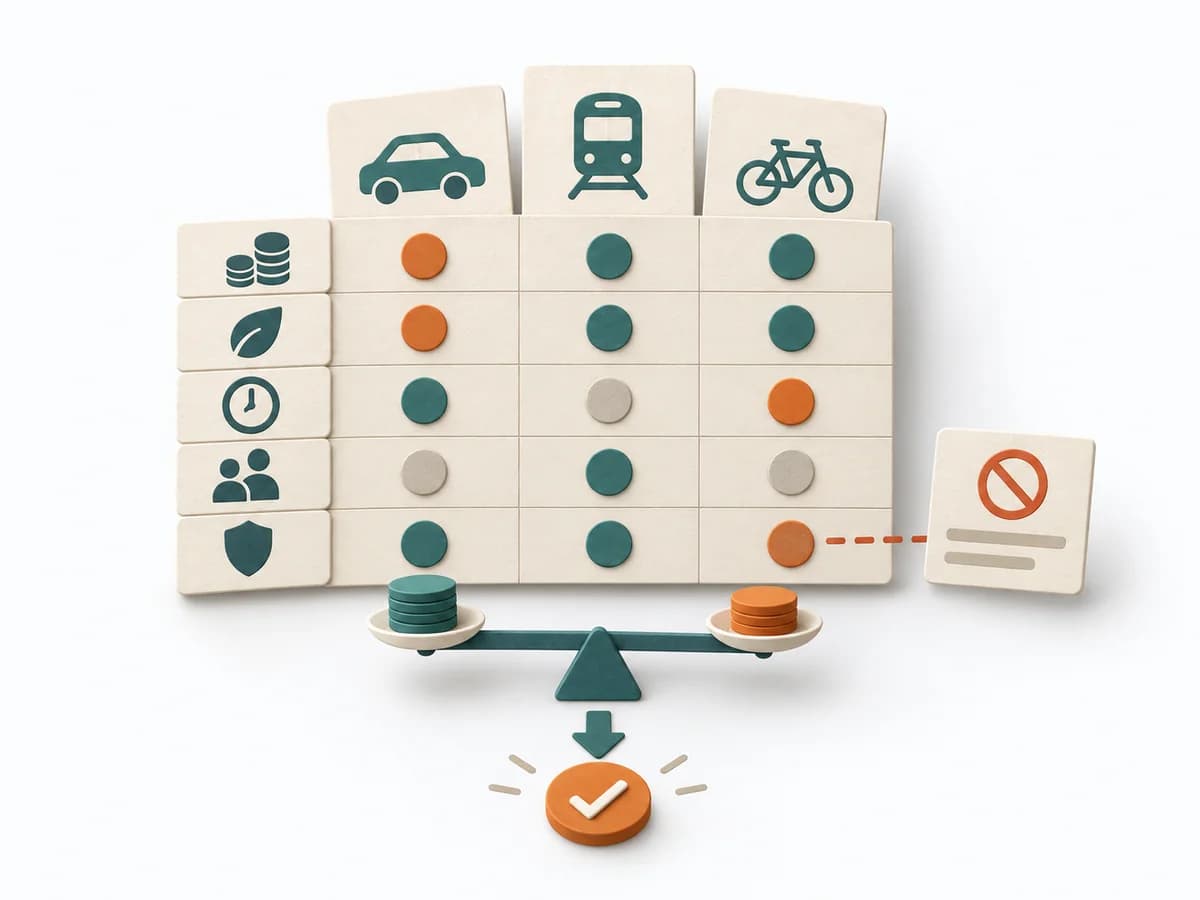 Decision Making Trade-off Analysis |  Operations Accountability Ladder |  Decision Making Constraint Analysis |
|---|---|---|---|---|
Purposedifferent | Polarity Mapping makes tensions between two opposing poles tangible, such as standardization and adaptation or control and autonomy. The method guards against making apparent either-or decisions prematurely. | With limited resources, quality, speed, cost, and risk almost always compete with each other. Trade-off Analysis makes these tensions explicit and prevents decisions from producing hidden side effects. | With defensive reactions to problems, the method shifts the view from justification to ownership. It makes visible which reaction stage a person or team is currently stuck on. | When an initiative stalls, the limit often lies not in the idea but in hard or soft boundary conditions. Constraint Analysis separates these limits and shows which of them can actually be shaped. |
Complexitydifferent | Medium | Medium | Low | Low |
Timedifferent | 1-2 h | 45-120 min | 20-45 min | 30-90 min |
Participantsdifferent | 3-12 | 2-8 | 1-8 | 2-8 |
Formatdifferent | Workshop | Workshop + async | Workshop + async | Workshop + async |
Outputdifferent | Polarity Map, Warning Signs, Balance Actions | Trade-off Matrix, Criteria List, Decision Rationale, Accepted Downsides | Ownership Reflection, Action Commitment, Coaching Notes | Constraint List, Hard/Soft Classification, Option Impact Notes, Decision Boundaries |
Tagsno overlap | Systems thinkingTradeoffsLeadership | TradeoffsDecisionCriteriaOptions | ResponsibilityLeadershipTeam | ConstraintsDecisionPlanningOptions |