View methods side by side.
Choose up to four methods. Add them using the search and share the comparison by copying its link.
| Criterion |  Systems Thinking Polarity Mapping | 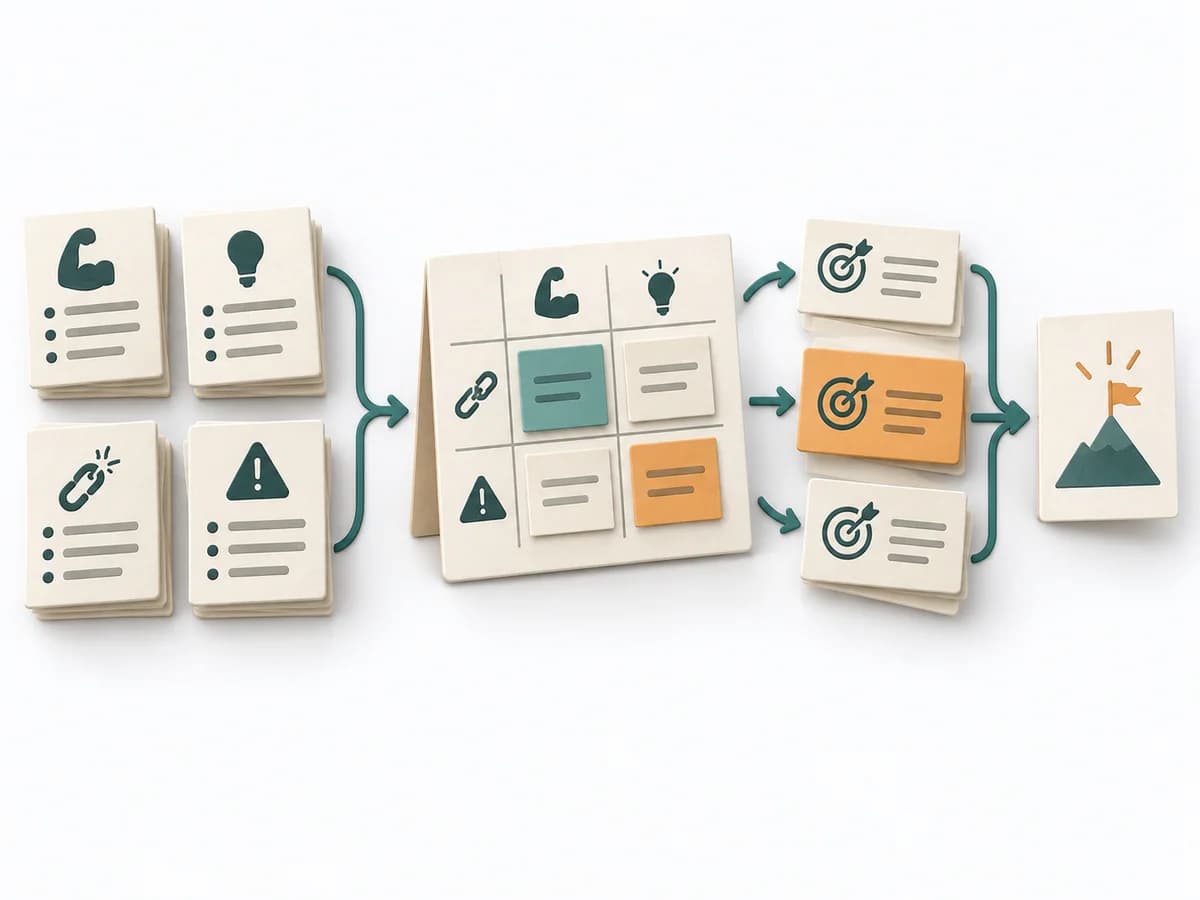 Business Strategy TOWS Matrix |  Facilitation Stakeholder Mapping |  Systems Thinking Leverage Points |
|---|---|---|---|---|
Purposedifferent | Polarity Mapping makes tensions between two opposing poles tangible, such as standardization and adaptation or control and autonomy. The method guards against making apparent either-or decisions prematurely. | The TOWS Matrix connects internal strengths and weaknesses with external opportunities and threats into action-oriented strategies. It goes a step further than a pure stocktaking. | When an initiative depends on many people, interests, and power dynamics, Stakeholder Mapping systematically orders the environment. It shows who influences, who is affected, and where relationship management or safeguarding matters first. | Leverage Points show exactly where interventions in a system produce a disproportionate effect. It draws relationships, patterns, and feedback loops. The result is captured as a leverage map and action strategy. |
Complexitydifferent | Medium | Medium | Low | High |
Timedifferent | 1-2 h | 1-2 h | 60–90 min | Half day |
Participantsdifferent | 3-12 | 3-10 | 2-8 | 3-12 |
Formatdifferent | Workshop | Workshop | Workshop + async | Workshop |
Outputdifferent | Polarity Map, Warning Signs, Balance Actions | TOWS Matrix, Strategic Options, Priority Actions | Stakeholder Map, Engagement Plan, Risk Notes | Leverage Map, Action Strategy |
Tagsno overlap | Systems thinkingTradeoffsLeadership | StrategyAnalysisOptions | StakeholdersAlignmentFacilitationChange | Systems thinkingChangeStrategy |