View methods side by side.
Choose up to four methods. Add them using the search and share the comparison by copying its link.
Selected:Polarity MappingTheory of Constraints Thinking ProcessFailure Mode and Effects AnalysisCurrent Reality Tree
| Criterion |  Systems Thinking Polarity Mapping | 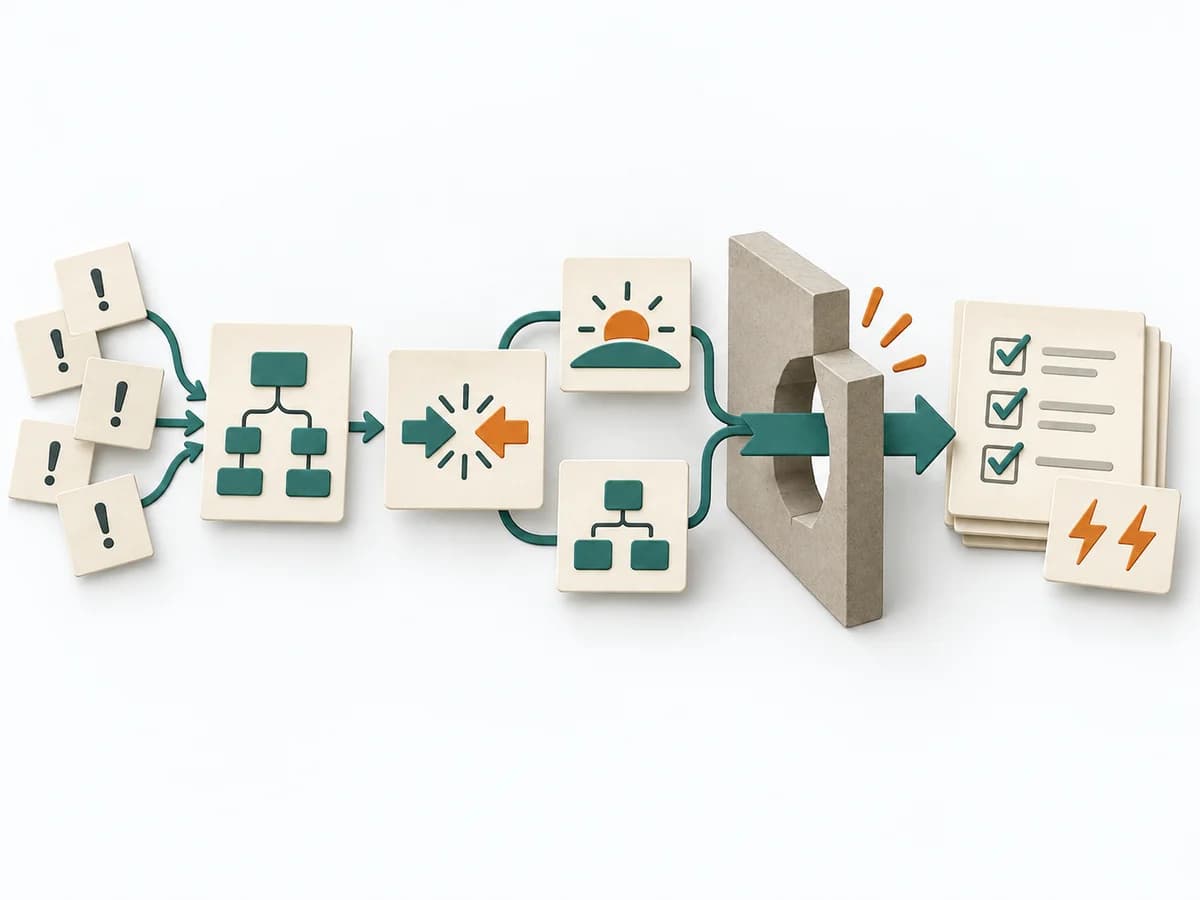 Systems Thinking Theory of Constraints Thinking Process |  Operations Failure Mode and Effects Analysis |  Systems Thinking Current Reality Tree |
|---|---|---|---|---|
Purposedifferent | Polarity Mapping makes tensions between two opposing poles tangible, such as standardization and adaptation or control and autonomy. The method guards against making apparent either-or decisions prematurely. | The Theory of Constraints Thinking Process exposes a system's bottleneck and the logic behind it. It suits situations where many symptoms trace back to the same limiting relationship. | For a process, product, or service with noticeable failure risks, the method assesses possible failure modes in advance. It directs attention to combinations of occurrence, effect, and detectability. | A Current Reality Tree condenses many symptoms into a few causal chains. The method makes visible which core problems drive several negative effects at once. |
Complexitydifferent | Medium | High | High | High |
Timedifferent | 1-2 h | 0.5-3 Tage | 2-6 h | 2-6 h |
Participantsdifferent | 3-12 | 4-10 | 3-10 | 3-8 |
Formatsame | Workshop | Workshop | Workshop | Workshop |
Outputdifferent | Polarity Map, Warning Signs, Balance Actions | Current Reality Logic, Conflict Cloud, Future Reality Tree, Implementation Obstacles | FMEA Table, Risk Priority, Mitigation Actions | Current Reality Tree, Core Problems, Intervention Ideas |
Tagsno overlap | Systems thinkingTradeoffsLeadership | Theory of ConstraintsConstraintsSystems thinkingCausality | RiskQualityOperationsRoot cause | Systems thinkingRoot causeConstraintsCausality |