View methods side by side.
Choose up to four methods. Add them using the search and share the comparison by copying its link.
Selected:Polarity MappingTheory of Constraints Thinking ProcessAccountability LadderEvaporating Cloud
| Criterion |  Systems Thinking Polarity Mapping | 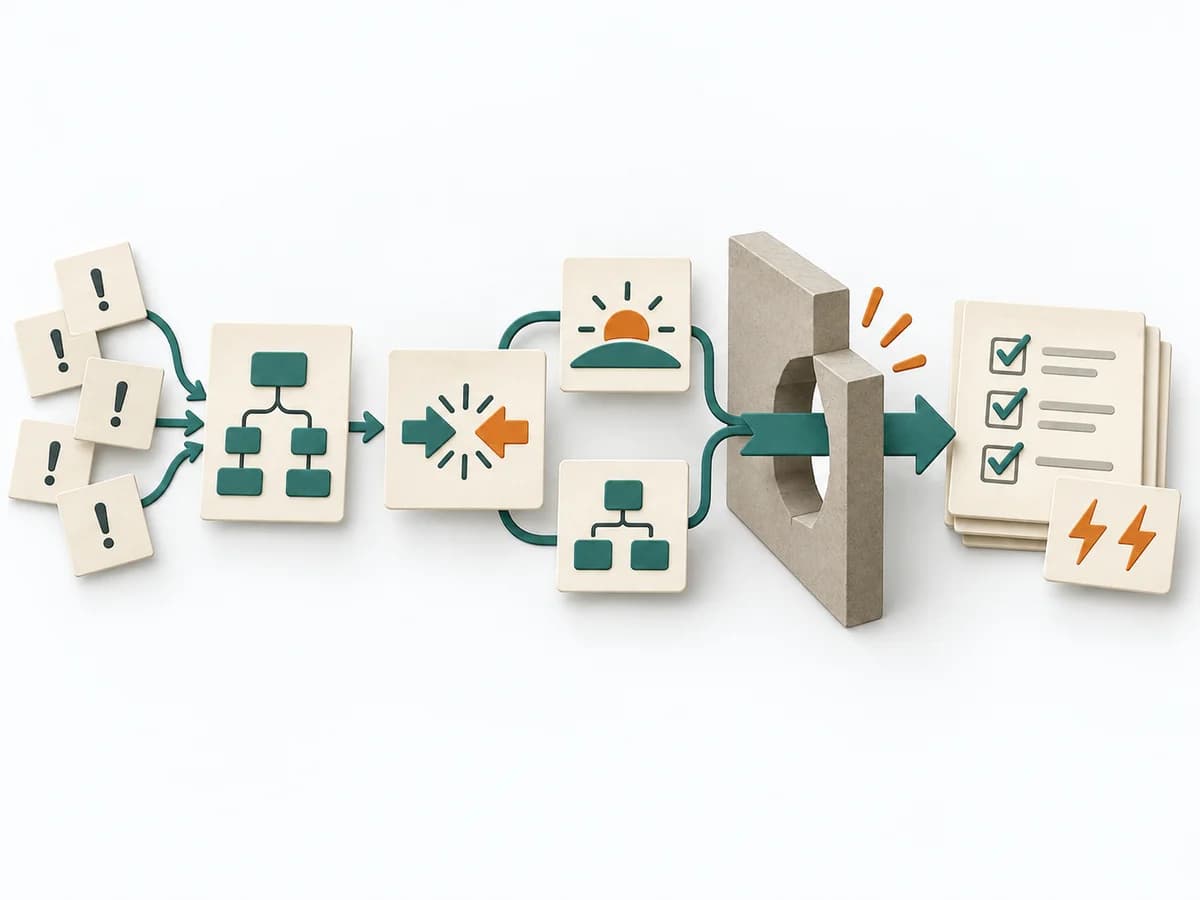 Systems Thinking Theory of Constraints Thinking Process |  Operations Accountability Ladder |  Systems Thinking Evaporating Cloud |
|---|---|---|---|---|
Purposedifferent | Polarity Mapping makes tensions between two opposing poles tangible, such as standardization and adaptation or control and autonomy. The method guards against making apparent either-or decisions prematurely. | The Theory of Constraints Thinking Process exposes a system's bottleneck and the logic behind it. It suits situations where many symptoms trace back to the same limiting relationship. | With defensive reactions to problems, the method shifts the view from justification to ownership. It makes visible which reaction stage a person or team is currently stuck on. | The method makes visible why two seemingly incompatible demands arise and which assumption must be tested to resolve the conflict. |
Complexitydifferent | Medium | High | Low | Medium |
Timedifferent | 1-2 h | 0.5-3 Tage | 20-45 min | 60-120 min |
Participantsdifferent | 3-12 | 4-10 | 1-8 | 2-8 |
Formatdifferent | Workshop | Workshop | Workshop + async | Workshop |
Outputdifferent | Polarity Map, Warning Signs, Balance Actions | Current Reality Logic, Conflict Cloud, Future Reality Tree, Implementation Obstacles | Ownership Reflection, Action Commitment, Coaching Notes | Conflict Cloud, Assumption List, Breakthrough Ideas, Next Experiments |
Tagsno overlap | Systems thinkingTradeoffsLeadership | Theory of ConstraintsConstraintsSystems thinkingCausality | ResponsibilityLeadershipTeam | Theory of ConstraintsAssumptionsSystems thinking |