View methods side by side.
Choose up to four methods. Add them using the search and share the comparison by copying its link.
| Criterion |  Systems Thinking Polarity Mapping |  Product Discovery Test Card | 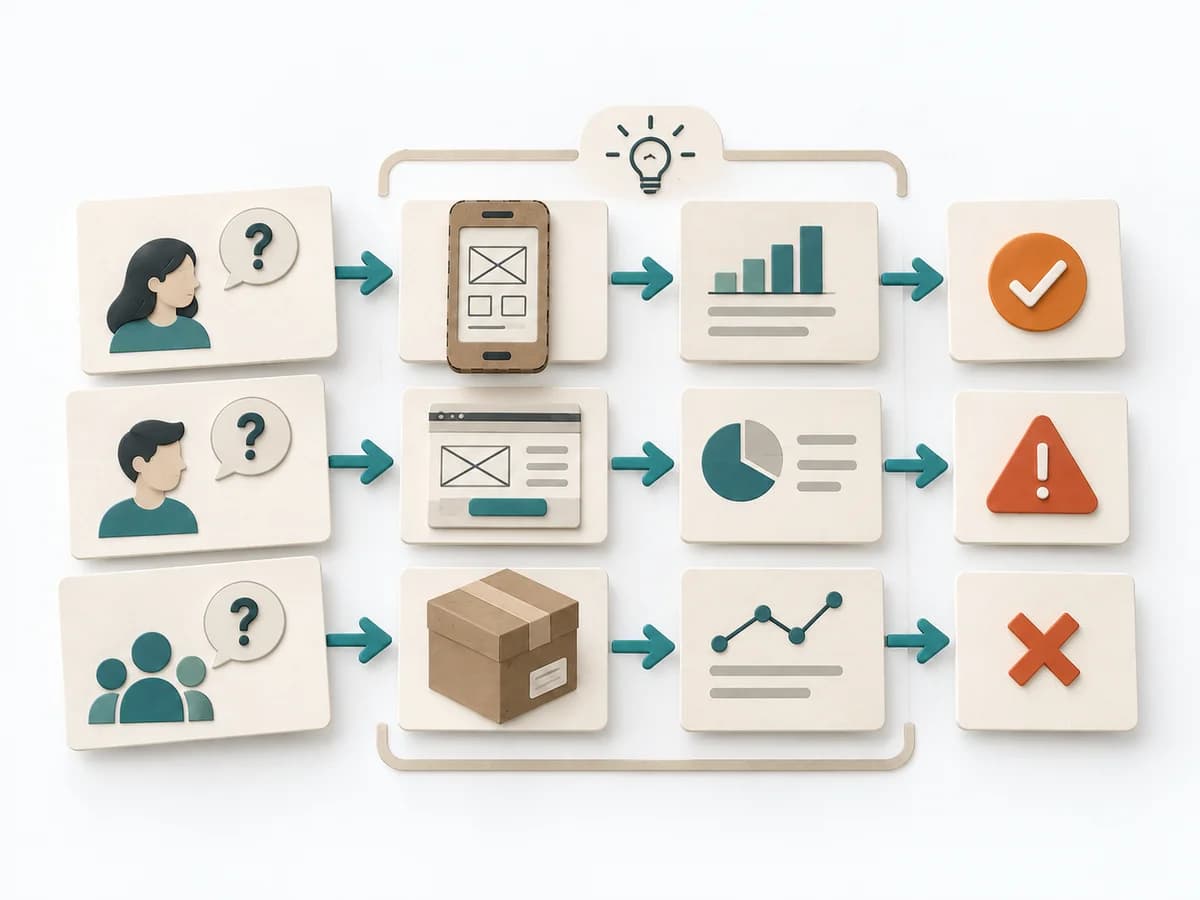 Product Discovery MVP Test Matrix | 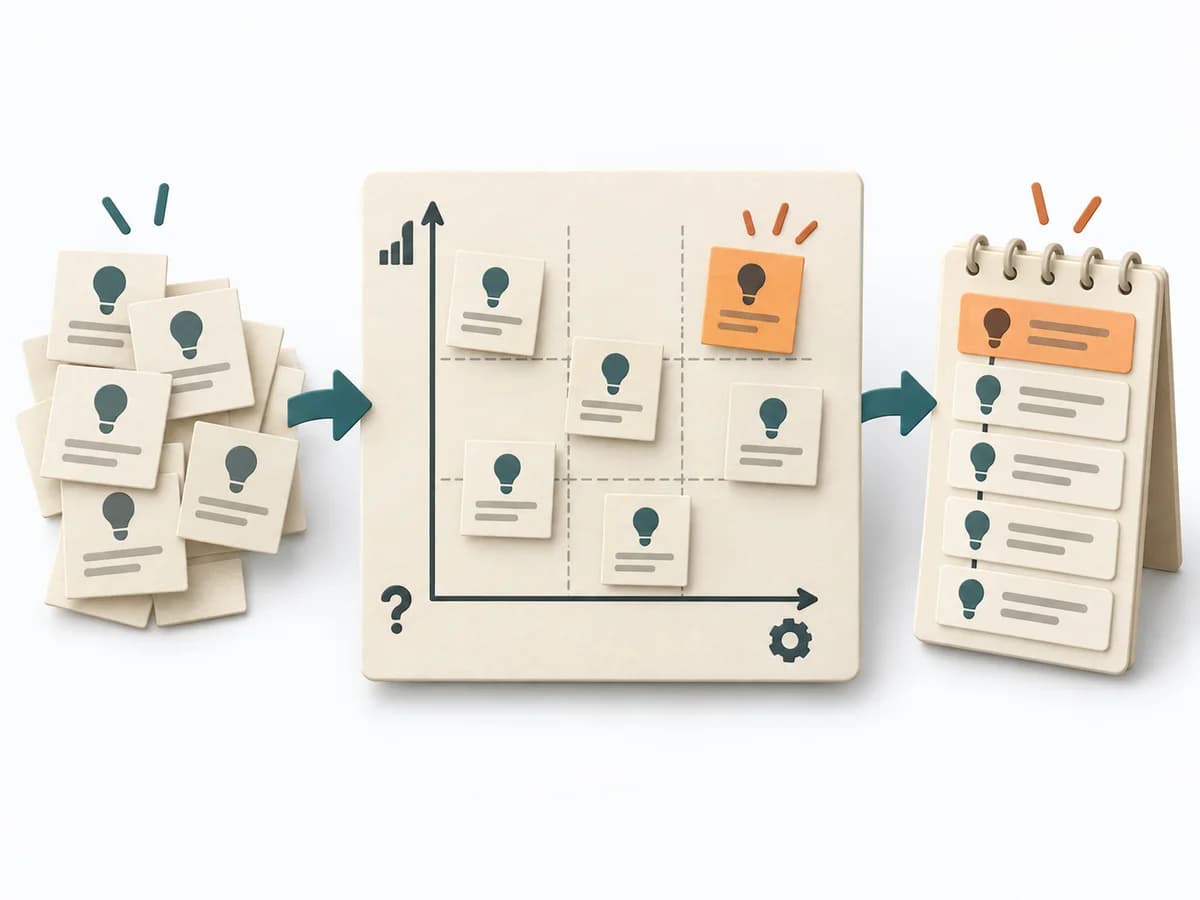 Product Discovery Hypothesis Prioritization Canvas |
|---|---|---|---|---|
Purposedifferent | Polarity Mapping makes tensions between two opposing poles tangible, such as standardization and adaptation or control and autonomy. The method guards against making apparent either-or decisions prematurely. | The Test Card turns a critical assumption into a testable claim and specifies in advance which result counts as success. | When several minimal variants compete to answer the same question, it makes comparing and choosing between them cleaner. It separates problem, assumption, solution, and evidence. The result is captured as a Test Matrix and a Test Plan. | When many hypotheses compete for attention, it brings order to their learning sequence and importance. It separates problem, assumption, solution, and evidence. The result is captured as a prioritization canvas and a hypothesis backlog. |
Complexitydifferent | Medium | Low | Medium | Medium |
Timedifferent | 1-2 h | 20-35 min | 45-75 min | 60-90 min |
Participantsdifferent | 3-12 | 1-5 | 2-8 | 3-8 |
Formatdifferent | Workshop | Workshop + async | Workshop | Workshop |
Outputdifferent | Polarity Map, Warning Signs, Balance Actions | Test Card with a pre-set threshold | Test Matrix, Test Plan | Prioritization Canvas, Hypothesis Backlog |
Tagsno overlap | Systems thinkingTradeoffsLeadership | ExperimentsValidationDiscoveryHypothesis | ExperimentsValidationDiscoveryOptions | ExperimentsPrioritizationDiscoveryHypothesis |