View methods side by side.
Choose up to four methods. Add them using the search and share the comparison by copying its link.
| Criterion |  Systems Thinking Polarity Mapping |  Team Design Team Topologies Interaction Modes |  Systems Thinking Leverage Points | 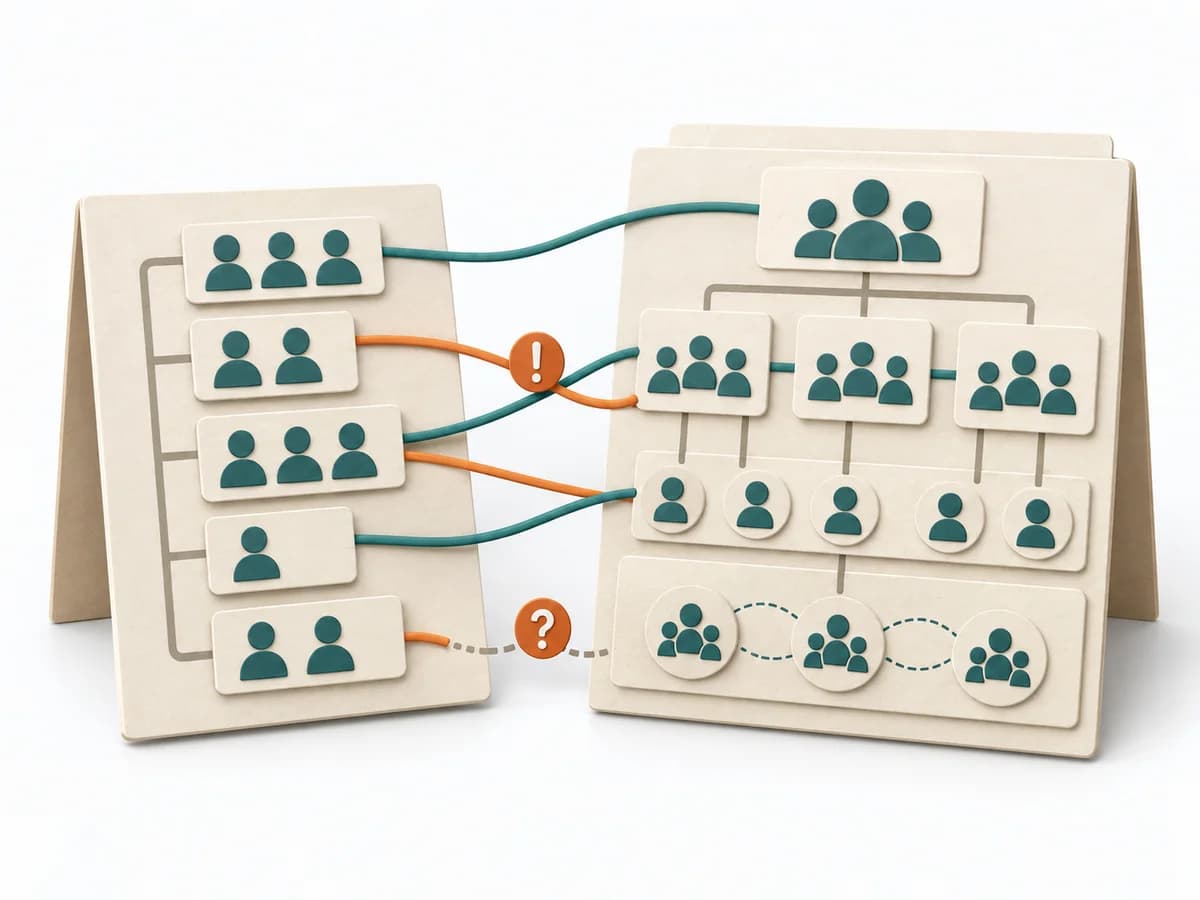 Team Design Spotify Model Mapping |
|---|---|---|---|---|
Purposedifferent | Polarity Mapping makes tensions between two opposing poles tangible, such as standardization and adaptation or control and autonomy. The method guards against making apparent either-or decisions prematurely. | When several teams collaborate repeatedly, it describes the right interaction mode for each interface between them. It clarifies responsibility, interaction, and load between teams. The result is captured as an interaction heat map and pairwise agreements. | Leverage Points show exactly where interventions in a system produce a disproportionate effect. It draws relationships, patterns, and feedback loops. The result is captured as a leverage map and action strategy. | When a team landscape has grown without clear grouping, it maps roles and relationships onto the Spotify model. It clarifies responsibility, interaction, and load between teams. The result is captured as a Spotify model map and action list. |
Complexitydifferent | Medium | Medium | High | Medium |
Timedifferent | 1-2 h | Half day | Half day | 90-180 min |
Participantsdifferent | 3-12 | Team-Leads plus Architecture | 3-12 | 5-15 |
Formatsame | Workshop | Workshop | Workshop | Workshop |
Outputdifferent | Polarity Map, Warning Signs, Balance Actions | Interaction Heat Map, Agreements per Pair | Leverage Map, Action Strategy | Spotify Model Map, Action List |
Tagsno overlap | Systems thinkingTradeoffsLeadership | TeamAlignmentCollaborationOrganization | Systems thinkingChangeStrategy | TeamOrganizationAlignmentDiagnosis |