View methods side by side.
Choose up to four methods. Add them using the search and share the comparison by copying its link.
Selected:Polarity MappingStandard Work AnalysisAfter-Action ReviewATAM (Architecture Tradeoff Analysis Method)
| Criterion |  Systems Thinking Polarity Mapping | 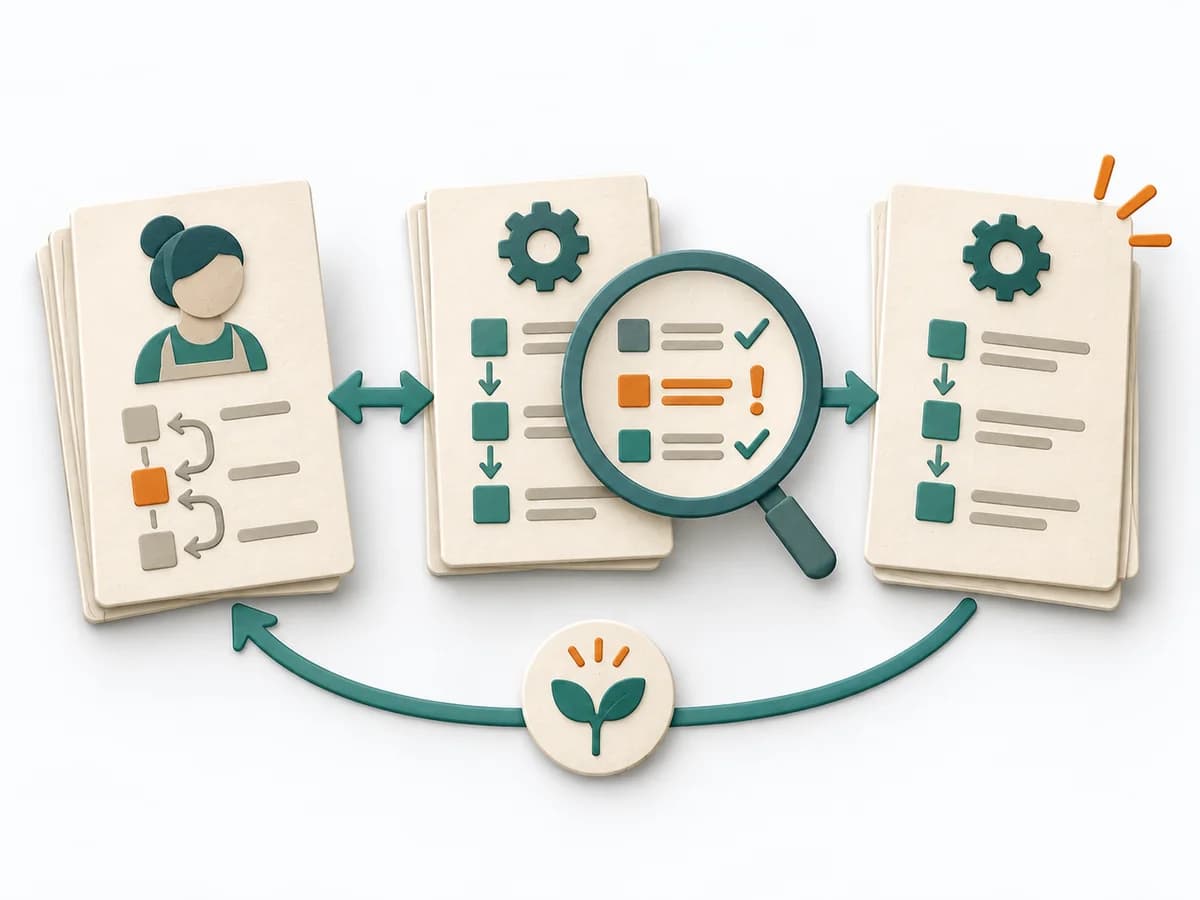 Operations Standard Work Analysis |  Operations After-Action Review |  Architecture ATAM (Architecture Tradeoff Analysis Method) |
|---|---|---|---|---|
Purposedifferent | Polarity Mapping makes tensions between two opposing poles tangible, such as standardization and adaptation or control and autonomy. The method guards against making apparent either-or decisions prematurely. | When the same task is done differently depending on the person, the method exposes the reliable core. It creates comparability without unnecessarily choking off needed latitude. | After missions or project phases with unclear outcomes, the method makes visible what actually happened and what can be learned from it. It separates course, effect, and causes so experience turns into solid improvement. | ATAM helps teams weigh architecture decisions when quality goals compete. The team considers business goals, stakeholder expectations, and technical decisions together. The evaluation shows which risks need further investigation. |
Complexitydifferent | Medium | Medium | Low | High |
Timedifferent | 1-2 h | 1-3 h | 20-45 min | Several meetings plus preparation and analysis; total effort depends on scope |
Participantsdifferent | 3-12 | 2-6 | 3-12 | Evaluation team, architects, and relevant stakeholders |
Formatdifferent | Workshop | Workshop | Workshop + async | Workshop + async |
Outputdifferent | Polarity Map, Warning Signs, Balance Actions | Standard Work Sheet, Deviation List, Improved Standard, Training Needs | Lessons learned, Action items, Event summary | Prioritized quality scenarios in a utility tree, Architecture risks with reasoning and assumptions, Sensitivity and trade-off points, Findings report with open investigations |
Tagsno overlap | Systems thinkingTradeoffsLeadership | LeanProcessQuality | LearningOperationsImprovement | ArchitectureQualityRiskTradeoffsStakeholders |