View methods side by side.
Choose up to four methods. Add them using the search and share the comparison by copying its link.
Selected:Polarity MappingScatter DiagramCurrent Reality TreeATAM (Architecture Tradeoff Analysis Method)
| Criterion |  Systems Thinking Polarity Mapping | 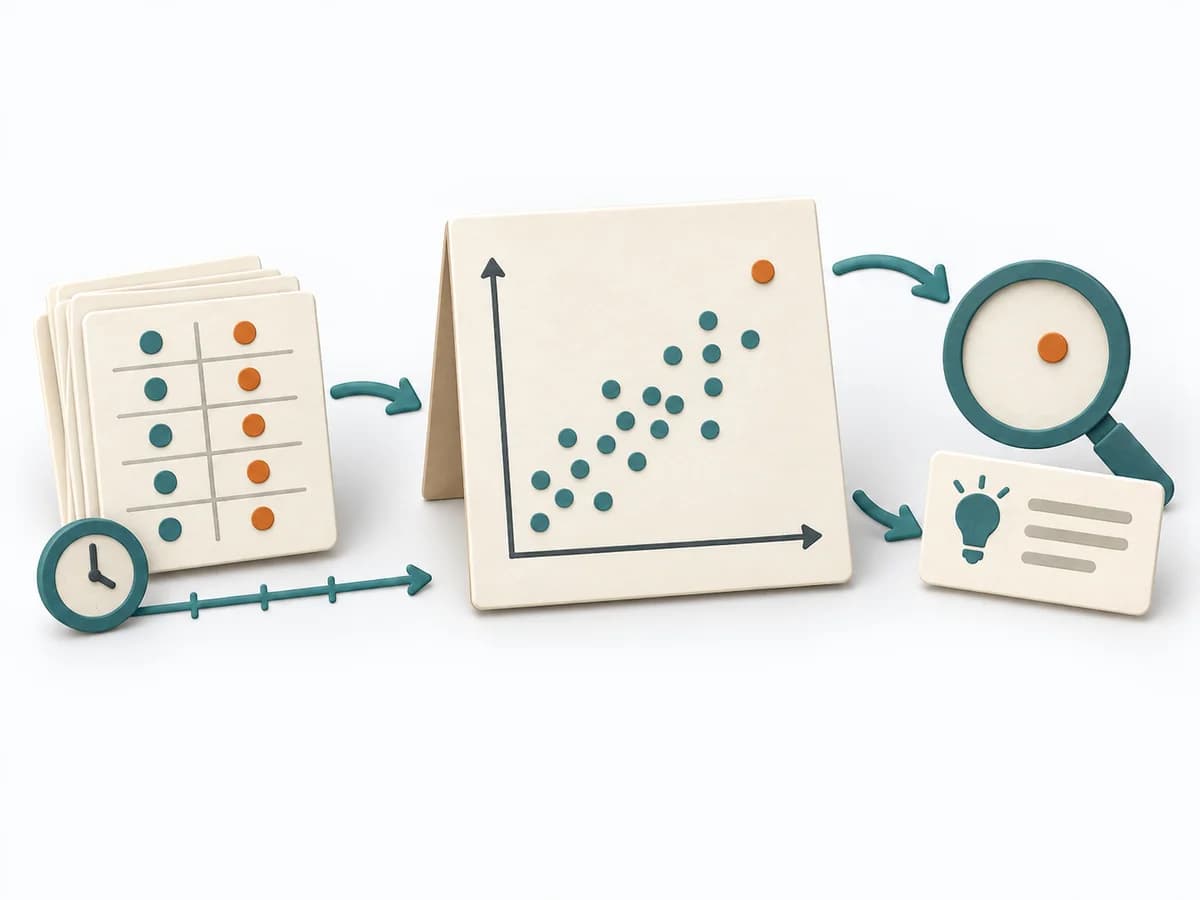 Operations Scatter Diagram |  Systems Thinking Current Reality Tree |  Architecture ATAM (Architecture Tradeoff Analysis Method) |
|---|---|---|---|---|
Purposedifferent | Polarity Mapping makes tensions between two opposing poles tangible, such as standardization and adaptation or control and autonomy. The method guards against making apparent either-or decisions prematurely. | When the question is whether two measures are related, the method makes patterns in the data picture visible. It separates felt correlations from relationships that actually show up in the data. | A Current Reality Tree condenses many symptoms into a few causal chains. The method makes visible which core problems drive several negative effects at once. | ATAM helps teams weigh architecture decisions when quality goals compete. The team considers business goals, stakeholder expectations, and technical decisions together. The evaluation shows which risks need further investigation. |
Complexitydifferent | Medium | Low | High | High |
Timedifferent | 1-2 h | 30-90 min | 2-6 h | Several meetings plus preparation and analysis; total effort depends on scope |
Participantsdifferent | 3-12 | 1-4 | 3-8 | Evaluation team, architects, and relevant stakeholders |
Formatdifferent | Workshop | Workshop + async | Workshop | Workshop + async |
Outputdifferent | Polarity Map, Warning Signs, Balance Actions | Scatter Plot, Korrelationsnotiz, Hypothesenliste | Current Reality Tree, Core Problems, Intervention Ideas | Prioritized quality scenarios in a utility tree, Architecture risks with reasoning and assumptions, Sensitivity and trade-off points, Findings report with open investigations |
Tagsno overlap | Systems thinkingTradeoffsLeadership | Root causeQualityVisualization | Systems thinkingRoot causeConstraintsCausality | ArchitectureQualityRiskTradeoffsStakeholders |