View methods side by side.
Choose up to four methods. Add them using the search and share the comparison by copying its link.
| Criterion |  Systems Thinking Polarity Mapping | 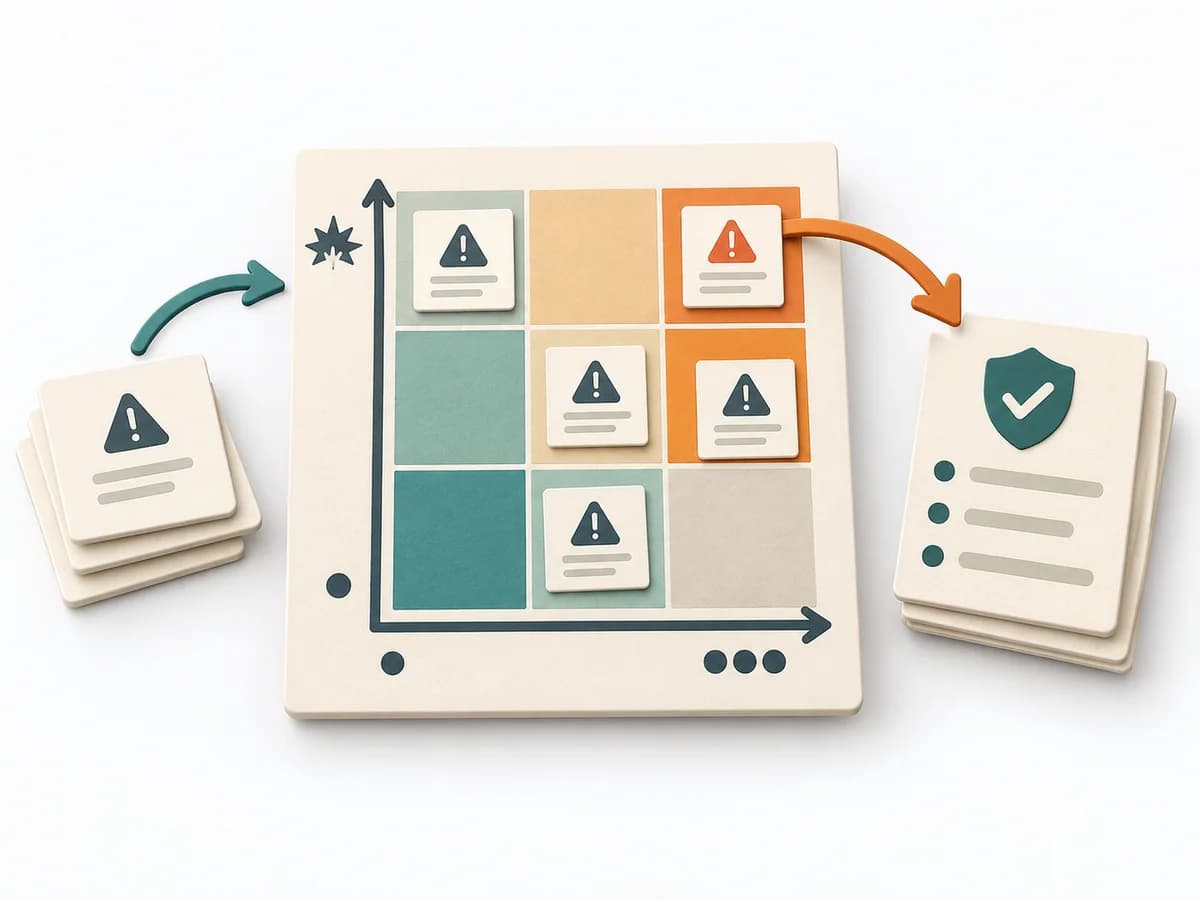 Decision Making Risk Matrix |  Systems Thinking CATWOE Analysis |  Decision Making Assumption Surfacing |
|---|---|---|---|---|
Purposedifferent | Polarity Mapping makes tensions between two opposing poles tangible, such as standardization and adaptation or control and autonomy. The method guards against making apparent either-or decisions prematurely. | When a project faces many possible disruptions, it quickly becomes unclear which risks deserve attention first. It separates options, evaluation criteria, and open risks. The result is captured as a Risk Matrix and a Top Risk List. | CATWOE structures a problem from six viewpoints and prevents too narrow a view of the situation. Different experiences of the system become comparably discussable this way. | Plans often contain assumptions that were never openly stated and remain dangerous precisely because of that. Assumption Surfacing makes these silent premises visible and prioritizes which of them carry the initiative or could sink it. |
Complexitydifferent | Medium | Low | Medium | Low |
Timedifferent | 1-2 h | 30-60 min | 45-90 min | 45-90 min |
Participantsdifferent | 3-12 | 3-10 | 3-8 | 2-8 |
Formatdifferent | Workshop | Workshop + async | Workshop + async | Workshop + async |
Outputdifferent | Polarity Map, Warning Signs, Balance Actions | Risk Matrix, Top Risk List | CATWOE Canvas, Root Definition, Stakeholder Perspectives, Constraints | Assumption List, Critical Assumptions, Learning Plan |
Tagsno overlap | Systems thinkingTradeoffsLeadership | RiskDecisionPrioritizationAssessment | Systems thinkingFramingStakeholders | AssumptionsRiskDecisionDiscovery |