View methods side by side.
Choose up to four methods. Add them using the search and share the comparison by copying its link.
| Criterion |  Systems Thinking Polarity Mapping |  Delivery RAID Log |  Systems Thinking CATWOE Analysis | 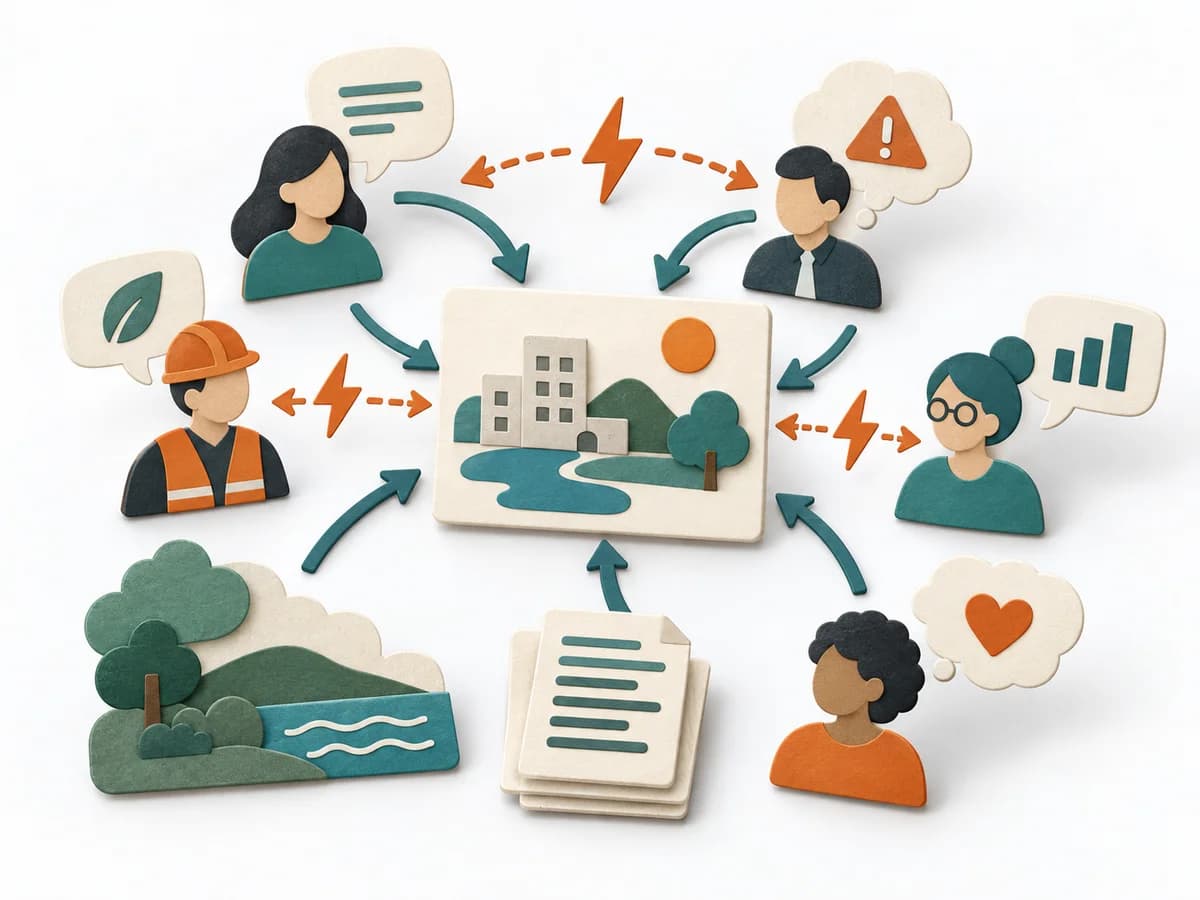 Systems Thinking Rich Picture |
|---|---|---|---|---|
Purposedifferent | Polarity Mapping makes tensions between two opposing poles tangible, such as standardization and adaptation or control and autonomy. The method guards against making apparent either-or decisions prematurely. | Helps clarify scope, sequence, and delivery flow in concrete terms. It makes work, boundaries, and order steerable. The result is captured as a RAID Log and a source for status reporting. | CATWOE structures a problem from six viewpoints and prevents too narrow a view of the situation. Different experiences of the system become comparably discussable this way. | A Rich Picture brings an unclear situation onto a shared drawing. It captures actors, tensions, information flows, and blind spots before the team jumps to solutions too early. |
Complexitydifferent | Medium | Low | Medium | Low |
Timedifferent | 1-2 h | 30 min Setup, dann laufend | 45-90 min | 30-90 min |
Participantsdifferent | 3-12 | 1-3 maintaining, briefing for everyone | 3-8 | 2-10 |
Formatdifferent | Workshop | Async | Workshop + async | Workshop |
Outputdifferent | Polarity Map, Warning Signs, Balance Actions | RAID Log, Status Report Source | CATWOE Canvas, Root Definition, Stakeholder Perspectives, Constraints | Rich Picture, Problem Framing Notes |
Tagsno overlap | Systems thinkingTradeoffsLeadership | RiskTrackingStakeholdersGovernance | Systems thinkingFramingStakeholders | Systems thinkingSoft systemsFramingVisualization |