View methods side by side.
Choose up to four methods. Add them using the search and share the comparison by copying its link.
| Criterion |  Systems Thinking Polarity Mapping | 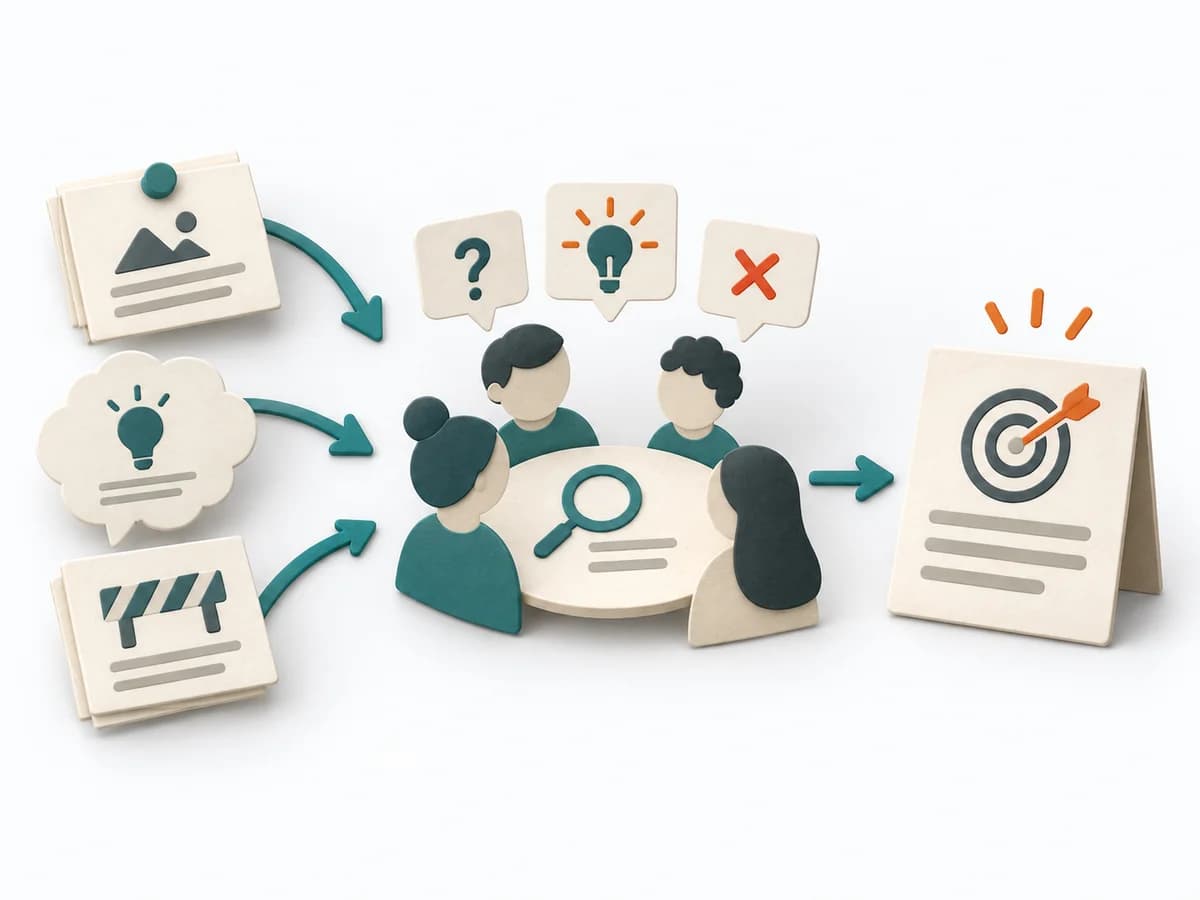 Facilitation Problem Framing Workshop |  Product Discovery Test Card |  Product Discovery Learning Card |
|---|---|---|---|---|
Purposedifferent | Polarity Mapping makes tensions between two opposing poles tangible, such as standardization and adaptation or control and autonomy. The method guards against making apparent either-or decisions prematurely. | When a team works on symptoms but the real question stays fuzzy, a Problem Framing Workshop sharpens the view of the right problem. It separates observation, interpretation, and target picture from each other. | The Test Card turns a critical assumption into a testable claim and specifies in advance which result counts as success. | The Learning Card connects traceable test results to a reasoned next action while keeping the limits of the insight visible. |
Complexitydifferent | Medium | Low | Low | Low |
Timedifferent | 1-2 h | 60-120 min | 20-35 min | 25-40 min |
Participantsdifferent | 3-12 | 4-10 | 1-5 | 1-5 |
Formatdifferent | Workshop | Workshop | Workshop + async | Workshop + async |
Outputdifferent | Polarity Map, Warning Signs, Balance Actions | Problem Statement, Scope Boundaries, Assumption List, Next Analysis Questions | Test Card with a pre-set threshold | Learning Card with evidence and next action |
Tagsno overlap | Systems thinkingTradeoffsLeadership | FacilitationAlignmentDiscovery | ExperimentsValidationDiscoveryHypothesis | ExperimentsValidationDiscoveryLearning |