View methods side by side.
Choose up to four methods. Add them using the search and share the comparison by copying its link.
| Criterion |  Systems Thinking Polarity Mapping |  Systems Thinking Leverage Points | 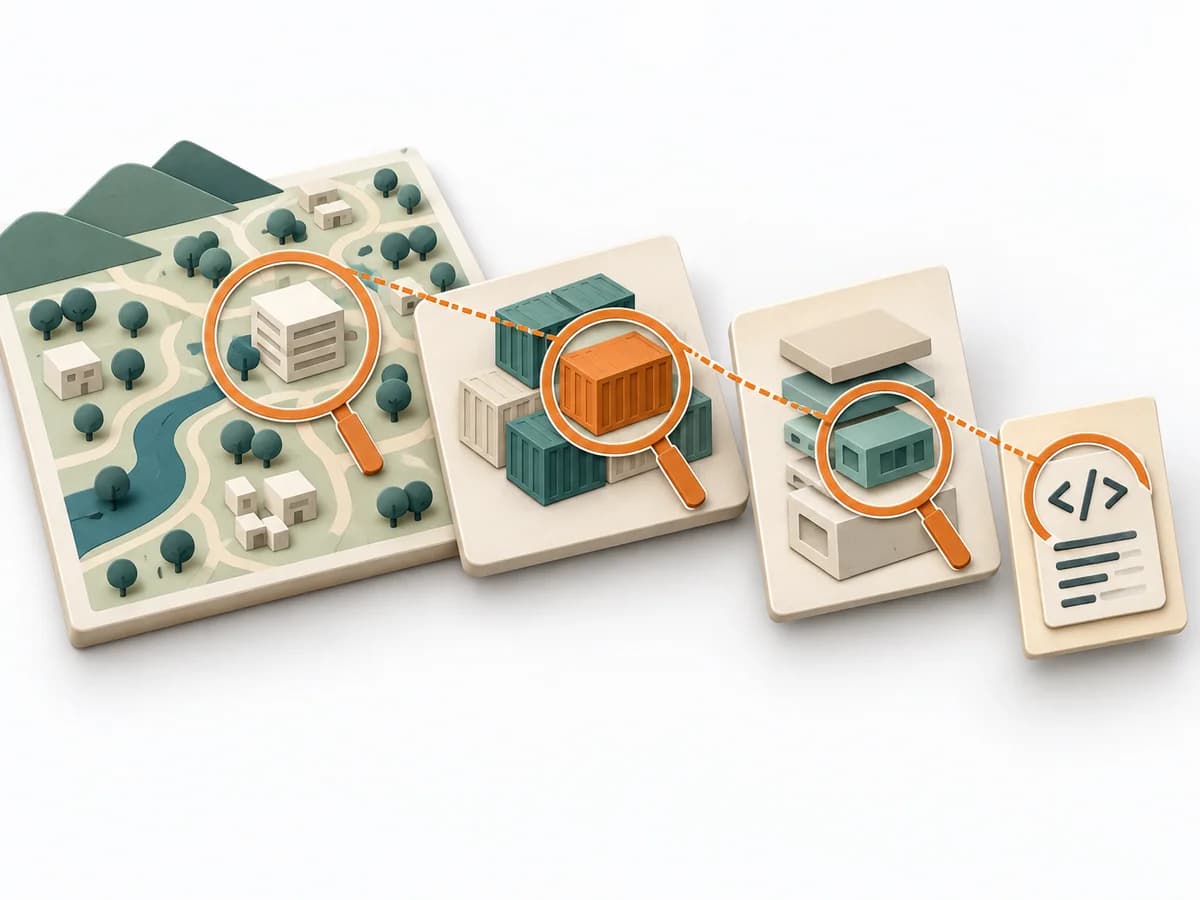 Architecture C4 Model |  Decision Making Force Field Analysis |
|---|---|---|---|---|
Purposedifferent | Polarity Mapping makes tensions between two opposing poles tangible, such as standardization and adaptation or control and autonomy. The method guards against making apparent either-or decisions prematurely. | Leverage Points show exactly where interventions in a system produce a disproportionate effect. It draws relationships, patterns, and feedback loops. The result is captured as a leverage map and action strategy. | The C4 Model makes a system legible across several resolution levels, from context down to code. It suits situations where different audiences need to understand the same architecture from different altitudes. | In change initiatives, supporting and restraining forces sit at the table at the same time. Force Field Analysis makes these tensions explicit and shows where change can be pushed forward by strengthening or relieving. |
Complexitydifferent | Medium | High | Low | Low |
Timedifferent | 1-2 h | Half day | 1-4 h | 45-90 min |
Participantsdifferent | 3-12 | 3-12 | 1-5 | 3-12 |
Formatdifferent | Workshop | Workshop | Workshop + async | Workshop |
Outputdifferent | Polarity Map, Warning Signs, Balance Actions | Leverage Map, Action Strategy | Context Diagram, Container Diagram, Component Diagram | Force Field Map, Change Levers, Risk Notes |
Tagsno overlap | Systems thinkingTradeoffsLeadership | Systems thinkingChangeStrategy | ArchitectureCommunicationVisualization | ChangeDecisionStrategy |