View methods side by side.
Choose up to four methods. Add them using the search and share the comparison by copying its link.
| Criterion |  Systems Thinking Polarity Mapping |  Knowledge Modeling Knowledge Mapping |  Agile ROAM Board | 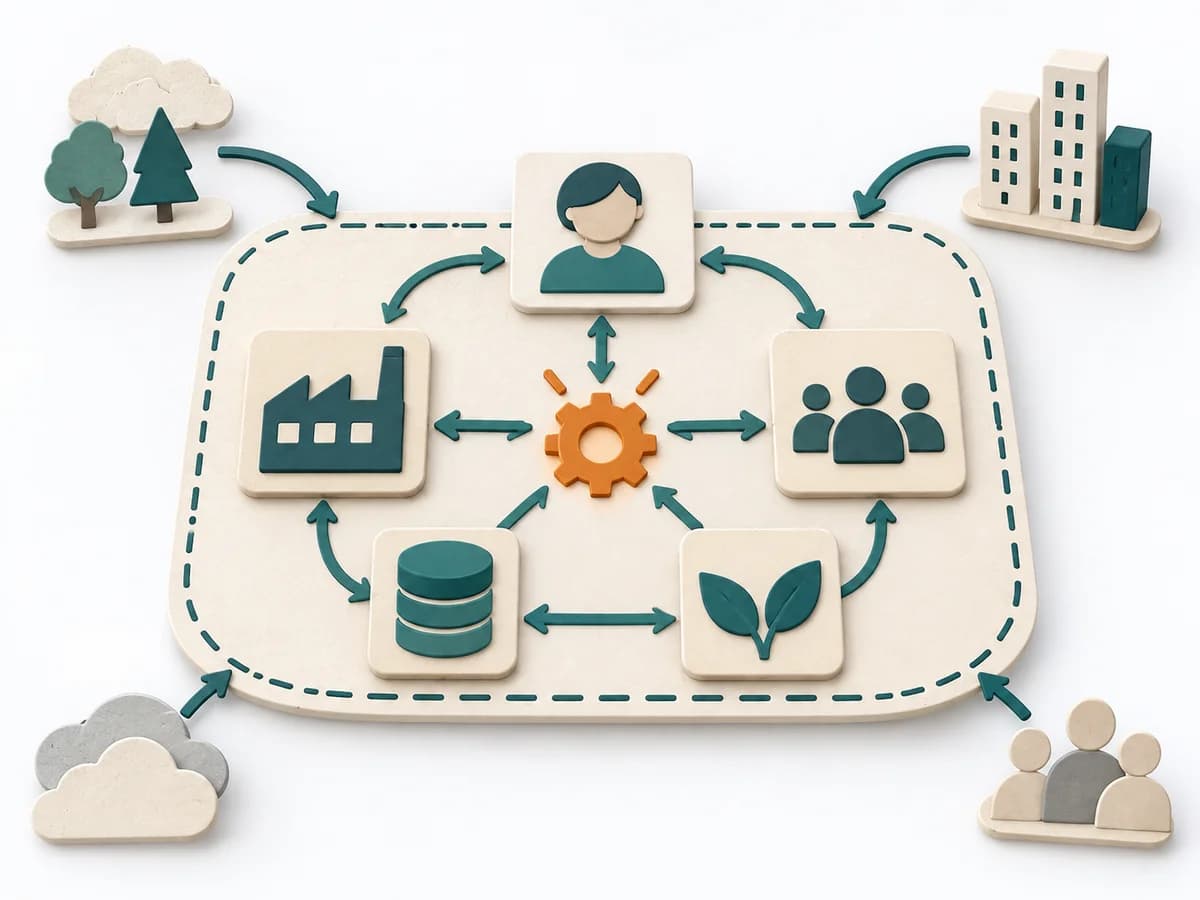 Systems Thinking Systems Mapping |
|---|---|---|---|---|
Purposedifferent | Polarity Mapping makes tensions between two opposing poles tangible, such as standardization and adaptation or control and autonomy. The method guards against making apparent either-or decisions prematurely. | Knowledge Mapping makes knowledge, gaps, and transfer paths visible across a field. It fits when expertise should not just exist but also be findable and transferable. | When work needs to move between different states or columns, it makes that movement and its handoffs legible. It sorts work by value, risk, and delivery ability. The result is captured as a ROAM Board and an Owner List. | Systems Mapping arranges elements, relationships, and boundaries so a complex field becomes legible at a glance. The overview stabilizes the overall picture before detail work or steering begins. |
Complexitydifferent | Medium | Medium | Low | Medium |
Timedifferent | 1-2 h | 1-3 h | 20-40 min initial, dann laufend | 1-3 h |
Participantsdifferent | 3-12 | 3-12 | 3-15 | 3-12 |
Formatdifferent | Workshop | Workshop | Workshop + async | Workshop + async |
Outputdifferent | Polarity Map, Warning Signs, Balance Actions | Knowledge Map, Critical Knowledge Areas, Transfer Plan | ROAM Board, Owner List | System Map, Dependencies, Leverage Points |
Tagsno overlap | Systems thinkingTradeoffsLeadership | KnowledgeMappingRisk | RiskAgileTrackingAlignment | Systems thinkingMappingBoundariesChange |