View methods side by side.
Choose up to four methods. Add them using the search and share the comparison by copying its link.
| Criterion |  Systems Thinking Polarity Mapping |  Operations Kepner-Tregoe | 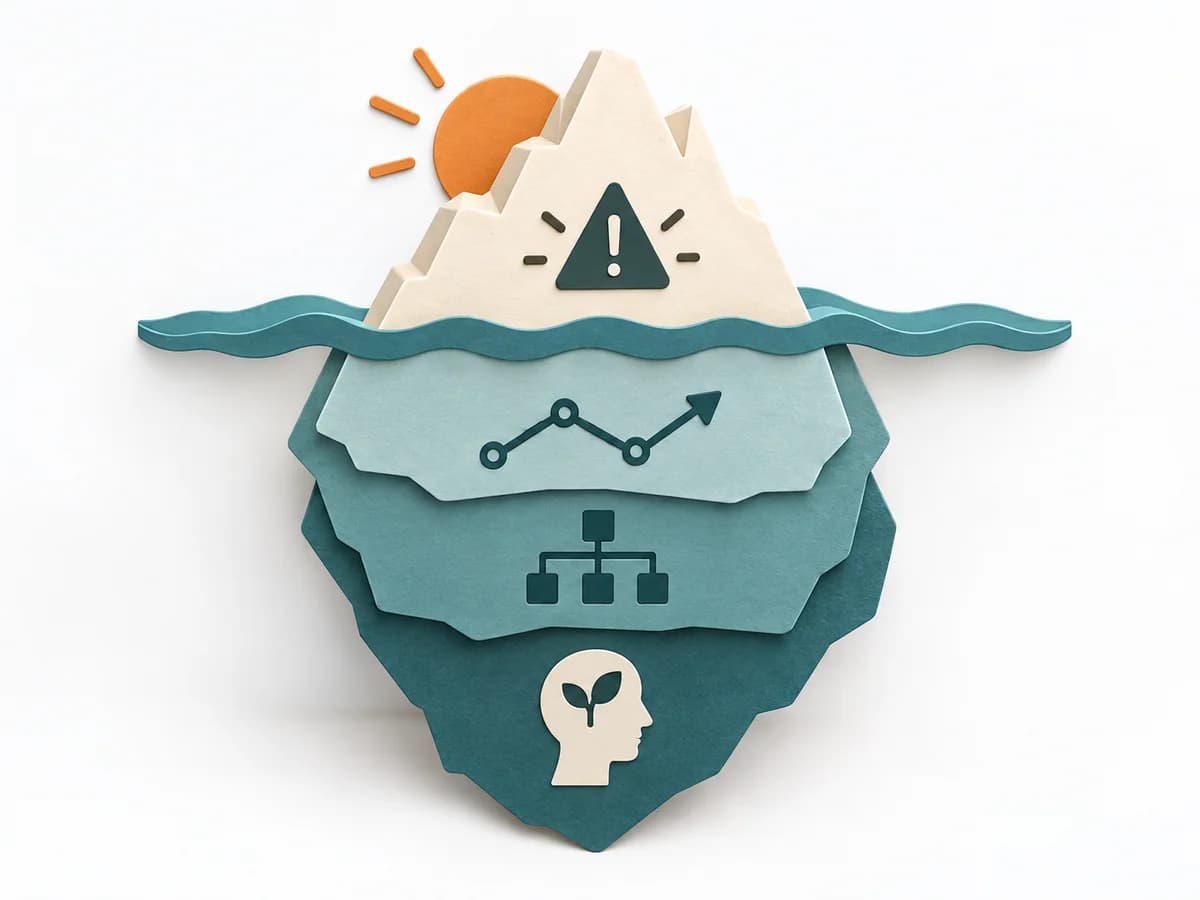 Systems Thinking Iceberg Model |  Operations A3 Problem Solving |
|---|---|---|---|---|
Purposedifferent | Polarity Mapping makes tensions between two opposing poles tangible, such as standardization and adaptation or control and autonomy. The method guards against making apparent either-or decisions prematurely. | For a disturbance that's hard to pin down, the method cleanly separates problem, cause, and decision. It reduces mixing when symptoms allow several interpretations. | The Iceberg Model separates visible events from patterns, structures, and mental models. This turns a single observation into a deeper understanding of why a problem keeps recurring. | For a complex deviation with several people involved, the method bundles problem, analysis, and decision onto one page. It creates a shared working space where causes, countermeasures, and follow-up fit together. |
Complexitydifferent | Medium | High | Low | Medium |
Timedifferent | 1-2 h | 2-8 h | 30-60 min | 45-90 min |
Participantsdifferent | 3-12 | 2-8 | 2-10 | 2-5 |
Formatdifferent | Workshop | Workshop + async | Workshop + async | Workshop + async |
Outputdifferent | Polarity Map, Warning Signs, Balance Actions | Problem Analysis, Decision Analysis, Risk Plan | Iceberg Worksheet, Pattern Notes, Intervention Ideas | A3 Report, Action Plan, Root Cause Analysis |
Tagsno overlap | Systems thinkingTradeoffsLeadership | Problem solvingRoot causeDecisionOperations | Systems thinkingRoot causePatterns | LeanProblem solvingCoachingOperations |