View methods side by side.
Choose up to four methods. Add them using the search and share the comparison by copying its link.
| Criterion |  Systems Thinking Polarity Mapping |  DevOps Incident Command | 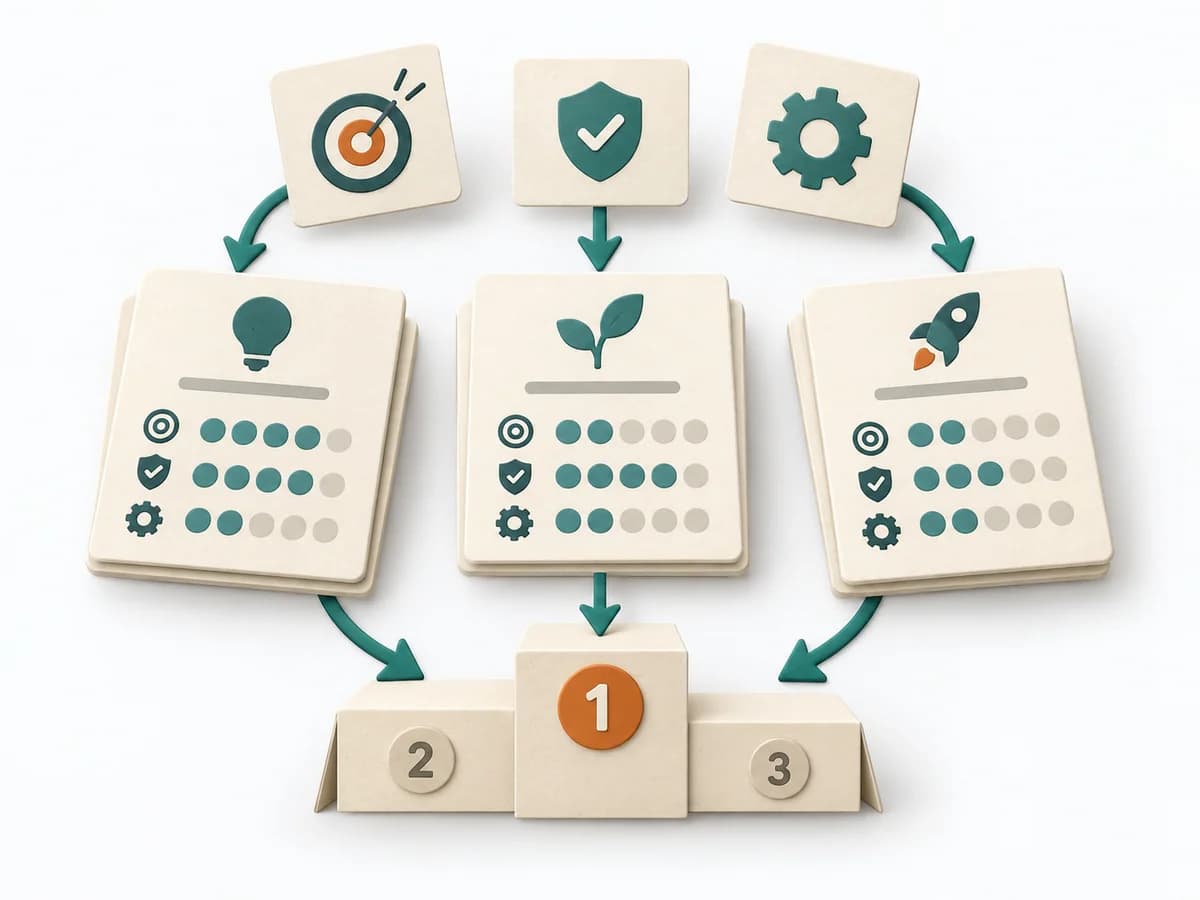 Product Strategy ICE Scoring |  DevOps Blameless Postmortem |
|---|---|---|---|---|
Purposedifferent | Polarity Mapping makes tensions between two opposing poles tangible, such as standardization and adaptation or control and autonomy. The method guards against making apparent either-or decisions prematurely. | During an acute incident with several people involved, the method creates a clear leadership and communication structure. It reduces chaos when fast coordination and clean situational awareness are both needed at once. | When ideas need sorting quickly, it condenses impact, confidence, and effort into one compact score. It connects customer value, product logic, and decision priorities. The result is captured as an ICE table and top-ideas list. | After an incident with damage or a near miss, the method creates a sober field for learning without assigning blame. It directs attention to the course of events, conditions, and effective countermeasures. |
Complexitydifferent | Medium | Medium | Low | Medium |
Timedifferent | 1-2 h | As needed | 30-60 min | 30-90 min |
Participantsdifferent | 3-12 | 4-15 | 2-8 | 3-12 |
Formatdifferent | Workshop | Workshop + async | Workshop + async | Workshop + async |
Outputdifferent | Polarity Map, Warning Signs, Balance Actions | Incident Log, Action Tracker, Stakeholder Updates | ICE Table, Top Idea List | Postmortem Doc, Action Items, Timeline |
Tagsno overlap | Systems thinkingTradeoffsLeadership | IncidentOperationsReliability | PrioritizationScoringGrowthDecision | Site Reliability EngineeringIncidentLearningReliability |