View methods side by side.
Choose up to four methods. Add them using the search and share the comparison by copying its link.
| Criterion |  Systems Thinking Polarity Mapping |  DevOps Incident Command |  Architecture Architecture Decision Record | 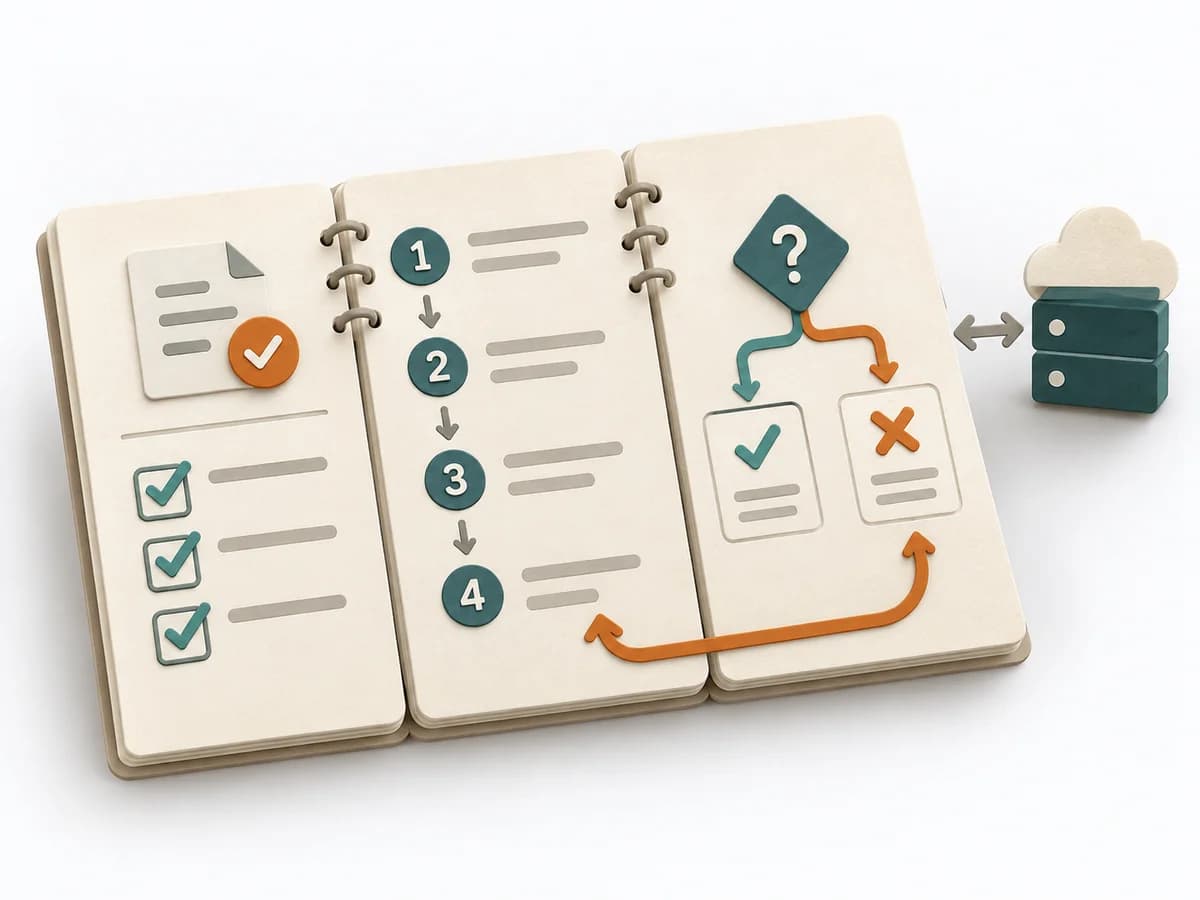 Operations Runbook |
|---|---|---|---|---|
Purposedifferent | Polarity Mapping makes tensions between two opposing poles tangible, such as standardization and adaptation or control and autonomy. The method guards against making apparent either-or decisions prematurely. | During an acute incident with several people involved, the method creates a clear leadership and communication structure. It reduces chaos when fast coordination and clean situational awareness are both needed at once. | An ADR permanently records an architecture decision with context, trade-offs, and consequence. It creates continuity for later changes because the decision path stays traceable. | For recurring operational tasks or incidents, the method keeps solid action logic ready. It reduces uncertainty when time pressure, role changes, or rare situations demand fast access. |
Complexitydifferent | Medium | Medium | Low | Low |
Timedifferent | 1-2 h | As needed | 15-45 min | 20-60 min |
Participantsdifferent | 3-12 | 4-15 | 1-3 | 1-4 |
Formatdifferent | Workshop | Workshop + async | Async | Async |
Outputdifferent | Polarity Map, Warning Signs, Balance Actions | Incident Log, Action Tracker, Stakeholder Updates | ADR File, Decision Log, Rationale | Runbook, Checklist, Escalation Path |
Tagsno overlap | Systems thinkingTradeoffsLeadership | IncidentOperationsReliability | ArchitectureRationaleDocumentationGovernance | OperationsReliabilityDocumentation |