View methods side by side.
Choose up to four methods. Add them using the search and share the comparison by copying its link.
| Criterion |  Systems Thinking Polarity Mapping |  Knowledge Modeling IBIS | 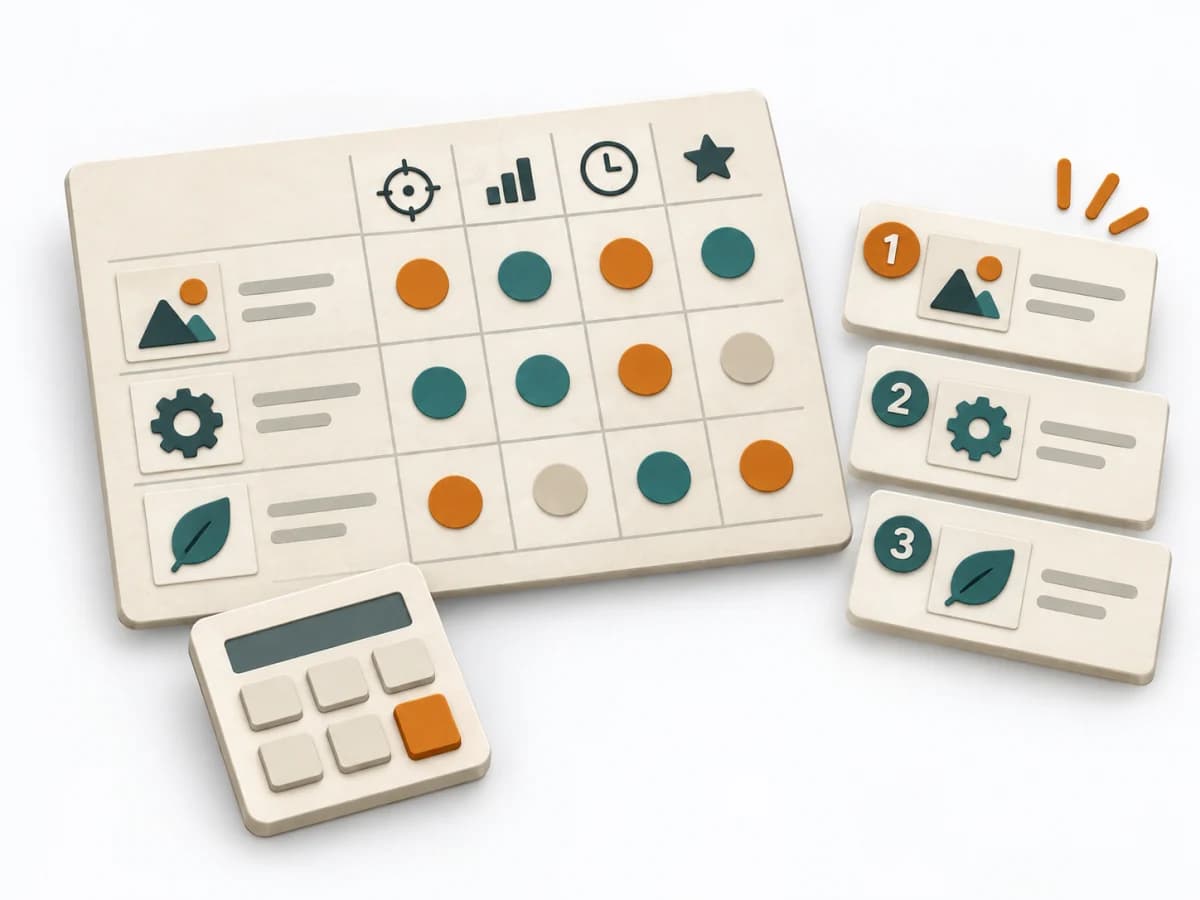 Product Strategy RICE Scoring | 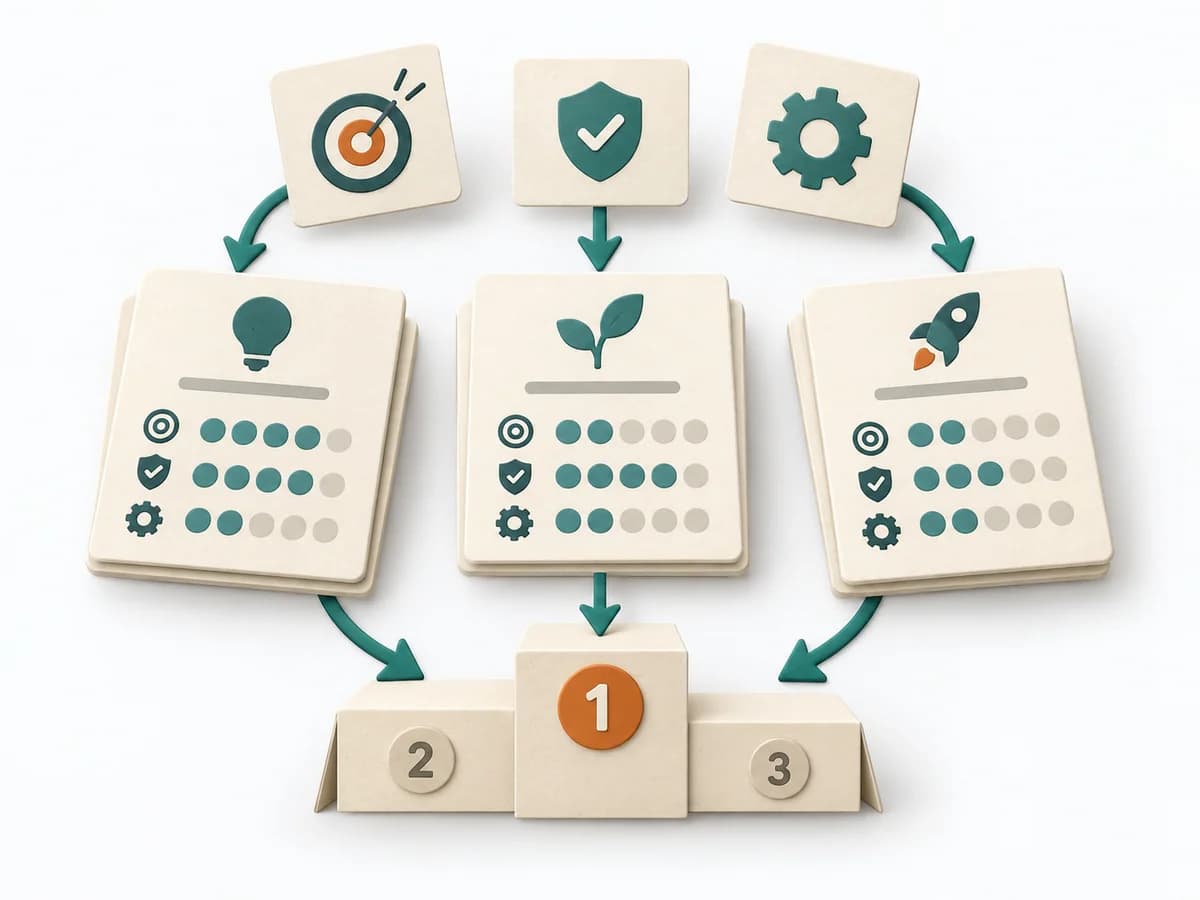 Product Strategy ICE Scoring |
|---|---|---|---|---|
Purposedifferent | Polarity Mapping makes tensions between two opposing poles tangible, such as standardization and adaptation or control and autonomy. The method guards against making apparent either-or decisions prematurely. | IBIS structures thinking about complex questions as a sequence of issues, ideas, and arguments. The method keeps discussions open without forcing them into premature consensus. | When many initiatives compete for the same resources, it brings reach, impact, confidence, and effort into one shared ranking. It makes prioritization economically connectable. | When ideas need sorting quickly, it condenses impact, confidence, and effort into one compact score. It connects customer value, product logic, and decision priorities. The result is captured as an ICE table and top-ideas list. |
Complexitydifferent | Medium | Medium | Medium | Low |
Timedifferent | 1-2 h | 1-3 h | 60-90 min | 30-60 min |
Participantsdifferent | 3-12 | 2-8 | 2-10 | 2-8 |
Formatdifferent | Workshop | Workshop + async | Workshop + async | Workshop + async |
Outputdifferent | Polarity Map, Warning Signs, Balance Actions | Issue Map, Positions, Argument Notes | RICE Scores, Ranked List, Assumption Log | ICE Table, Top Idea List |
Tagsno overlap | Systems thinkingTradeoffsLeadership | RationaleKnowledgeDecision | PrioritizationScoringRoadmapTradeoffs | PrioritizationScoringGrowthDecision |