View methods side by side.
Choose up to four methods. Add them using the search and share the comparison by copying its link.
| Criterion |  Systems Thinking Polarity Mapping |  Decision Making Force Field Analysis |  Systems Thinking Soft Systems Methodology | 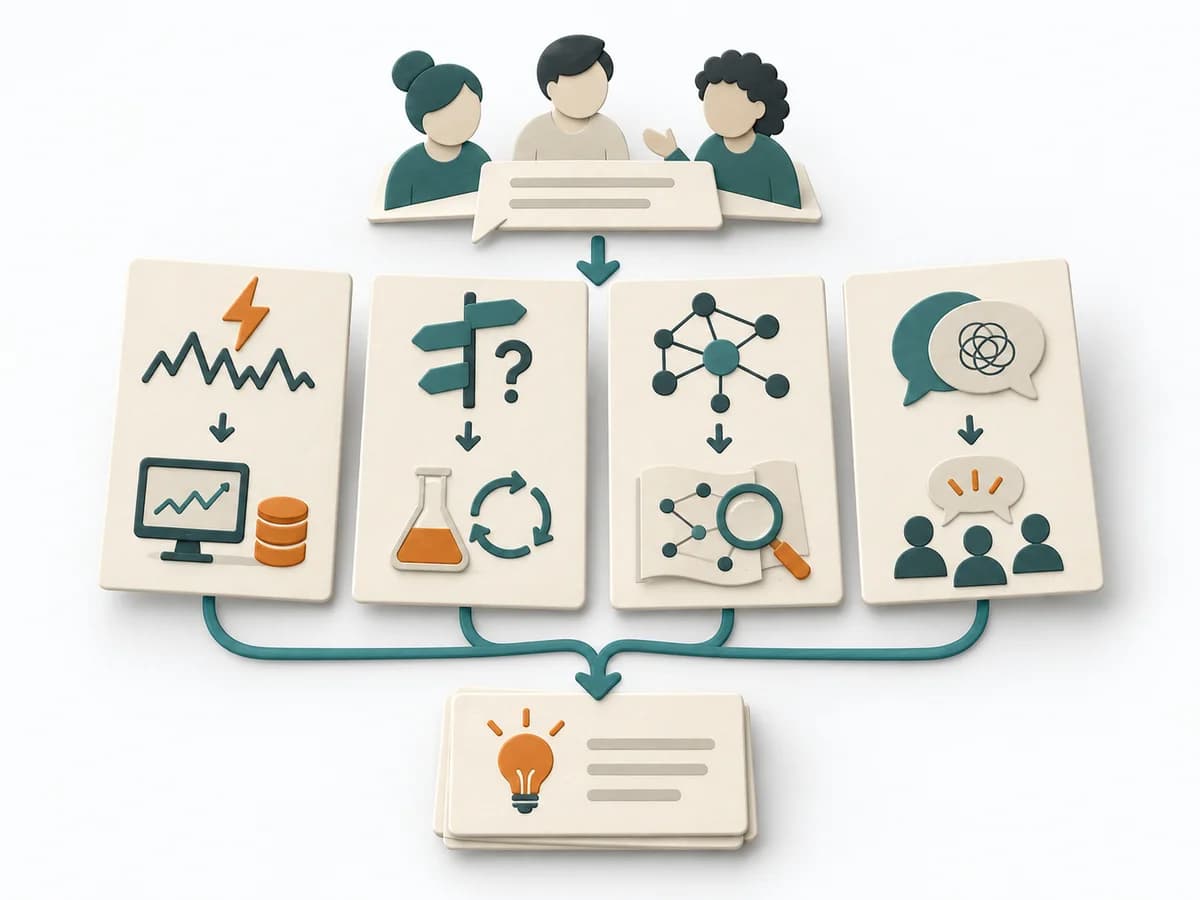 Systems Thinking VUCA Scan |
|---|---|---|---|---|
Purposedifferent | Polarity Mapping makes tensions between two opposing poles tangible, such as standardization and adaptation or control and autonomy. The method guards against making apparent either-or decisions prematurely. | In change initiatives, supporting and restraining forces sit at the table at the same time. Force Field Analysis makes these tensions explicit and shows where change can be pushed forward by strengthening or relieving. | Soft Systems Methodology helps explore unclear or politically charged problems systematically. Instead of forcing a quick answer, the method builds a shared understanding of perspectives and room for action. | The VUCA Scan helps read difficult situations more precisely. Instead of treating unclarity as generally complicated, the method separates fast change, missing knowledge, systemic entanglement, and ambiguous interpretation. |
Complexitydifferent | Medium | Low | High | Low |
Timedifferent | 1-2 h | 45-90 min | 0.5-3 Tage | 30-90 min |
Participantsdifferent | 3-12 | 3-12 | 5-15 | 1-10 |
Formatdifferent | Workshop | Workshop | Workshop | Workshop + async |
Outputdifferent | Polarity Map, Warning Signs, Balance Actions | Force Field Map, Change Levers, Risk Notes | Rich Picture, Root Definitions, Conceptual Models, Change Agenda | VUCA Map, Response Options, Signal and Learning Plan |
Tagsno overlap | Systems thinkingTradeoffsLeadership | ChangeDecisionStrategy | Soft systemsComplexitySensemakingSystems thinking | SensemakingUncertaintyComplexityStrategyForesight |