View methods side by side.
Choose up to four methods. Add them using the search and share the comparison by copying its link.
| Criterion |  Systems Thinking Polarity Mapping |  Decision Making Delphi Method |  Decision Making Risk Matrix | 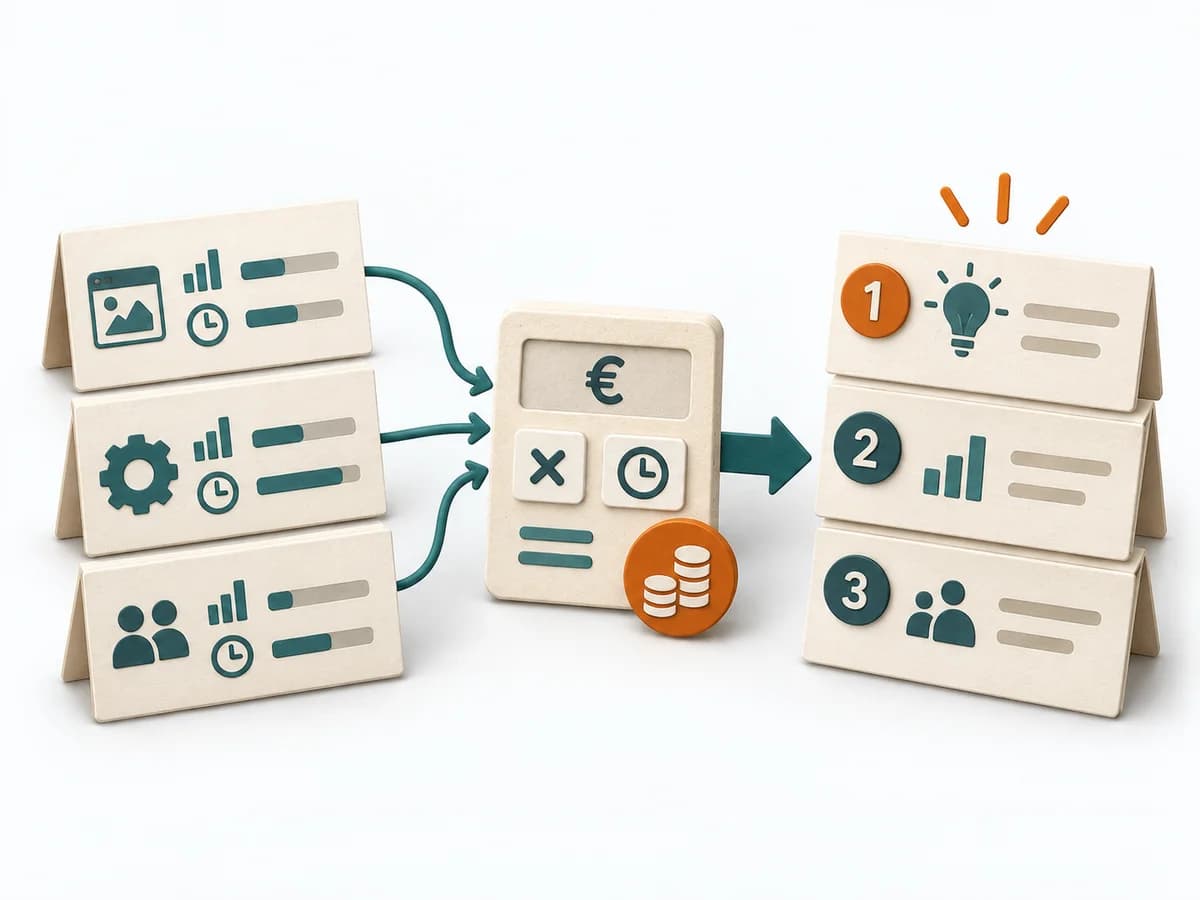 Delivery Cost of Delay |
|---|---|---|---|---|
Purposedifferent | Polarity Mapping makes tensions between two opposing poles tangible, such as standardization and adaptation or control and autonomy. The method guards against making apparent either-or decisions prematurely. | When knowledge is distributed and direct dominance should be avoided, groups quickly fall under the sway of their opinion leaders. The Delphi Method gathers assessments iteratively and gradually brings expert judgments closer together. | When a project faces many possible disruptions, it quickly becomes unclear which risks deserve attention first. It separates options, evaluation criteria, and open risks. The result is captured as a Risk Matrix and a Top Risk List. | Helps clarify scope, order, and delivery flow in concrete terms. It makes work, constraints, and sequence manageable. The result is captured as a Cost of Delay table and prioritization sequence. |
Complexitydifferent | Medium | High | Low | High |
Timedifferent | 1-2 h | 1-4 Wochen | 30-60 min | 90-180 min |
Participantsdifferent | 3-12 | 6-30 Experten | 3-10 | 3-8 |
Formatdifferent | Workshop | Async | Workshop + async | Workshop |
Outputdifferent | Polarity Map, Warning Signs, Balance Actions | Expert Forecast, Consensus Range, Assumption Notes | Risk Matrix, Top Risk List | CoD Table, Prioritization Sequence |
Tagsno overlap | Systems thinkingTradeoffsLeadership | ForecastingExpertsDecisionStrategy | RiskDecisionPrioritizationAssessment | PrioritizationDeliveryEconomicsDecision |