View methods side by side.
Choose up to four methods. Add them using the search and share the comparison by copying its link.
| Criterion |  Systems Thinking Polarity Mapping | 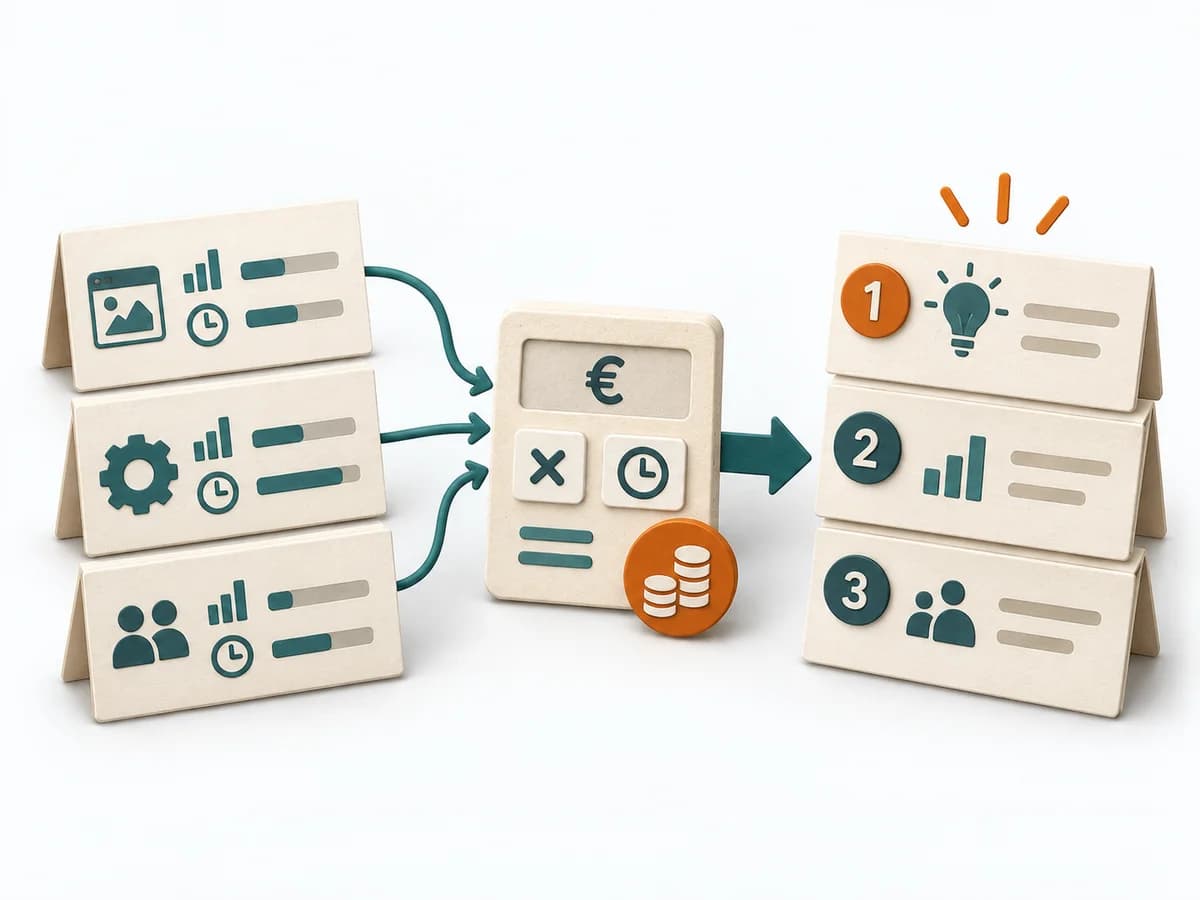 Delivery Cost of Delay |  Facilitation Dot Voting |  Facilitation Decision Jam |
|---|---|---|---|---|
Purposedifferent | Polarity Mapping makes tensions between two opposing poles tangible, such as standardization and adaptation or control and autonomy. The method guards against making apparent either-or decisions prematurely. | Helps clarify scope, order, and delivery flow in concrete terms. It makes work, constraints, and sequence manageable. The result is captured as a Cost of Delay table and prioritization sequence. | When a workshop has produced too many options and the group needs to condense quickly, dot voting makes preferences visible in a short time. It bundles individual votes into a solid signal for the next selection. | When a decision is stuck, Decision Jam loosens the knot through structured separation of problem, idea, and selection. The format creates movement without jumping prematurely at the first seemingly elegant answer. |
Complexitydifferent | Medium | High | Low | Low |
Timedifferent | 1-2 h | 90-180 min | 5-15 min | 60-90 min |
Participantsdifferent | 3-12 | 3-8 | 3-20 | 4-10 |
Formatsame | Workshop | Workshop | Workshop | Workshop |
Outputdifferent | Polarity Map, Warning Signs, Balance Actions | CoD Table, Prioritization Sequence | Ranked list, Consensus signal, Shortlist | Problem Cluster, Prioritized Challenge, Experiment |
Tagsno overlap | Systems thinkingTradeoffsLeadership | PrioritizationDeliveryEconomicsDecision | FacilitationVotingConsensusPrioritization | FacilitationDecisionProblem solvingWorkshop |