View methods side by side.
Choose up to four methods. Add them using the search and share the comparison by copying its link.
| Criterion |  Systems Thinking Polarity Mapping |  Facilitation Barcamp | 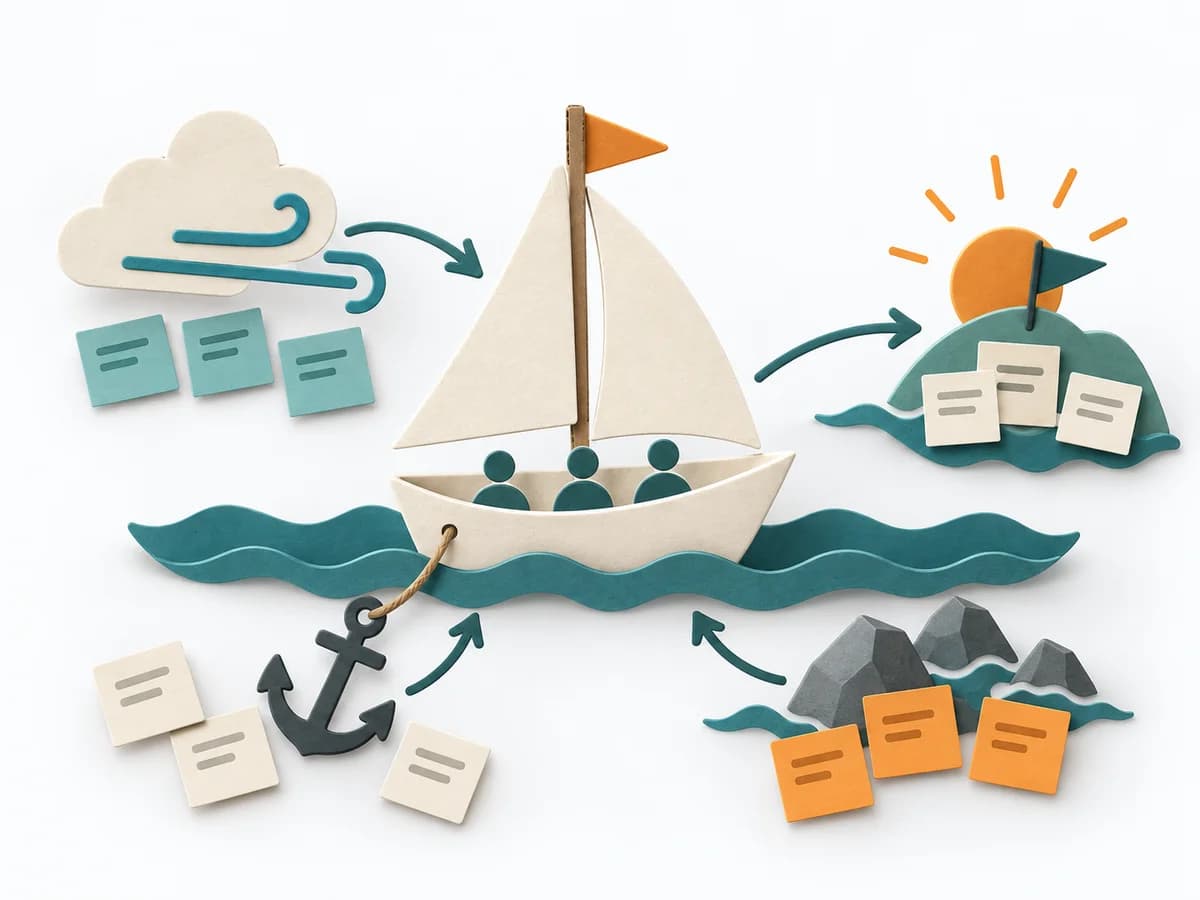 Agile Sailboat Retrospective |  Agile Sprint Retrospective |
|---|---|---|---|---|
Purposedifferent | Polarity Mapping makes tensions between two opposing poles tangible, such as standardization and adaptation or control and autonomy. The method guards against making apparent either-or decisions prematurely. | When many people can contribute knowledge and the flow should stay open, Barcamp provides a framework for self-organized sessions. The format channels energy without defining the content too narrowly in advance. | When a team wants to read momentum, brakes, and risks together, it offers an easily understandable picture of the situation. It makes drive, obstacles, and headwind visible in the same picture. | When a sprint is over and friction shouldn't simply be carried forward, it opens the view onto collaboration and patterns. It creates space to see causes and changes together. |
Complexitydifferent | Medium | Medium | Low | Low |
Timedifferent | 1-2 h | Halber Tag bis 2 Tage | 45-90 min | Up to 3 hours for a one-month Sprint; shorter Sprints are usually shorter |
Participantsdifferent | 3-12 | 15-200 | 4-12 | Scrum Team |
Formatsame | Workshop | Workshop | Workshop | Workshop |
Outputdifferent | Polarity Map, Warning Signs, Balance Actions | Session Board, Session Notes, Community Learnings | Sailboat Board, Risks, Improvement Actions | Improvement actions, Team agreements |
Tagsno overlap | Systems thinkingTradeoffsLeadership | FacilitationLarge groupLearning | RetrospectiveTeamImprovement | RetrospectiveImprovementLearning |