View methods side by side.
Choose up to four methods. Add them using the search and share the comparison by copying its link.
| Criterion |  Systems Thinking Polarity Mapping |  Operations Accountability Ladder | 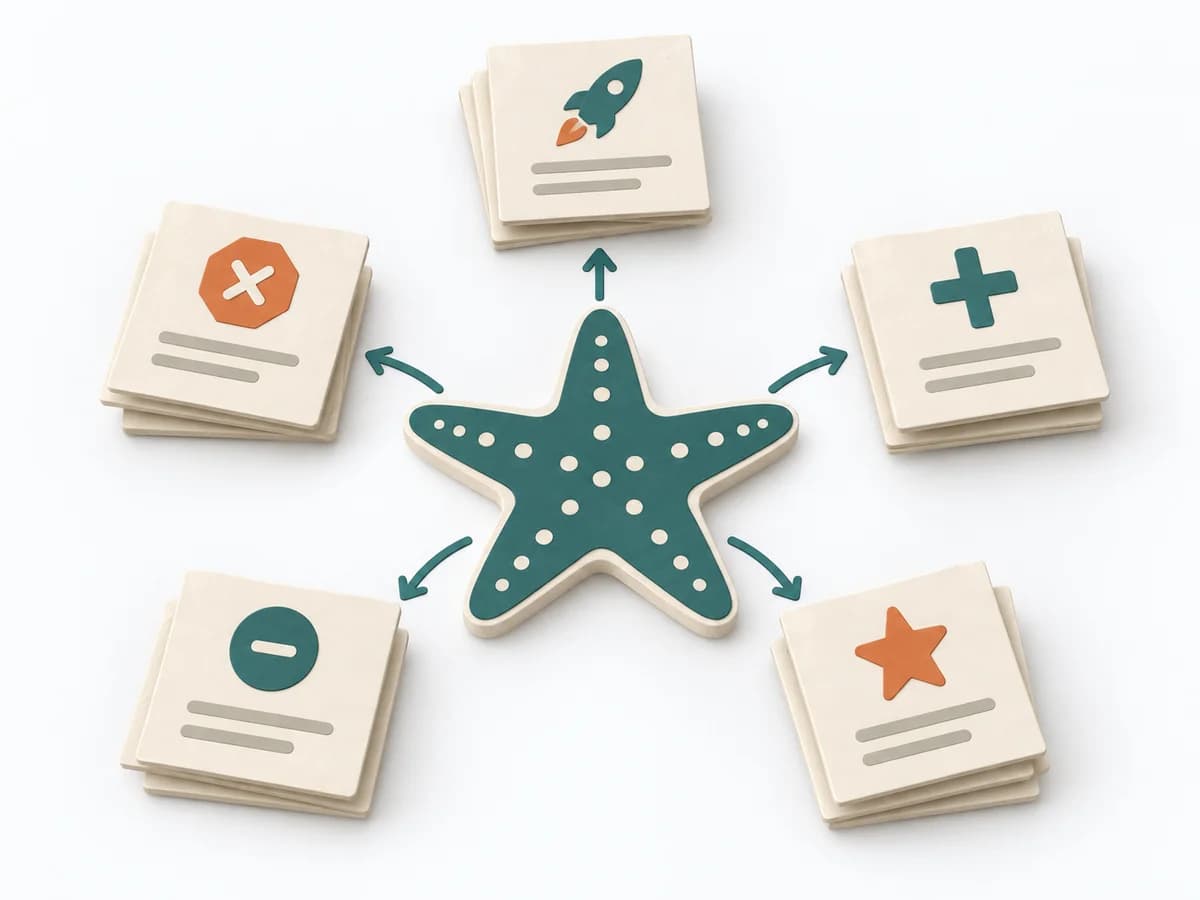 Agile Starfish Retrospective | 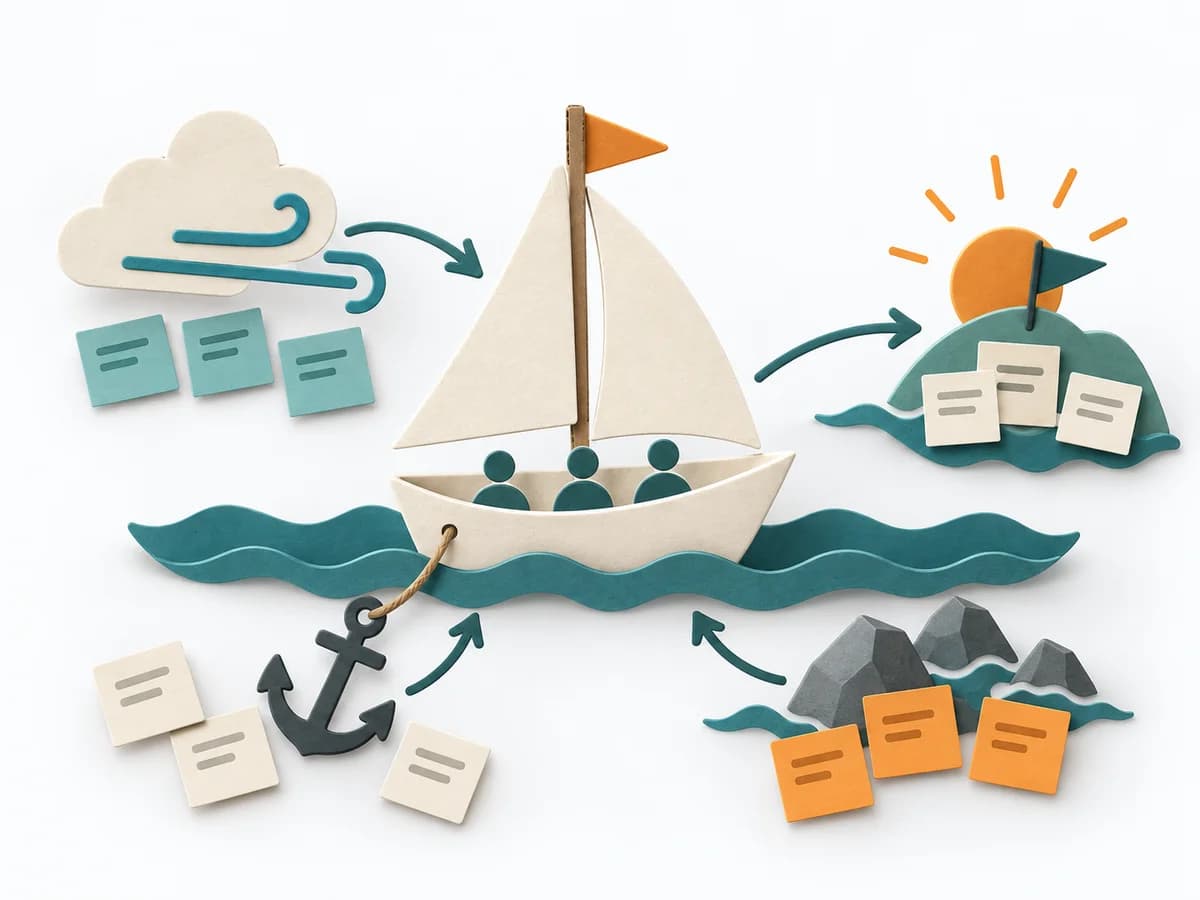 Agile Sailboat Retrospective |
|---|---|---|---|---|
Purposedifferent | Polarity Mapping makes tensions between two opposing poles tangible, such as standardization and adaptation or control and autonomy. The method guards against making apparent either-or decisions prematurely. | With defensive reactions to problems, the method shifts the view from justification to ownership. It makes visible which reaction stage a person or team is currently stuck on. | When improvement options need to be sorted more finely than just start and stop, it brings observations into clear kinds of action. This makes visible what should be done more, less, newly, or continued. | When a team wants to read momentum, brakes, and risks together, it offers an easily understandable picture of the situation. It makes drive, obstacles, and headwind visible in the same picture. |
Complexitydifferent | Medium | Low | Low | Low |
Timedifferent | 1-2 h | 20-45 min | 45-90 min | 45-90 min |
Participantsdifferent | 3-12 | 1-8 | 4-12 | 4-12 |
Formatdifferent | Workshop | Workshop + async | Workshop | Workshop |
Outputdifferent | Polarity Map, Warning Signs, Balance Actions | Ownership Reflection, Action Commitment, Coaching Notes | Starfish Board, Practice Changes, Experiments | Sailboat Board, Risks, Improvement Actions |
Tagsno overlap | Systems thinkingTradeoffsLeadership | ResponsibilityLeadershipTeam | RetrospectiveImprovementExperimentsTeam | RetrospectiveTeamImprovement |