View methods side by side.
Choose up to four methods. Add them using the search and share the comparison by copying its link.
| Criterion |  Systems Thinking Polarity Mapping |  Operations Accountability Ladder | 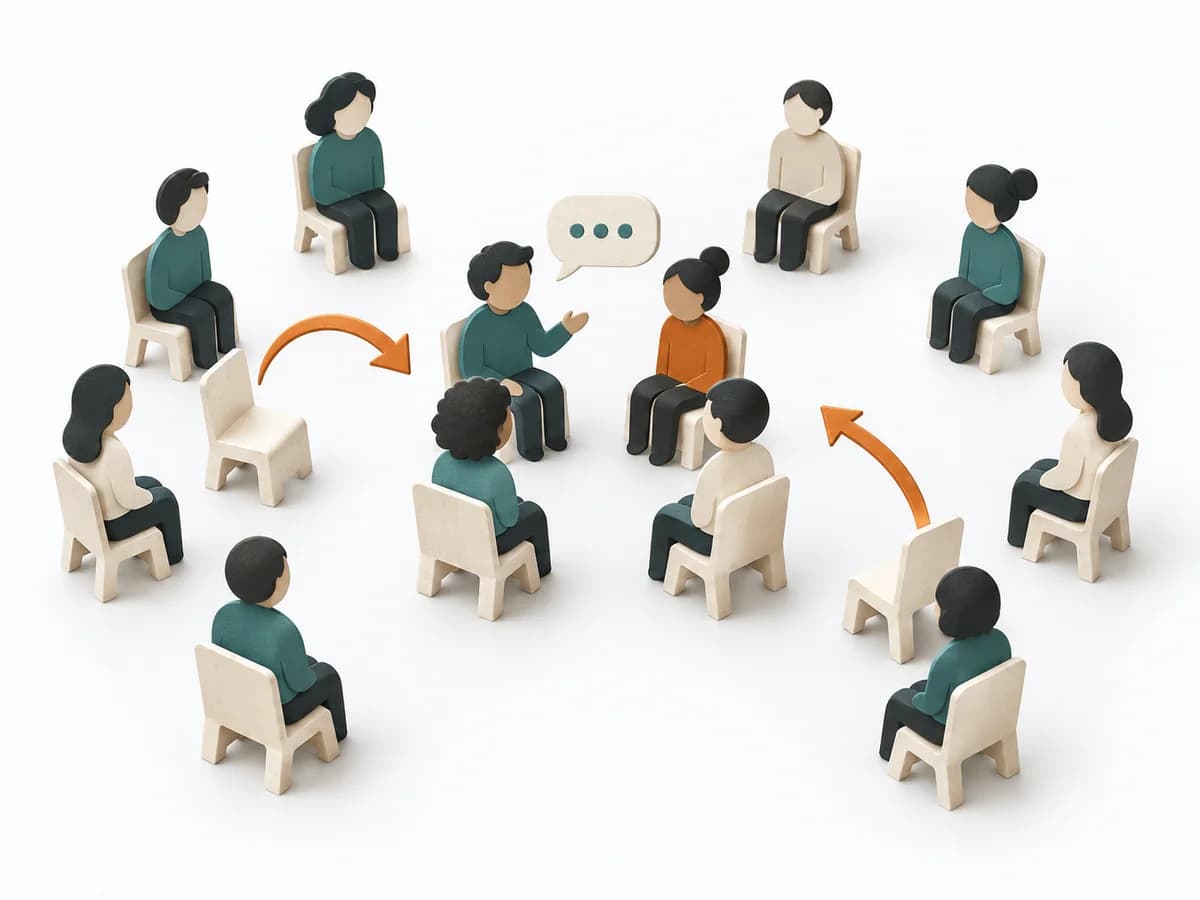 Facilitation Fishbowl Discussion |  Facilitation Barcamp |
|---|---|---|---|---|
Purposedifferent | Polarity Mapping makes tensions between two opposing poles tangible, such as standardization and adaptation or control and autonomy. The method guards against making apparent either-or decisions prematurely. | With defensive reactions to problems, the method shifts the view from justification to ownership. It makes visible which reaction stage a person or team is currently stuck on. | When a controversial topic needs depth and discipline at the same time, Fishbowl Discussion makes the structure of the conversation transparent. The format keeps the core small enough for real dialogue and open enough for controlled turnover. | When many people can contribute knowledge and the flow should stay open, Barcamp provides a framework for self-organized sessions. The format channels energy without defining the content too narrowly in advance. |
Complexitydifferent | Medium | Low | Medium | Medium |
Timedifferent | 1-2 h | 20-45 min | 45-90 min | Halber Tag bis 2 Tage |
Participantsdifferent | 3-12 | 1-8 | 8-80 | 15-200 |
Formatdifferent | Workshop | Workshop + async | Workshop | Workshop |
Outputdifferent | Polarity Map, Warning Signs, Balance Actions | Ownership Reflection, Action Commitment, Coaching Notes | Discussion Insights, Observed Tensions, Follow-up Questions | Session Board, Session Notes, Community Learnings |
Tagsno overlap | Systems thinkingTradeoffsLeadership | ResponsibilityLeadershipTeam | FacilitationDialogueLarge group | FacilitationLarge groupLearning |