View methods side by side.
Choose up to four methods. Add them using the search and share the comparison by copying its link.
| Criterion |  Systems Thinking Polarity Mapping | 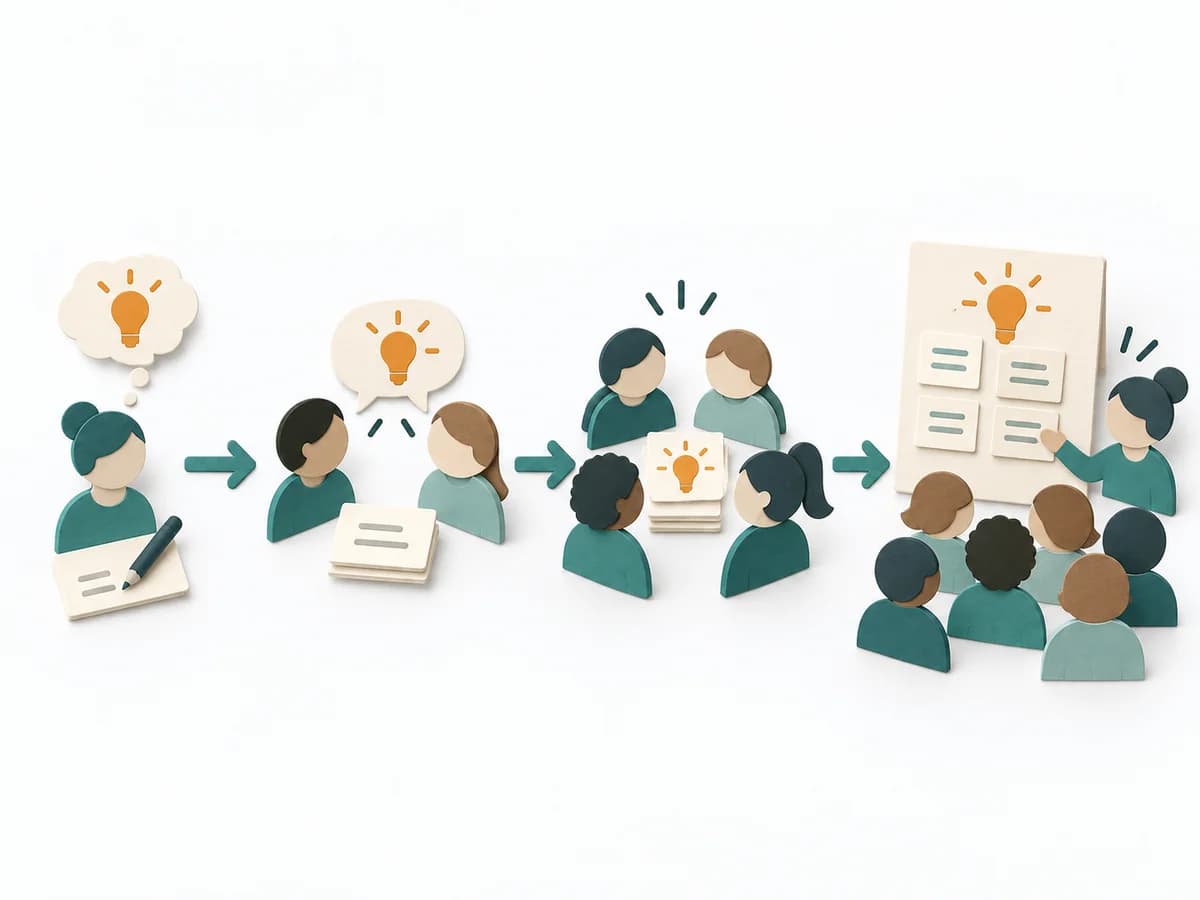 Facilitation 1-2-4-All |  Innovation Reverse Brainstorming |  Innovation Lotus Blossom |
|---|---|---|---|---|
Purposedifferent | Polarity Mapping makes tensions between two opposing poles tangible, such as standardization and adaptation or control and autonomy. The method guards against making apparent either-or decisions prematurely. | When many people in a group too rarely get to speak, 1-2-4-All distributes thinking time more fairly. The format builds participation step by step and makes quiet or still-unformed thoughts usable faster. | For persistent errors or blockages, the method shifts the view to the opposite of the desired effect. It exposes the mechanics of failure and makes hidden causes easier to grasp. This makes improvement more concrete and the problem clearer. | When a central question feels too large, the method breaks it into neighboring topic fields with their own depth of ideation. It holds structure and openness at the same time, so adjacent perspectives don't get lost. This grows an idea space out of a core problem. |
Complexitydifferent | Medium | Low | Low | Low |
Timedifferent | 1-2 h | 10-20 min | 30-60 min | 45-90 min |
Participantsdifferent | 3-12 | 4-100+ | 3-12 | 3-10 |
Formatsame | Workshop | Workshop | Workshop | Workshop |
Outputdifferent | Polarity Map, Warning Signs, Balance Actions | Idea List, Shared Insights, Emergent Themes | Reverse Ideas, Risk Themes, Solution Ideas | Lotus Diagram, Idea Themes, Shortlist |
Tagsno overlap | Systems thinkingTradeoffsLeadership | FacilitationInclusionIdeation | BrainstormingIdeationCreativityRisk | BrainstormingIdeationCreativityDivergenceWorkshop |