View methods side by side.
Choose up to four methods. Add them using the search and share the comparison by copying its link.
| Criterion |  Agile Planning Poker | 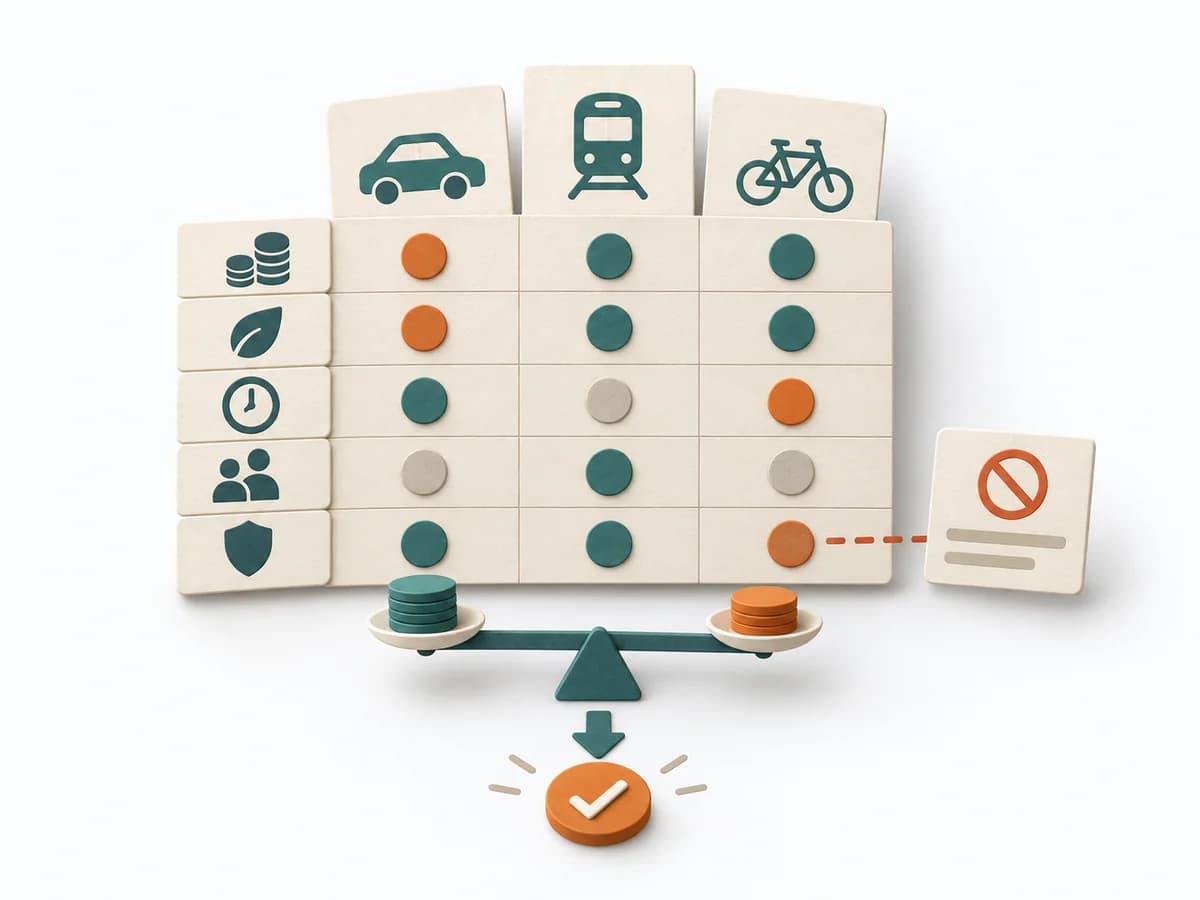 Decision Making Trade-off Analysis |  Agile Affinity Estimation | 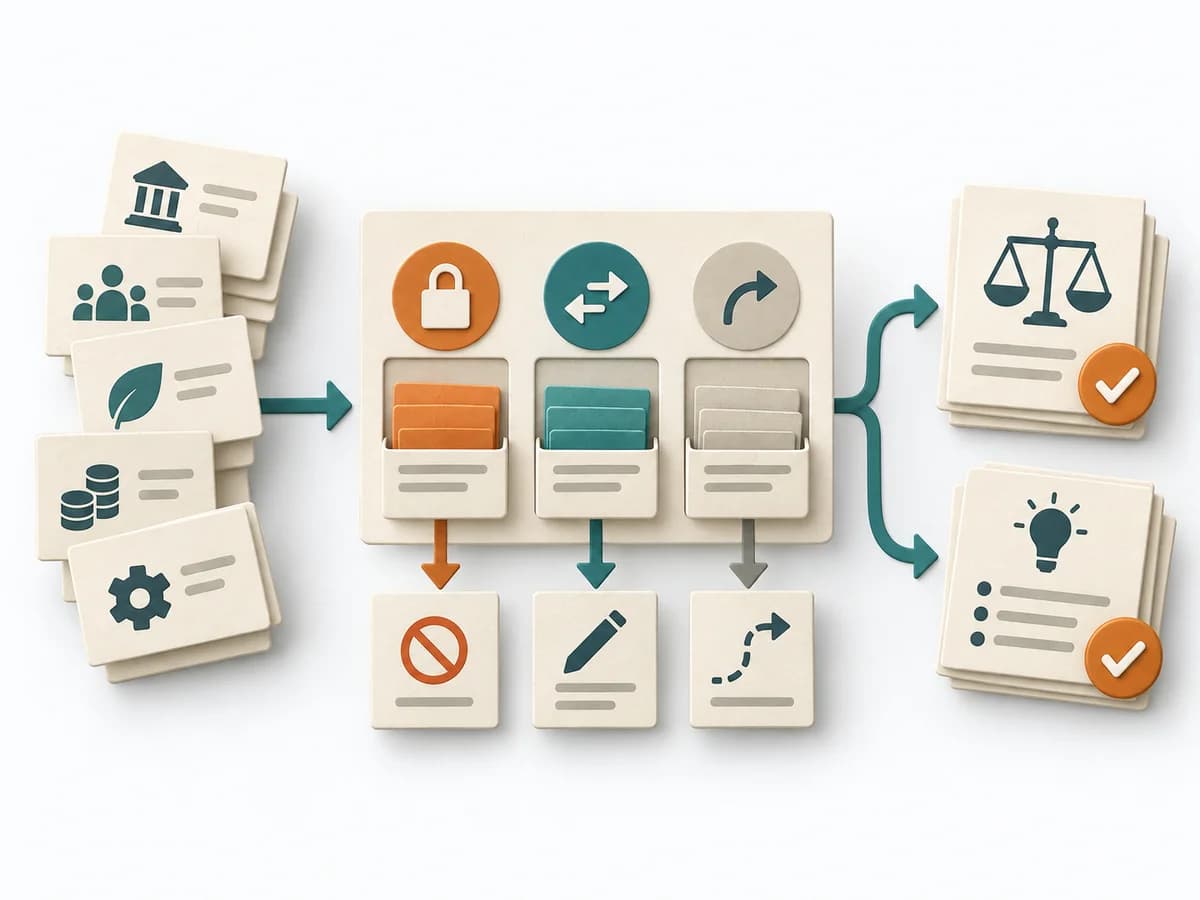 Decision Making Constraint Analysis |
|---|---|---|---|---|
Purposedifferent | When estimates within the team diverge too much, it puts differing expectations on a common test bench. It separates rough complexity from unspoken assumptions. | With limited resources, quality, speed, cost, and risk almost always compete with each other. Trade-off Analysis makes these tensions explicit and prevents decisions from producing hidden side effects. | When many tasks need to be classified quickly, it sorts them by perceived effort and similarity. It reduces the effort of fine-grained estimation for large volumes. | When an initiative stalls, the limit often lies not in the idea but in hard or soft boundary conditions. Constraint Analysis separates these limits and shows which of them can actually be shaped. |
Complexitydifferent | Low | Medium | Medium | Low |
Timedifferent | 2-5 min je Item | 45-120 min | 30-90 min | 30-90 min |
Participantsdifferent | 3-9 | 2-8 | 3-12 | 2-8 |
Formatdifferent | Workshop + async | Workshop + async | Workshop | Workshop + async |
Outputdifferent | Relative Estimates, Assumption Notes, Split Candidates | Trade-off Matrix, Criteria List, Decision Rationale, Accepted Downsides | Affinity Size Map, Grouped Estimates, Unclear Items | Constraint List, Hard/Soft Classification, Option Impact Notes, Decision Boundaries |
Tagsno overlap | EstimationAgileRelative sizingTeam | TradeoffsDecisionCriteriaOptions | EstimationBacklogRelative sizing | ConstraintsDecisionPlanningOptions |