View methods side by side.
Choose up to four methods. Add them using the search and share the comparison by copying its link.
| Criterion |  Agile Planning Poker |  Systems Thinking Leverage Points | 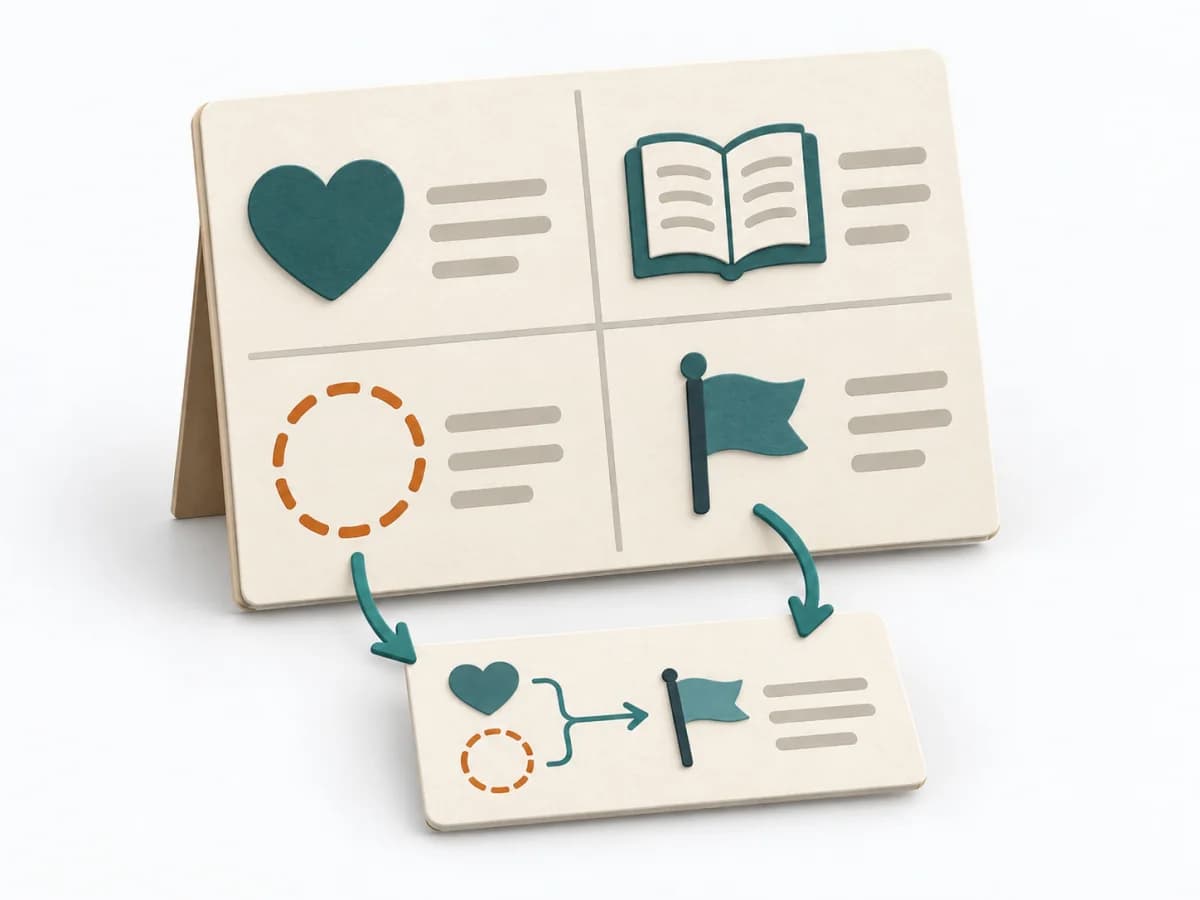 Agile 4Ls Retrospective |  Agile Start Stop Continue |
|---|---|---|---|---|
Purposedifferent | When estimates within the team diverge too much, it puts differing expectations on a common test bench. It separates rough complexity from unspoken assumptions. | Leverage Points show exactly where interventions in a system produce a disproportionate effect. It draws relationships, patterns, and feedback loops. The result is captured as a leverage map and action strategy. | When a sprint should not only be assessed but also learned from, it captures experience in clear learning categories. It records what worked, what's missing, and what should run differently next time. | When a team wants to deliberately adjust its working behavior, it makes habits visible and assessable. It focuses on concrete changes instead of diffuse mood. |
Complexitydifferent | Low | High | Low | Low |
Timedifferent | 2-5 min je Item | Half day | 45–75 min | 30-60 min |
Participantsdifferent | 3-9 | 3-12 | Team members involved | 3-12 |
Formatdifferent | Workshop + async | Workshop | Workshop | Workshop |
Outputdifferent | Relative Estimates, Assumption Notes, Split Candidates | Leverage Map, Action Strategy | 4Ls Board, Learning Themes, Improvement Actions | Start Stop Continue Board, Improvement Actions |
Tagsno overlap | EstimationAgileRelative sizingTeam | Systems thinkingChangeStrategy | RetrospectiveLearningReflectionTeam | RetrospectiveImprovementTeamReflection |