View methods side by side.
Choose up to four methods. Add them using the search and share the comparison by copying its link.
| Criterion |  Agile Planning Poker |  Facilitation Alignment Mapping | 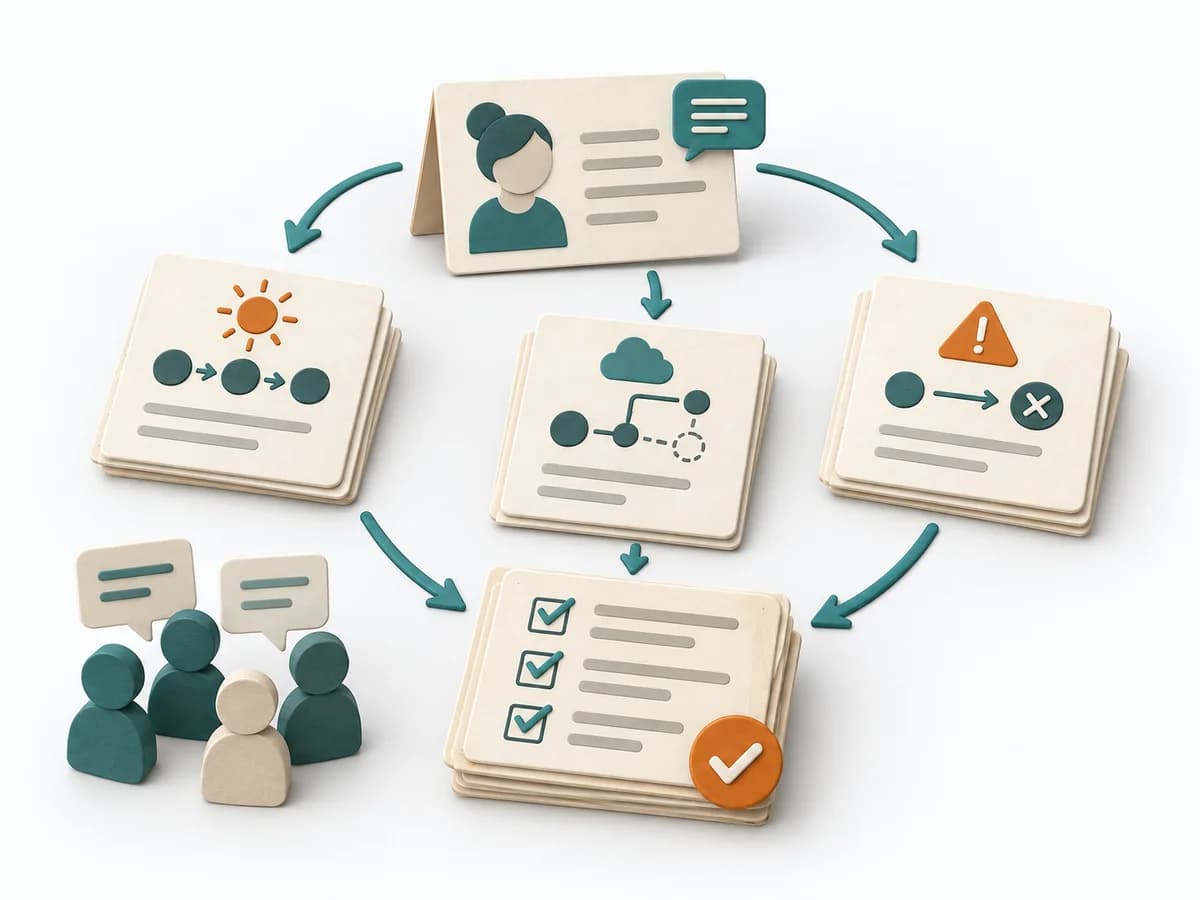 Agile Acceptance Criteria Workshop | 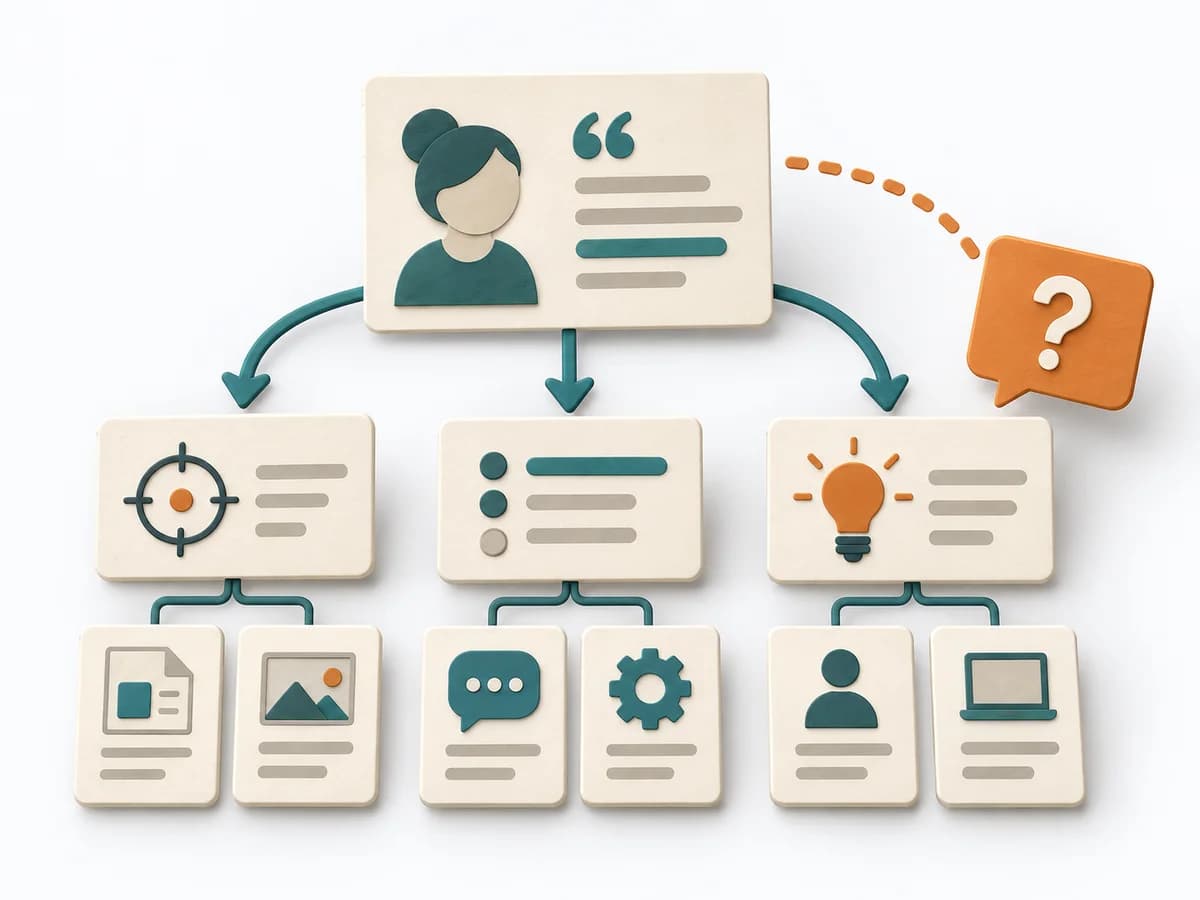 Agile Example Mapping |
|---|---|---|---|---|
Purposedifferent | When estimates within the team diverge too much, it puts differing expectations on a common test bench. It separates rough complexity from unspoken assumptions. | When several people work toward one goal but hold different mental maps, Alignment Mapping makes the discrepancies visible. It arranges goals, assumptions, and priorities so shared direction becomes verifiable. | When a story needs clear checkpoints before implementation, it sharpens expectation and scope together. It sorts work by value, risk, and delivery ability. The result is captured as Acceptance Criteria and a Story Update. | When a story carries business rules and exceptions, it brings clarity before implementation. It makes examples, open questions, and boundaries visible enough that the logic becomes jointly sound. |
Complexitydifferent | Low | Medium | Low | Low |
Timedifferent | 2-5 min je Item | 1-2 h | 20-40 min pro Story | 30-60 min |
Participantsdifferent | 3-9 | 4-12 | 3-6 | 3-7 |
Formatdifferent | Workshop + async | Workshop | Workshop | Workshop |
Outputdifferent | Relative Estimates, Assumption Notes, Split Candidates | Alignment Map, Open Issues, Decision Questions | Acceptance Criteria, Story Update | Example Map, Acceptance Criteria, Open Questions |
Tagsno overlap | EstimationAgileRelative sizingTeam | AlignmentStakeholdersStrategyFacilitation | AgileRequirementsRefinementBehavior-Driven Development | Behavior-Driven DevelopmentRequirementsExamplesRefinement |