View methods side by side.
Choose up to four methods. Add them using the search and share the comparison by copying its link.
| Criterion |  UX Research Personas |  UX Research User Interviews | 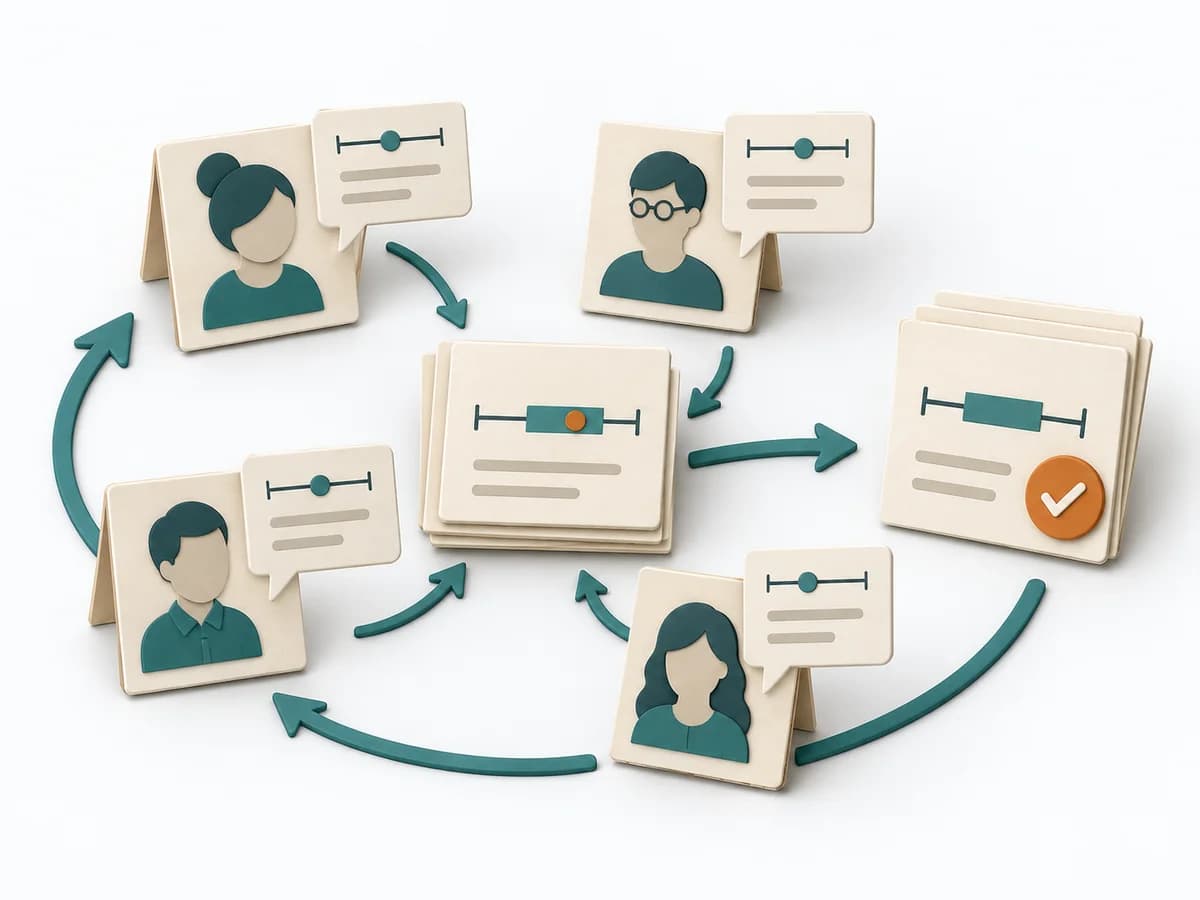 Decision Making Delphi Method |  Decision Making Assumption Surfacing |
|---|---|---|---|---|
Purposedifferent | When target groups stay too vague and teams talk about the same people differently, personas create a shared, solid picture of usage. Condensed profiles make needs, contexts, and differences tangible enough for decisions. | When teams derive needs only from assumptions and real motives are missing, user interviews give direct access to behavior and meaning. Conversations from the target group's everyday life make patterns, tensions, and open questions solidly visible. | When knowledge is distributed and direct dominance should be avoided, groups quickly fall under the sway of their opinion leaders. The Delphi Method gathers assessments iteratively and gradually brings expert judgments closer together. | Plans often contain assumptions that were never openly stated and remain dangerous precisely because of that. Assumption Surfacing makes these silent premises visible and prioritizes which of them carry the initiative or could sink it. |
Complexitydifferent | Medium | Low | High | Low |
Timedifferent | 1-3 Tage | 30–60 min per interview | 1-4 Wochen | 45-90 min |
Participantsdifferent | Internes Team | 1 participant per interview | 6-30 Experten | 2-8 |
Formatdifferent | Workshop + async | Workshop + async | Async | Workshop + async |
Outputdifferent | Persona Profiles, Needs Summary, Scenario Notes | Interview Notes, Themes, Insight Summary | Expert Forecast, Consensus Range, Assumption Notes | Assumption List, Critical Assumptions, Learning Plan |
Tagsno overlap | ResearchCustomerSynthesis | QualitativeResearchCustomerDiscovery | ForecastingExpertsDecisionStrategy | AssumptionsRiskDecisionDiscovery |