View methods side by side.
Choose up to four methods. Add them using the search and share the comparison by copying its link.
| Criterion | 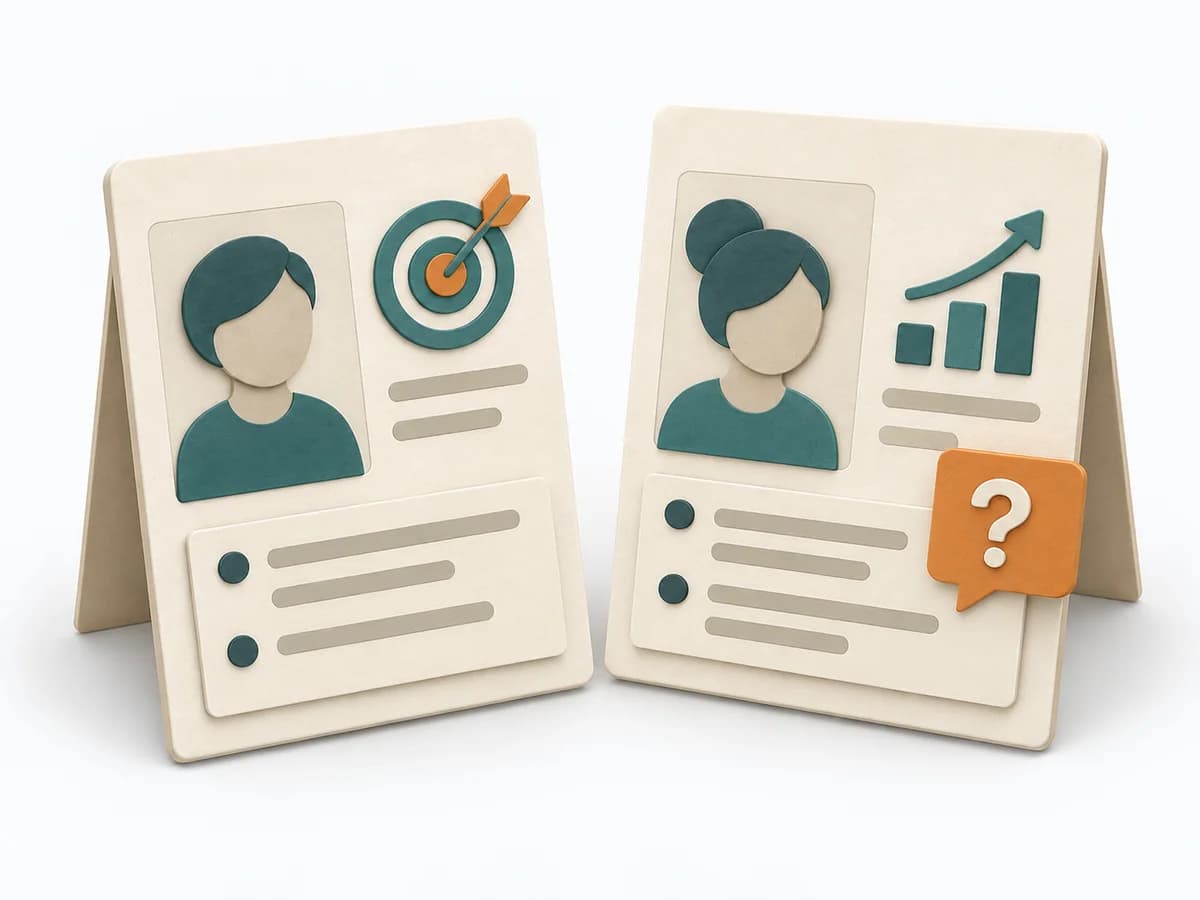 UX Research Personas | 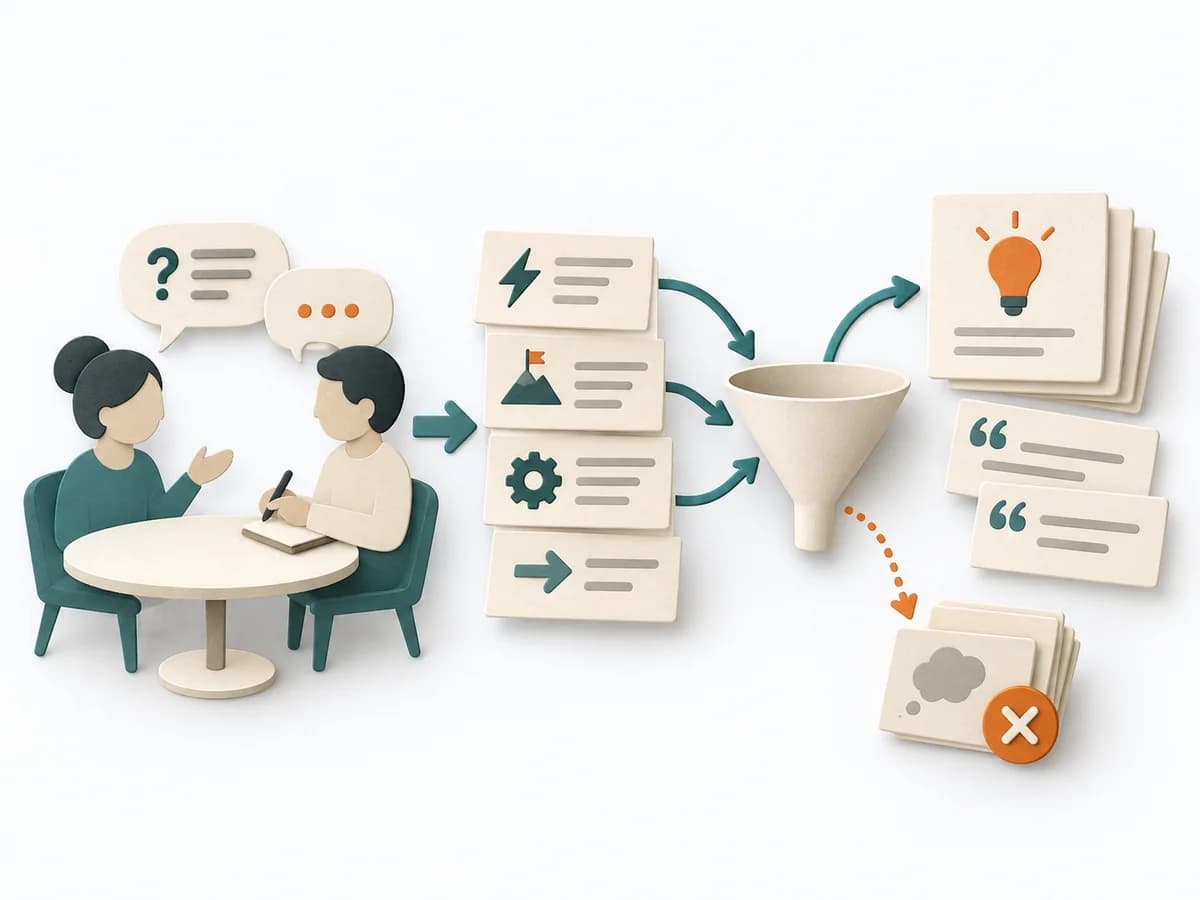 Product Discovery Opportunity Interview | 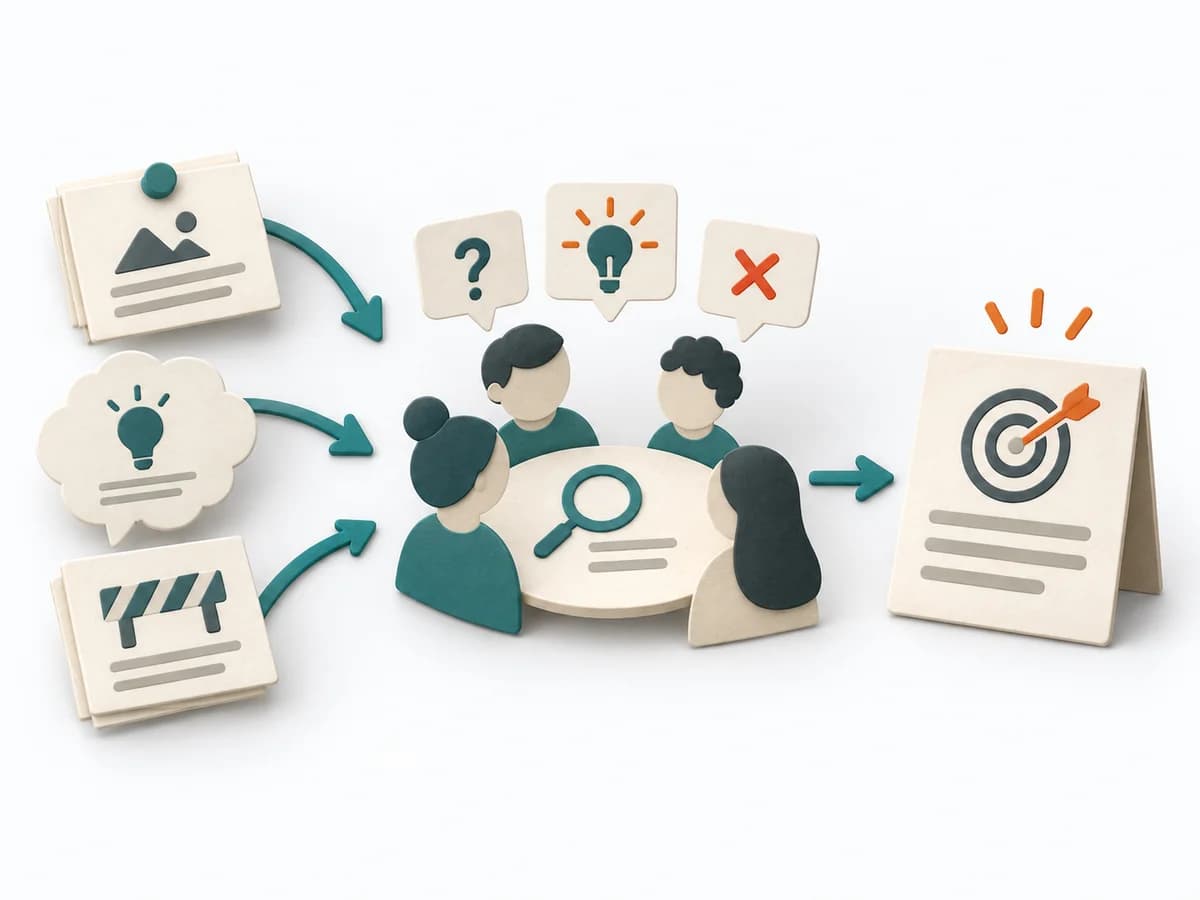 Facilitation Problem Framing Workshop |  Facilitation Alignment Mapping |
|---|---|---|---|---|
Purposedifferent | When target groups stay too vague and teams talk about the same people differently, personas create a shared, solid picture of usage. Condensed profiles make needs, contexts, and differences tangible enough for decisions. | When opportunities are still hidden behind signals of need, it structures conversations around needs and obstacles. It looks for patterns that lead to new product opportunities. | When a team works on symptoms but the real question stays fuzzy, a Problem Framing Workshop sharpens the view of the right problem. It separates observation, interpretation, and target picture from each other. | When several people work toward one goal but hold different mental maps, Alignment Mapping makes the discrepancies visible. It arranges goals, assumptions, and priorities so shared direction becomes verifiable. |
Complexitydifferent | Medium | Medium | Low | Medium |
Timedifferent | 1-3 Tage | 30-60 min je Interview | 60-120 min | 1-2 h |
Participantsdifferent | Internes Team | 5-12 Interviews | 4-10 | 4-12 |
Formatdifferent | Workshop + async | Workshop + async | Workshop | Workshop |
Outputdifferent | Persona Profiles, Needs Summary, Scenario Notes | Interview Notes, Opportunity Themes, Customer Quotes | Problem Statement, Scope Boundaries, Assumption List, Next Analysis Questions | Alignment Map, Open Issues, Decision Questions |
Tagsno overlap | ResearchCustomerSynthesis | DiscoveryInterviewsOpportunityCustomer | FacilitationAlignmentDiscovery | AlignmentStakeholdersStrategyFacilitation |