View methods side by side.
Choose up to four methods. Add them using the search and share the comparison by copying its link.
| Criterion |  UX Research Personas |  Product Strategy Lean Canvas | 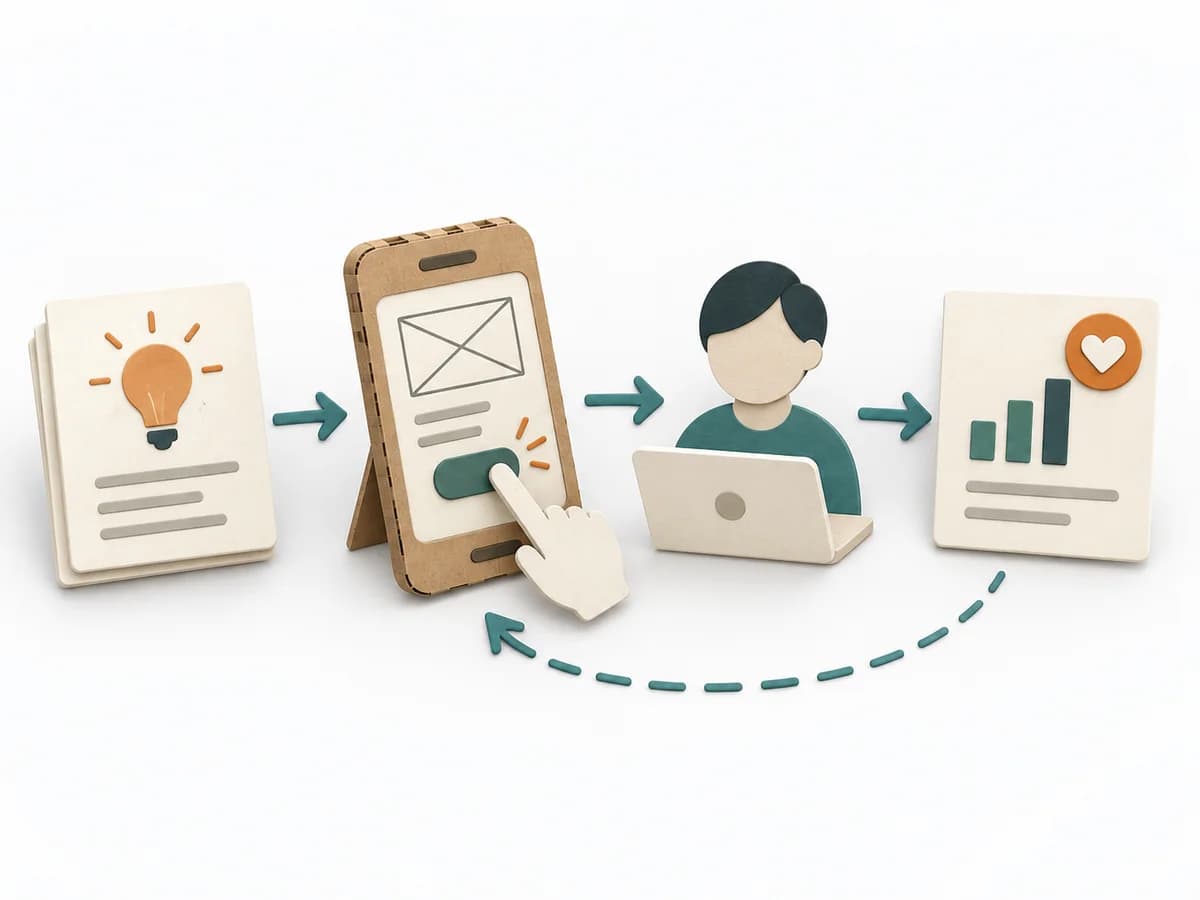 Product Discovery Pretotyping |  Product Discovery Assumption Mapping |
|---|---|---|---|---|
Purposedifferent | When target groups stay too vague and teams talk about the same people differently, personas create a shared, solid picture of usage. Condensed profiles make needs, contexts, and differences tangible enough for decisions. | When an early product bet still has too many open points, it brings target group, problem, and assumptions into a single view. It condenses the idea so core risks become nameable. | Pretotyping clarifies whether a customer problem and solution idea create enough real demand. It separates problem, assumption, solution, and evidence, and captures the result as a pretotyping sketch, test setup, and conversion data. | When assumptions still sit unordered in the room, it weighs uncertainty against leverage. It makes visible which hypotheses should be checked first. |
Complexitydifferent | Medium | Medium | Low | Medium |
Timedifferent | 1-3 Tage | 45-90 min | Stunden bis wenige Tage | 45-60 min |
Participantsdifferent | Internes Team | 1-6 | 1-4 | 2-8 |
Formatsame | Workshop + async | Workshop + async | Workshop + async | Workshop + async |
Outputdifferent | Persona Profiles, Needs Summary, Scenario Notes | Lean Canvas, Core Assumptions, Experiment Backlog | Pretotyping sketch, Test setup, Conversion data, Go or no-go decision | Assumption map, Test backlog, Risk ranking |
Tagsno overlap | ResearchCustomerSynthesis | StartupLeanAssumptionsBusiness model | ValidationDemandMVP | AssumptionsRiskExperimentsValidation |