View methods side by side.
Choose up to four methods. Add them using the search and share the comparison by copying its link.
| Criterion | 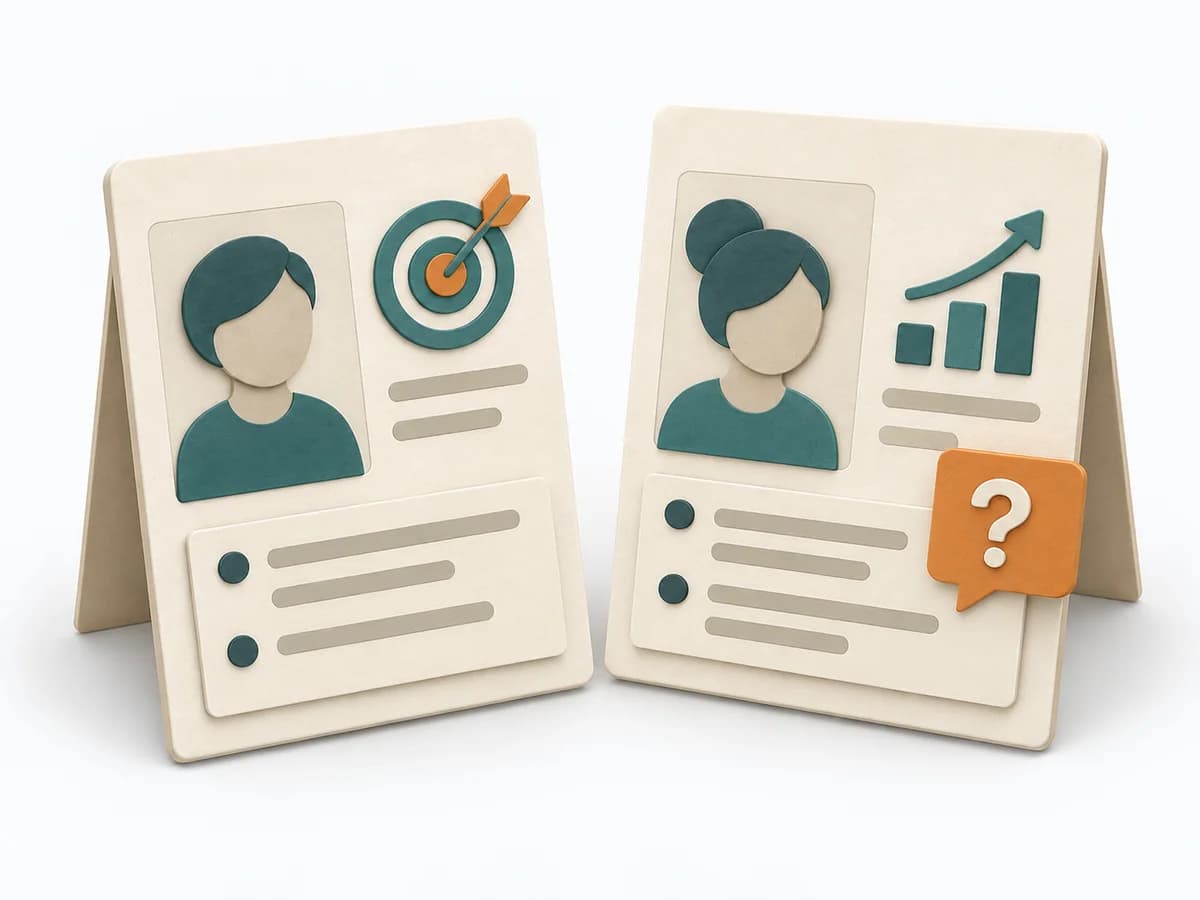 UX Research Personas | 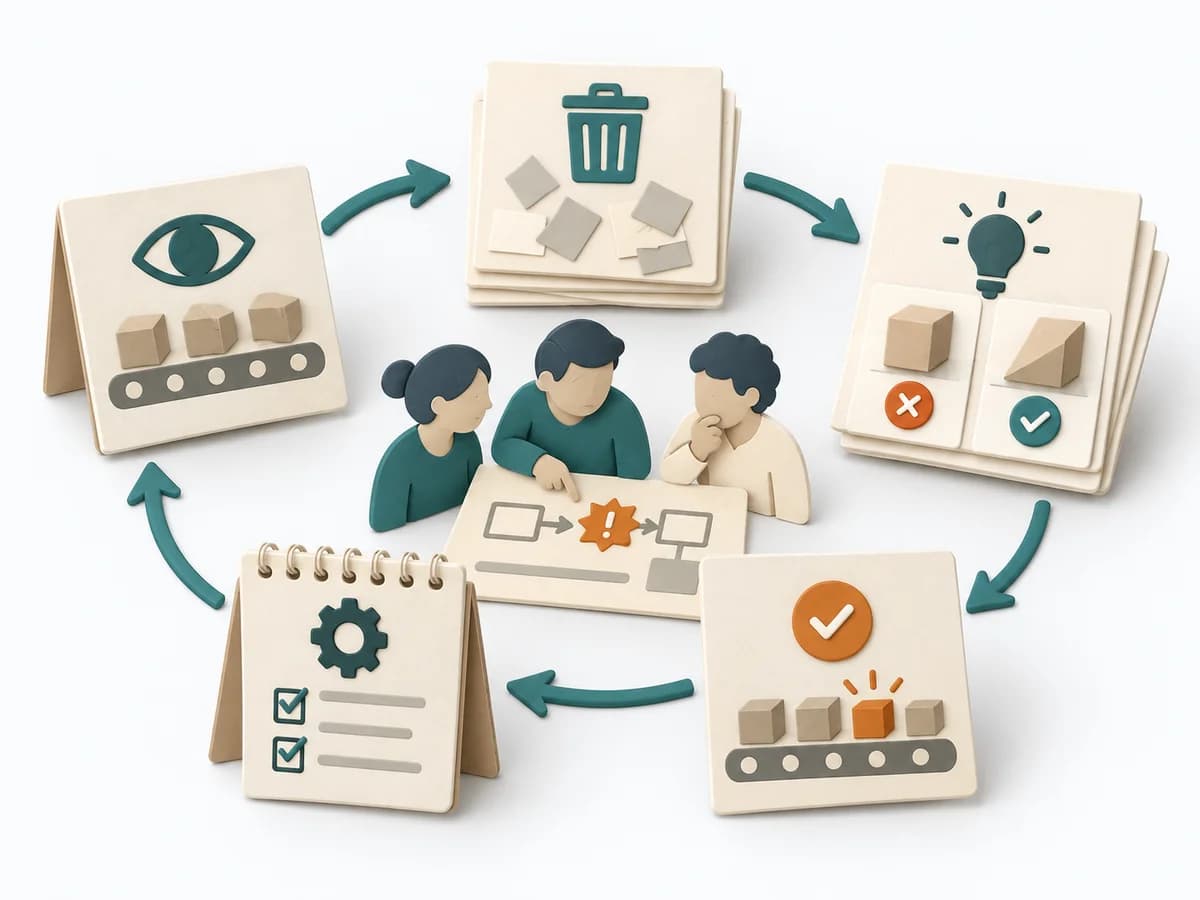 Operations Kaizen Event | 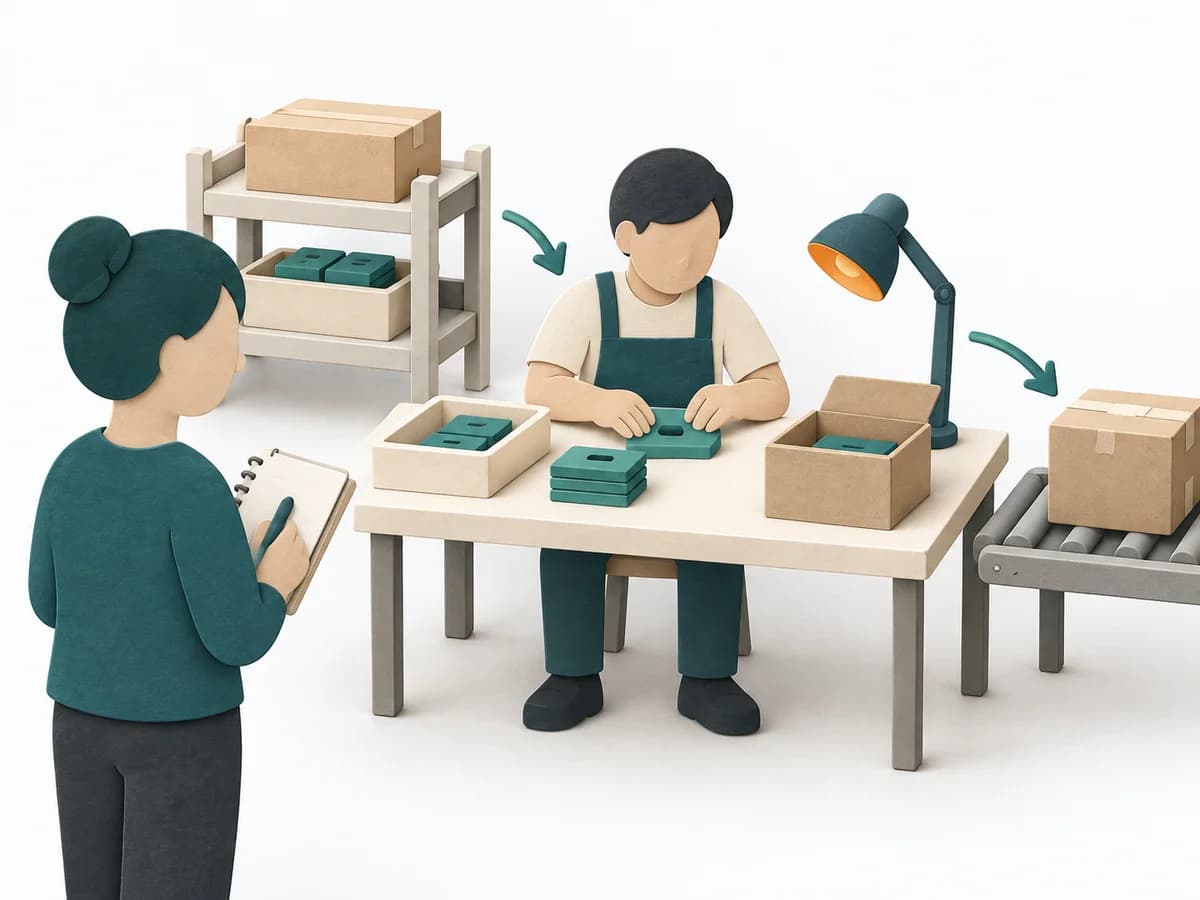 Operations Gemba Walk | 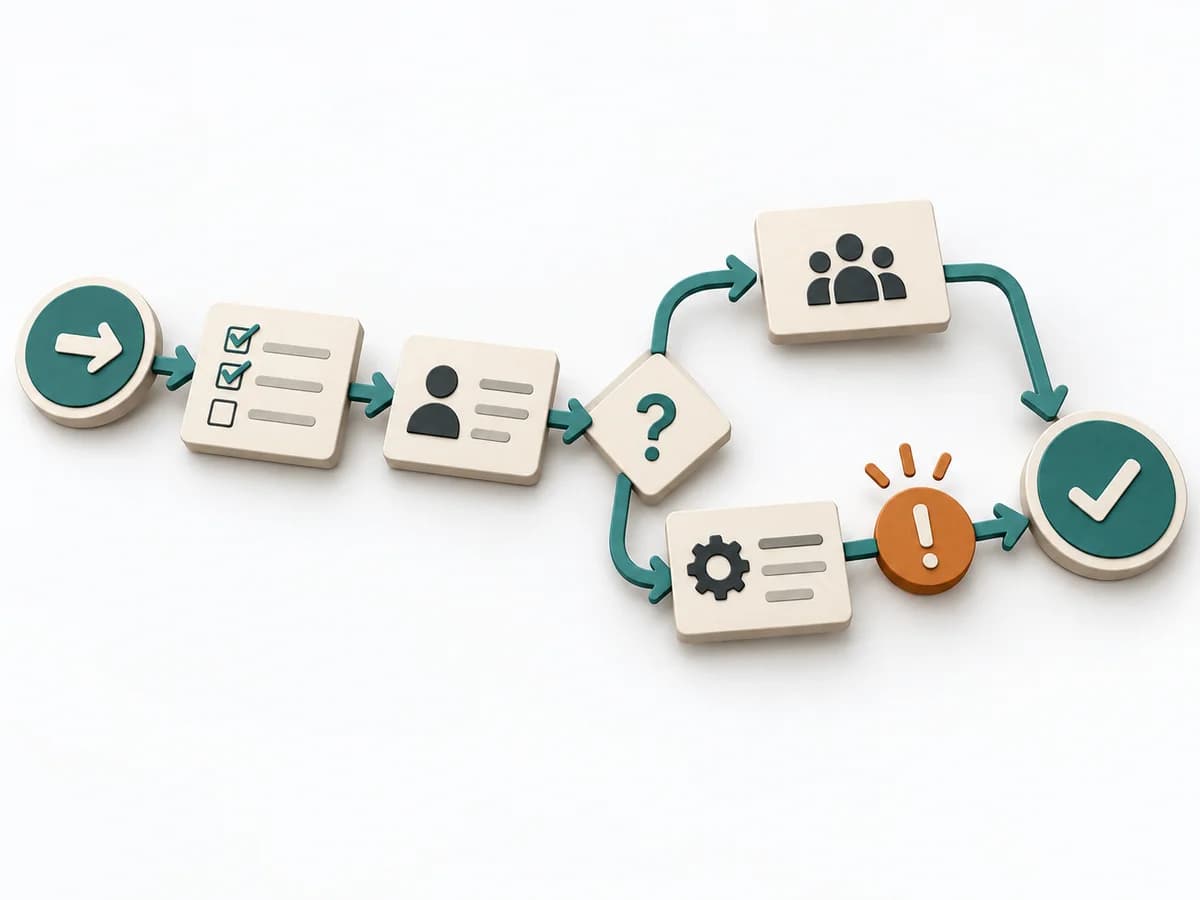 Operations Process Mapping |
|---|---|---|---|---|
Purposedifferent | When target groups stay too vague and teams talk about the same people differently, personas create a shared, solid picture of usage. Condensed profiles make needs, contexts, and differences tangible enough for decisions. | For a tightly scoped process segment with noticeable waste, the method bundles shared energy for change. It suits situations that call for fast learning loops and visible adjustments. | When there is uncertainty about the real course of a process, the method brings observation to the place where work happens. It combines perception, follow-up questions, and process knowledge so decisions rest on actual workflows instead of assumptions. | With a confusing workflow that has many handoffs, the method makes the actual process visible. It shows where work is passed on, delayed, or duplicated, so improvement targets the right spots. |
Complexitydifferent | Medium | Medium | Low | Medium |
Timedifferent | 1-3 Tage | 0.5-5 Tage | 30-120 min | 1-3 h |
Participantsdifferent | Internes Team | 4-10 | 2-6 | 3-10 |
Formatdifferent | Workshop + async | Workshop | Workshop | Workshop |
Outputdifferent | Persona Profiles, Needs Summary, Scenario Notes | Kaizen Charter, Waste List, Improvement Experiments, Standard Work Update | Observation Notes, Improvement Ideas | Process Map, Handoff List, Improvement Backlog |
Tagsno overlap | ResearchCustomerSynthesis | LeanContinuous improvementOperations | LeanObservationProcessOperations | ProcessOperationsImprovement |