View methods side by side.
Choose up to four methods. Add them using the search and share the comparison by copying its link.
| Criterion | 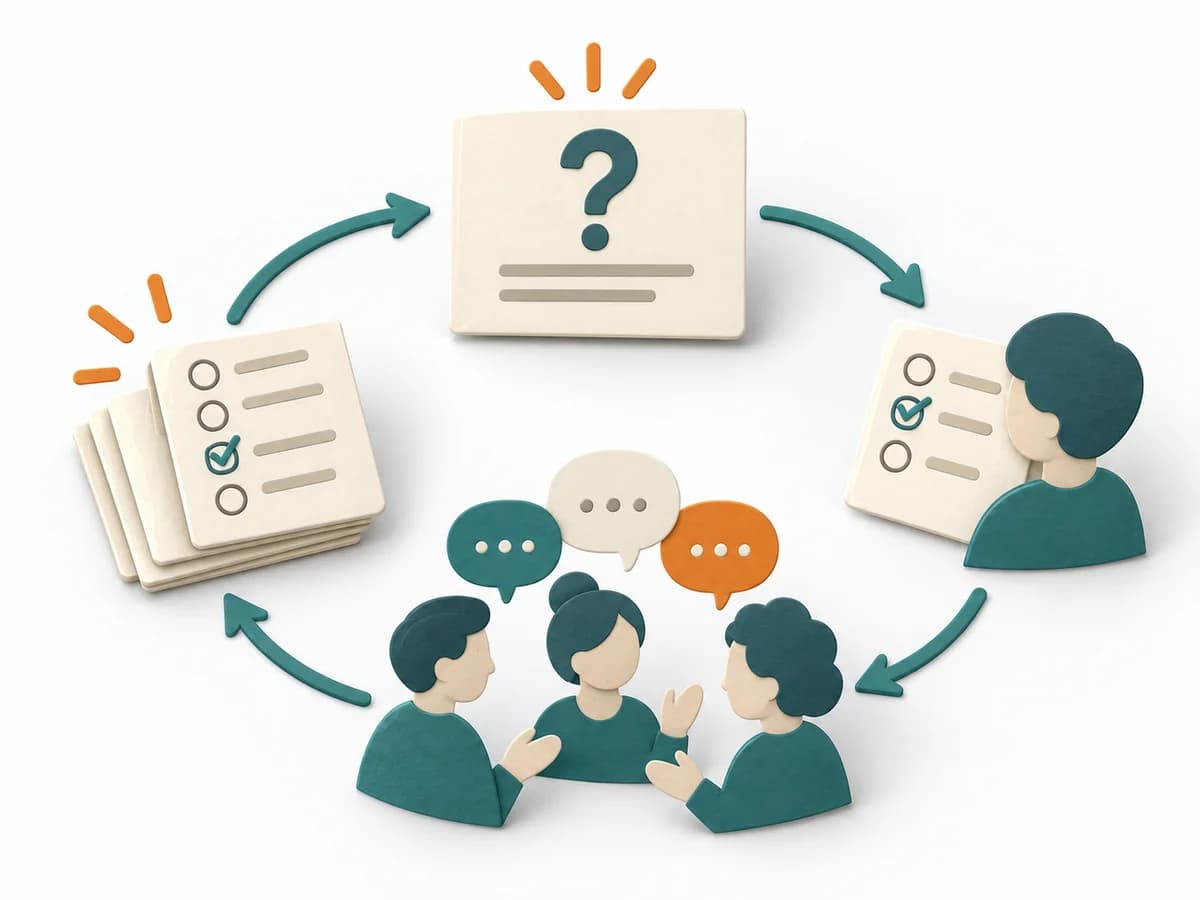 Knowledge Modeling Peer Instruction |  Knowledge Modeling Teach-back |  Knowledge Modeling Feynman Technique | 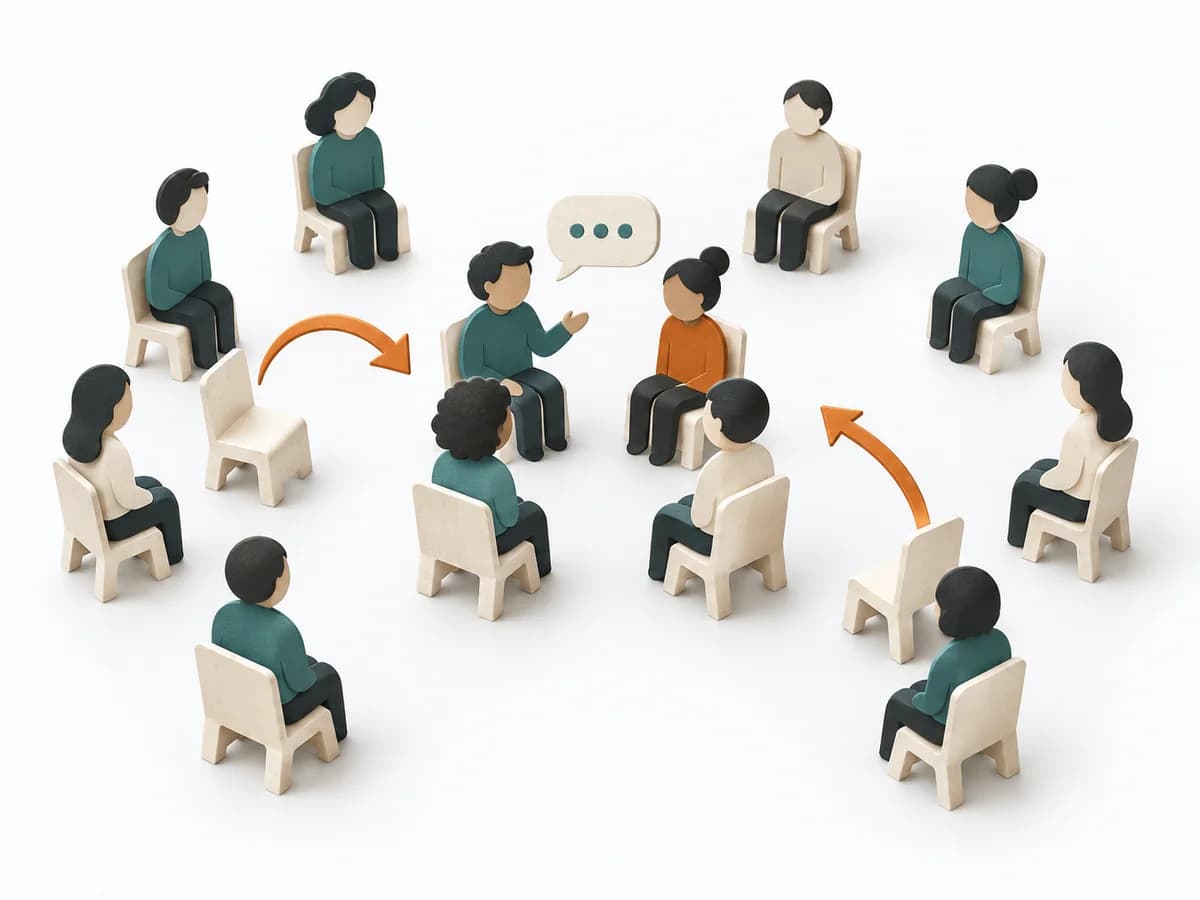 Facilitation Fishbowl Discussion |
|---|---|---|---|---|
Purposedifferent | Peer Instruction uses group thinking to clarify difficult terms or concepts faster. The method combines individual reflection with social correction and shared precision. | Teach-back checks whether an explanation actually got through to the other person. The method makes misunderstandings visible early and strengthens shared understanding in advisory and learning situations. | The Feynman Technique checks understanding by explaining a topic so that it stays easy for others to understand. It makes knowledge gaps visible before they become costly in everyday work. | When a controversial topic needs depth and discipline at the same time, Fishbowl Discussion makes the structure of the conversation transparent. The format keeps the core small enough for real dialogue and open enough for controlled turnover. |
Complexitydifferent | Medium | Low | Low | Medium |
Timedifferent | 10-20 min je Frage | 5-20 min | 20-60 min | 45-90 min |
Participantsdifferent | 6-50 | 2-8 | 1 | 8-80 |
Formatdifferent | Workshop | Workshop + async | Async | Workshop |
Outputdifferent | Concept Questions, Vote Results, Learning Notes | Understanding Check, Clarification Notes, Learning Gaps | Plain-language Explanation, Knowledge Gaps, Study Notes | Discussion Insights, Observed Tensions, Follow-up Questions |
Tagsno overlap | LearningDialogueFacilitation | LearningUnderstandingCommunication | LearningKnowledgeUnderstanding | FacilitationDialogueLarge group |