View methods side by side.
Choose up to four methods. Add them using the search and share the comparison by copying its link.
| Criterion |  Knowledge Modeling Peer Instruction | 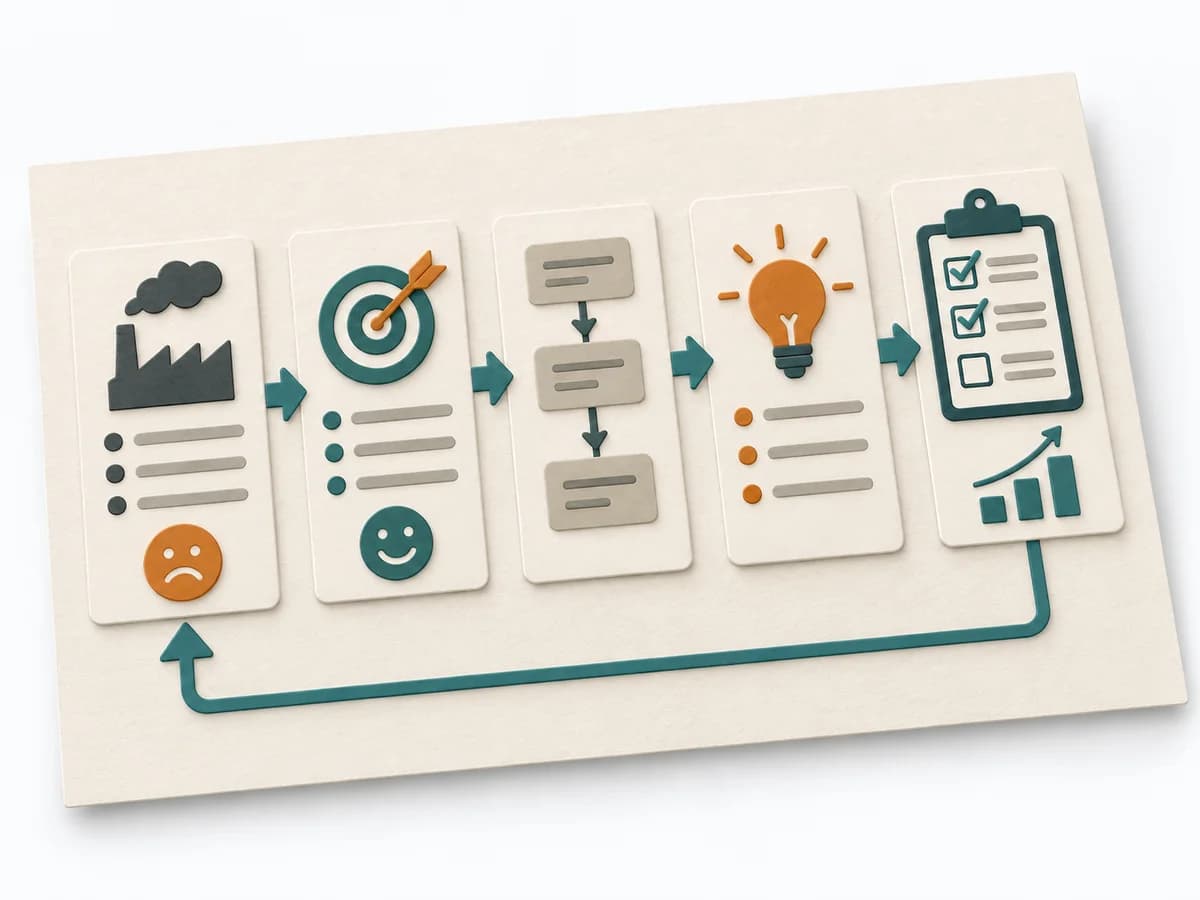 Operations A3 Problem Solving | 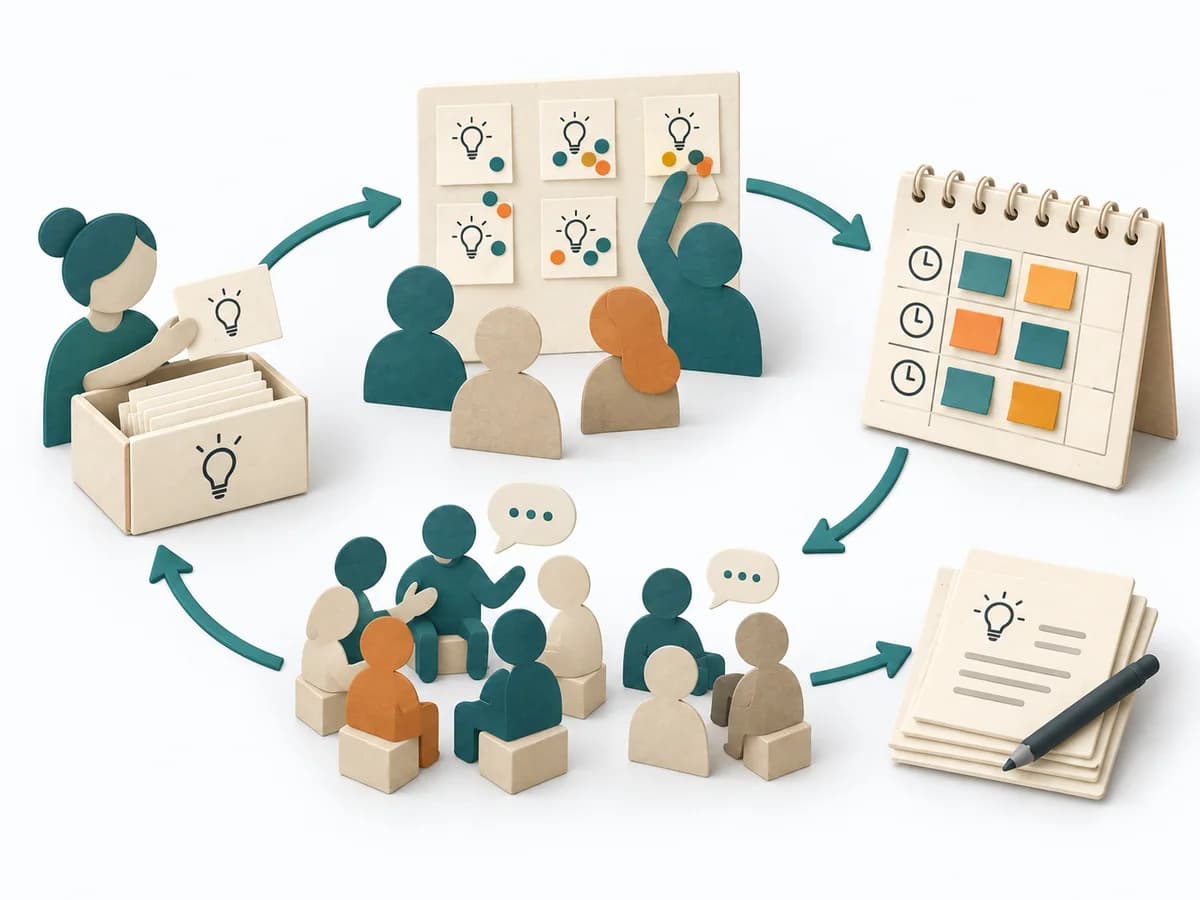 Facilitation Barcamp |  Operations 5 Whys |
|---|---|---|---|---|
Purposedifferent | Peer Instruction uses group thinking to clarify difficult terms or concepts faster. The method combines individual reflection with social correction and shared precision. | For a complex deviation with several people involved, the method bundles problem, analysis, and decision onto one page. It creates a shared working space where causes, countermeasures, and follow-up fit together. | When many people can contribute knowledge and the flow should stay open, Barcamp provides a framework for self-organized sessions. The format channels energy without defining the content too narrowly in advance. | For a single, hard-to-explain deviation, the method exposes the causal chain behind the visible symptom. It keeps the cause open until a controllable condition emerges instead of a mere description. |
Complexitydifferent | Medium | Medium | Medium | Low |
Timedifferent | 10-20 min je Frage | 45-90 min | Halber Tag bis 2 Tage | 15-30 min |
Participantsdifferent | 6-50 | 2-5 | 15-200 | 2-6 |
Formatdifferent | Workshop | Workshop + async | Workshop | Workshop |
Outputdifferent | Concept Questions, Vote Results, Learning Notes | A3 Report, Action Plan, Root Cause Analysis | Session Board, Session Notes, Community Learnings | Root cause notes, Countermeasures |
Tagsno overlap | LearningDialogueFacilitation | LeanProblem solvingCoachingOperations | FacilitationLarge groupLearning | Root causeIncidentLeanProblem solving |