View methods side by side.
Choose up to four methods. Add them using the search and share the comparison by copying its link.
| Criterion | 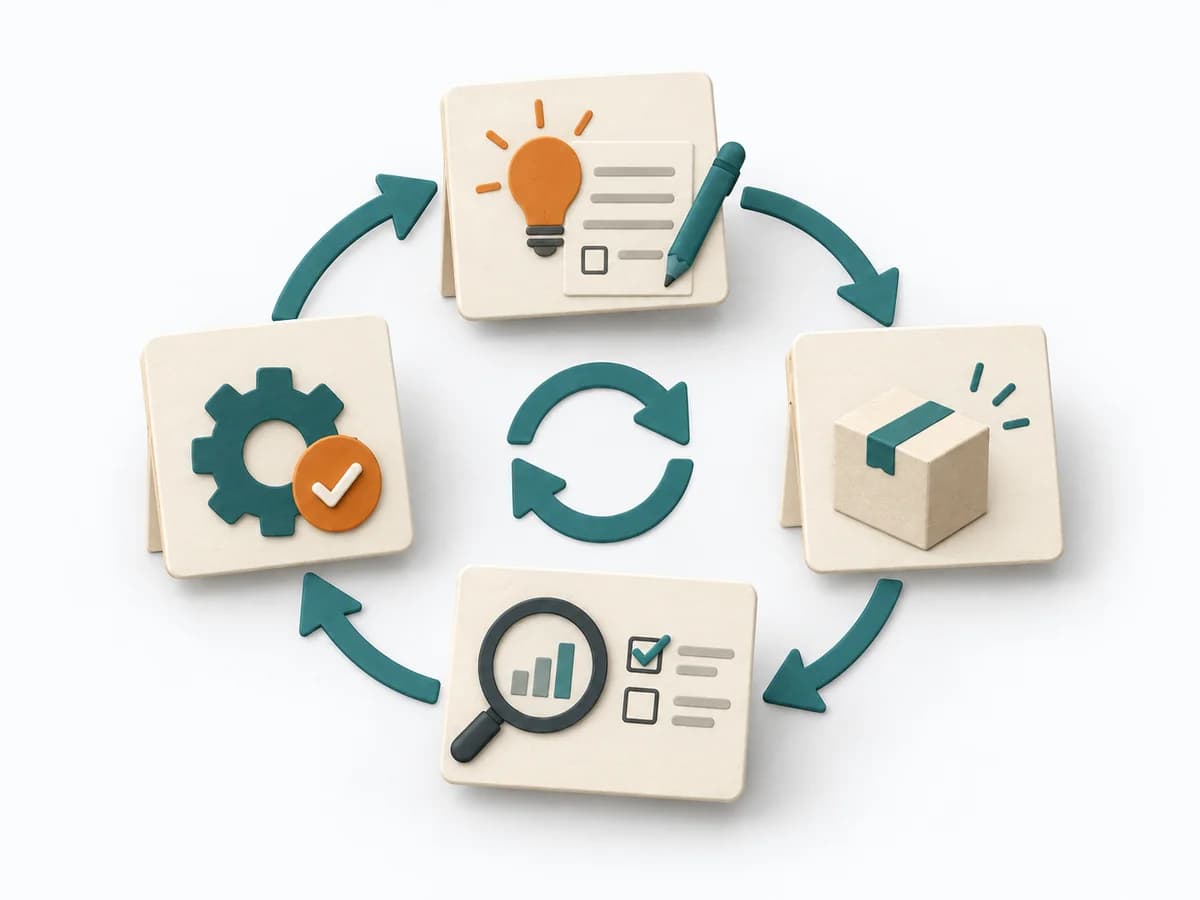 Operations PDCA Cycle |  Delivery RAID Log |  Agile ROAM Board |  Product Discovery Assumption Mapping |
|---|---|---|---|---|
Purposedifferent | For an improvement that still has to prove itself in everyday work, the method runs it through small learning loops. It connects planning, checking, and standardization into a repeatable learning mode. | Helps clarify scope, sequence, and delivery flow in concrete terms. It makes work, boundaries, and order steerable. The result is captured as a RAID Log and a source for status reporting. | When work needs to move between different states or columns, it makes that movement and its handoffs legible. It sorts work by value, risk, and delivery ability. The result is captured as a ROAM Board and an Owner List. | When assumptions still sit unordered in the room, it weighs uncertainty against leverage. It makes visible which hypotheses should be checked first. |
Complexitydifferent | Low | Low | Low | Medium |
Timedifferent | 1 h bis mehrere Wochen | 30 min Setup, dann laufend | 20-40 min initial, dann laufend | 45-60 min |
Participantsdifferent | 1-8 | 1-3 maintaining, briefing for everyone | 3-15 | 2-8 |
Formatdifferent | Workshop + async | Async | Workshop + async | Workshop + async |
Outputdifferent | PDCA Log, Experiment Plan, Learning Outcome, Standard Change | RAID Log, Status Report Source | ROAM Board, Owner List | Assumption map, Test backlog, Risk ranking |
Tagsno overlap | Continuous improvementLeanExperiments | RiskTrackingStakeholdersGovernance | RiskAgileTrackingAlignment | AssumptionsRiskExperimentsValidation |