View methods side by side.
Choose up to four methods. Add them using the search and share the comparison by copying its link.
| Criterion |  Operations PDCA Cycle |  Delivery MoSCoW | 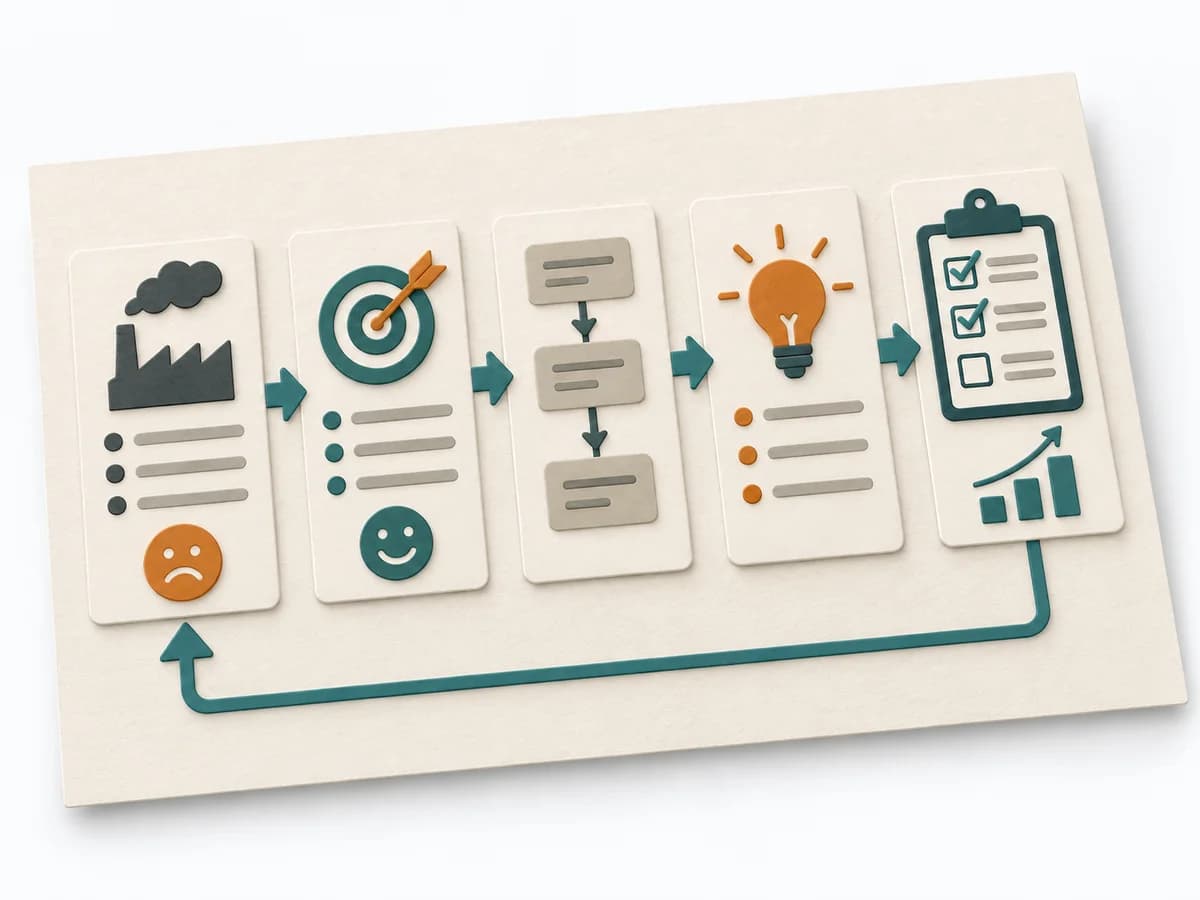 Operations A3 Problem Solving | 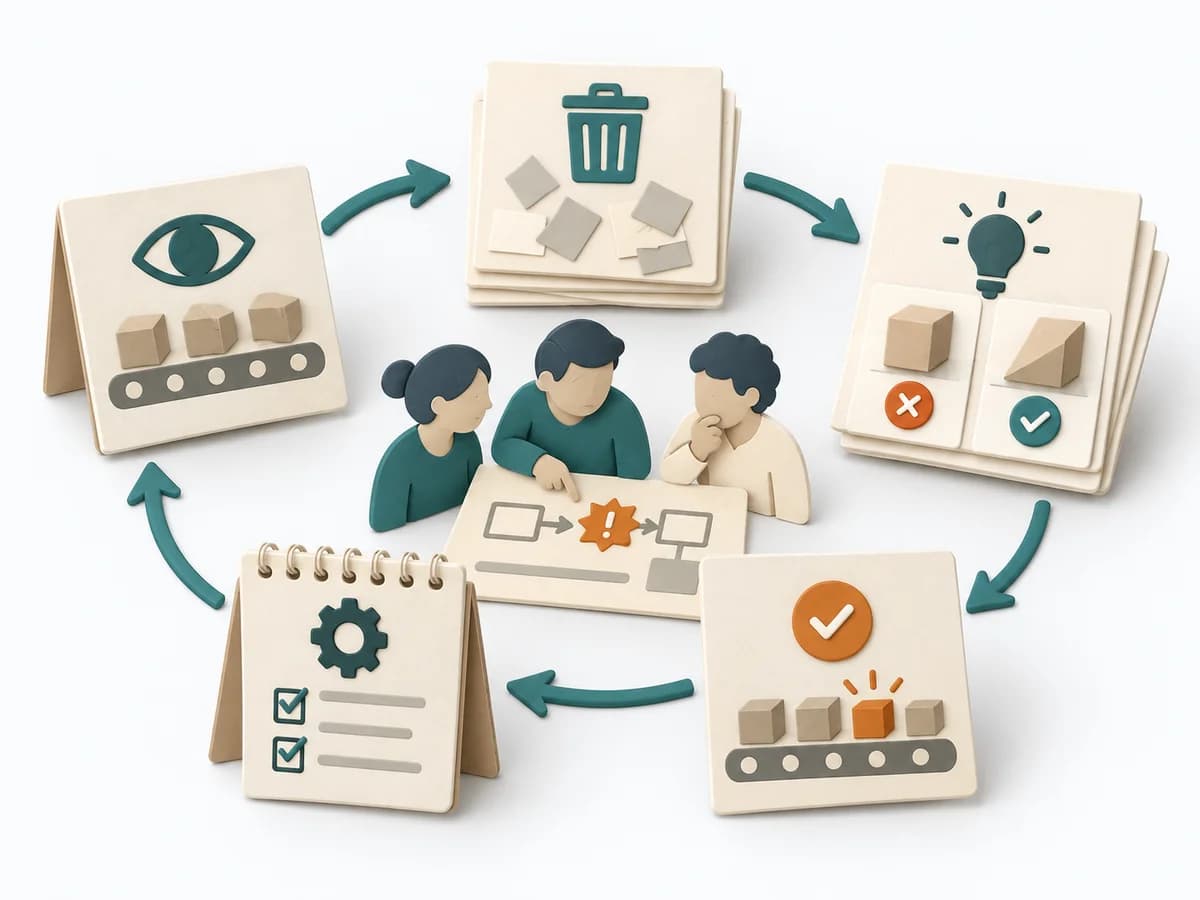 Operations Kaizen Event |
|---|---|---|---|---|
Purposedifferent | For an improvement that still has to prove itself in everyday work, the method runs it through small learning loops. It connects planning, checking, and standardization into a repeatable learning mode. | When a release carries too many demands and priorities are only ever negotiated, MoSCoW creates clear boundaries for the next cut. Must, Should, Could, and Won't make commitment, room for maneuver, and trade-off logic visible to everyone involved. | For a complex deviation with several people involved, the method bundles problem, analysis, and decision onto one page. It creates a shared working space where causes, countermeasures, and follow-up fit together. | For a tightly scoped process segment with noticeable waste, the method bundles shared energy for change. It suits situations that call for fast learning loops and visible adjustments. |
Complexitydifferent | Low | Low | Medium | Medium |
Timedifferent | 1 h bis mehrere Wochen | 30-90 min | 45-90 min | 0.5-5 Tage |
Participantsdifferent | 1-8 | 3-12 | 2-5 | 4-10 |
Formatdifferent | Workshop + async | Workshop + async | Workshop + async | Workshop |
Outputdifferent | PDCA Log, Experiment Plan, Learning Outcome, Standard Change | Prioritized Backlog, Release Scope, Tradeoff Notes | A3 Report, Action Plan, Root Cause Analysis | Kaizen Charter, Waste List, Improvement Experiments, Standard Work Update |
Tagsno overlap | Continuous improvementLeanExperiments | PrioritizationScopeDecision | LeanProblem solvingCoachingOperations | LeanContinuous improvementOperations |