View methods side by side.
Choose up to four methods. Add them using the search and share the comparison by copying its link.
| Criterion |  Operations PDCA Cycle | 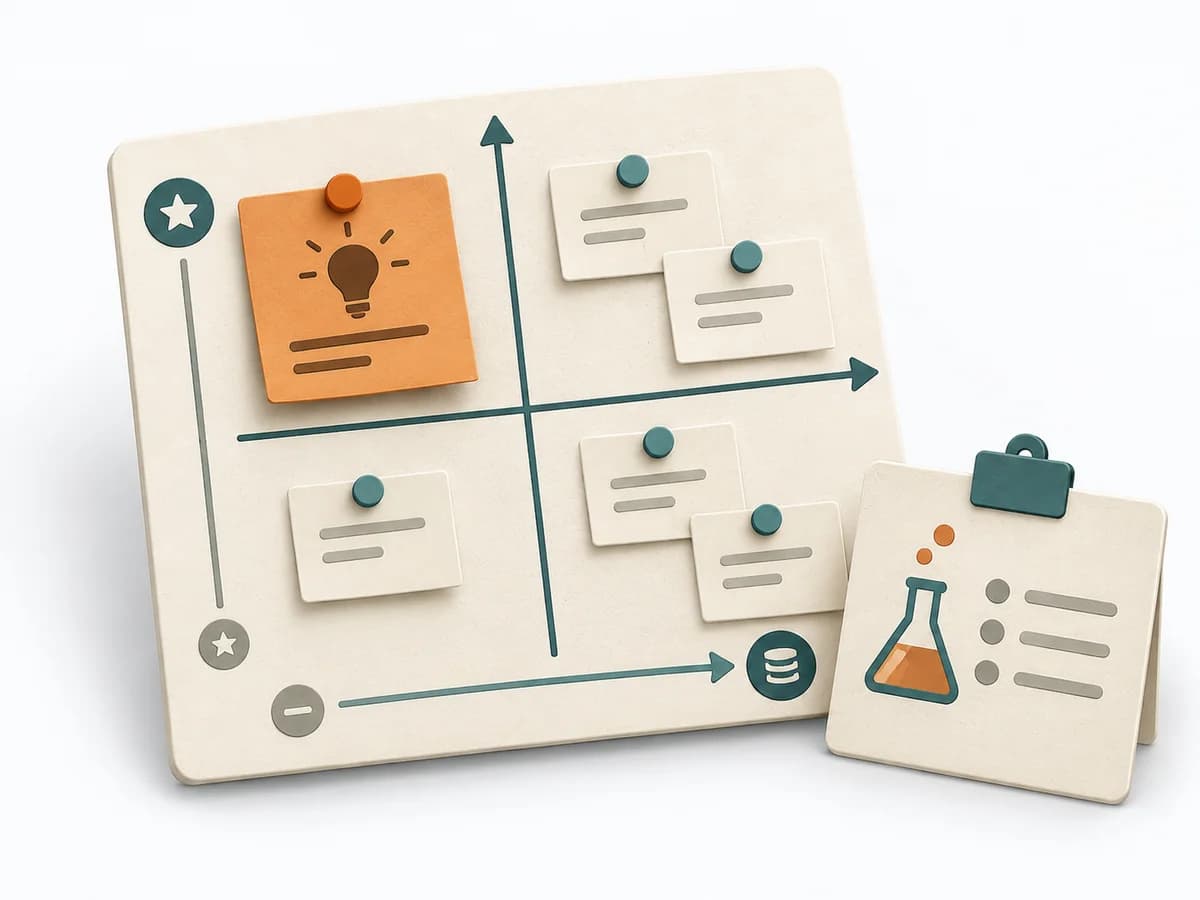 Product Discovery Assumption Mapping | 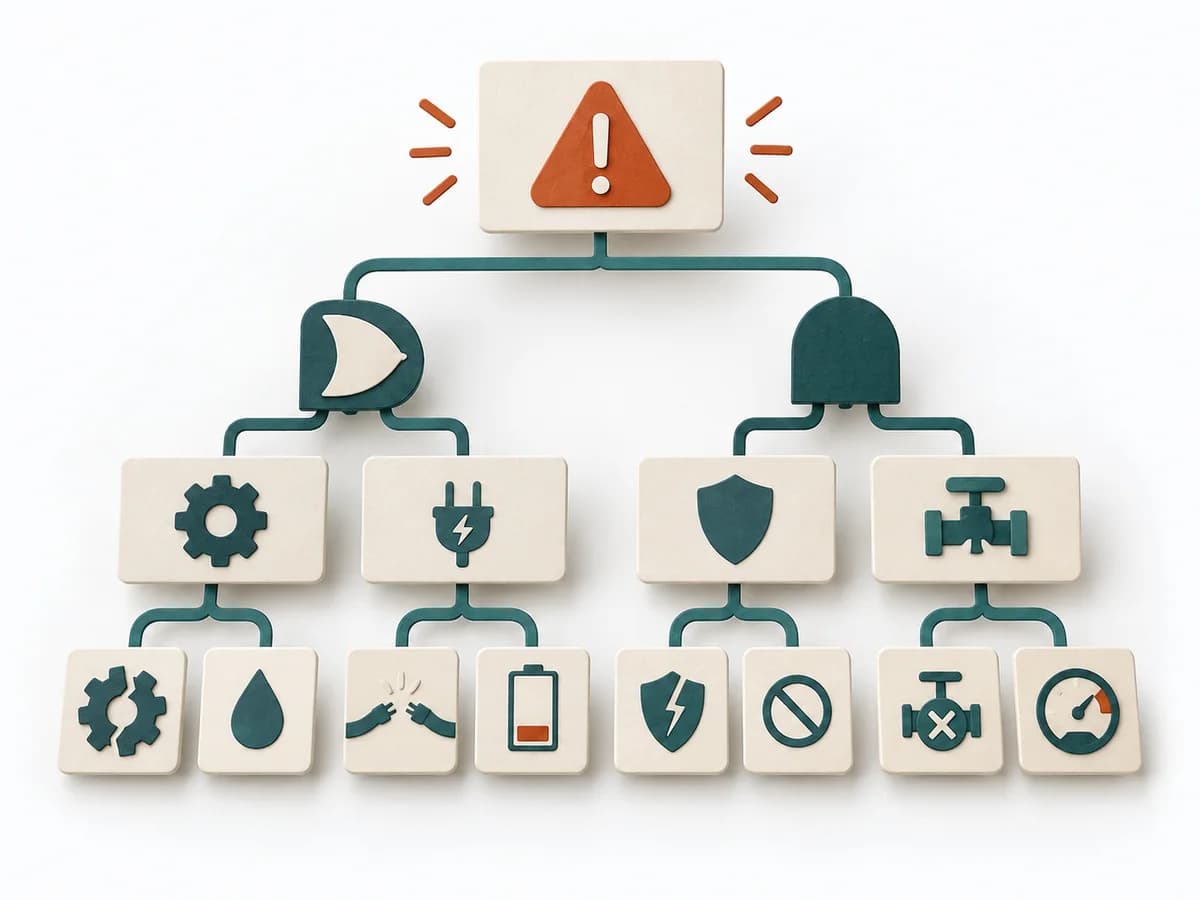 Operations Fault Tree Analysis |  Operations 5 Whys |
|---|---|---|---|---|
Purposedifferent | For an improvement that still has to prove itself in everyday work, the method runs it through small learning loops. It connects planning, checking, and standardization into a repeatable learning mode. | When assumptions still sit unordered in the room, it weighs uncertainty against leverage. It makes visible which hypotheses should be checked first. | For a critical top event with several possible triggers, the method logically models failure paths. It makes visible which combinations of conditions can lead to damage. | For a single, hard-to-explain deviation, the method exposes the causal chain behind the visible symptom. It keeps the cause open until a controllable condition emerges instead of a mere description. |
Complexitydifferent | Low | Medium | High | Low |
Timedifferent | 1 h bis mehrere Wochen | 45-60 min | 2-6 h | 15-30 min |
Participantsdifferent | 1-8 | 2-8 | 3-8 | 2-6 |
Formatdifferent | Workshop + async | Workshop + async | Workshop + async | Workshop |
Outputdifferent | PDCA Log, Experiment Plan, Learning Outcome, Standard Change | Assumption map, Test backlog, Risk ranking | Fault Tree, Critical Paths, Cause Hypotheses, Control Actions | Root cause notes, Countermeasures |
Tagsno overlap | Continuous improvementLeanExperiments | AssumptionsRiskExperimentsValidation | RiskRoot causeSafety | Root causeIncidentLeanProblem solving |