View methods side by side.
Choose up to four methods. Add them using the search and share the comparison by copying its link.
| Criterion | 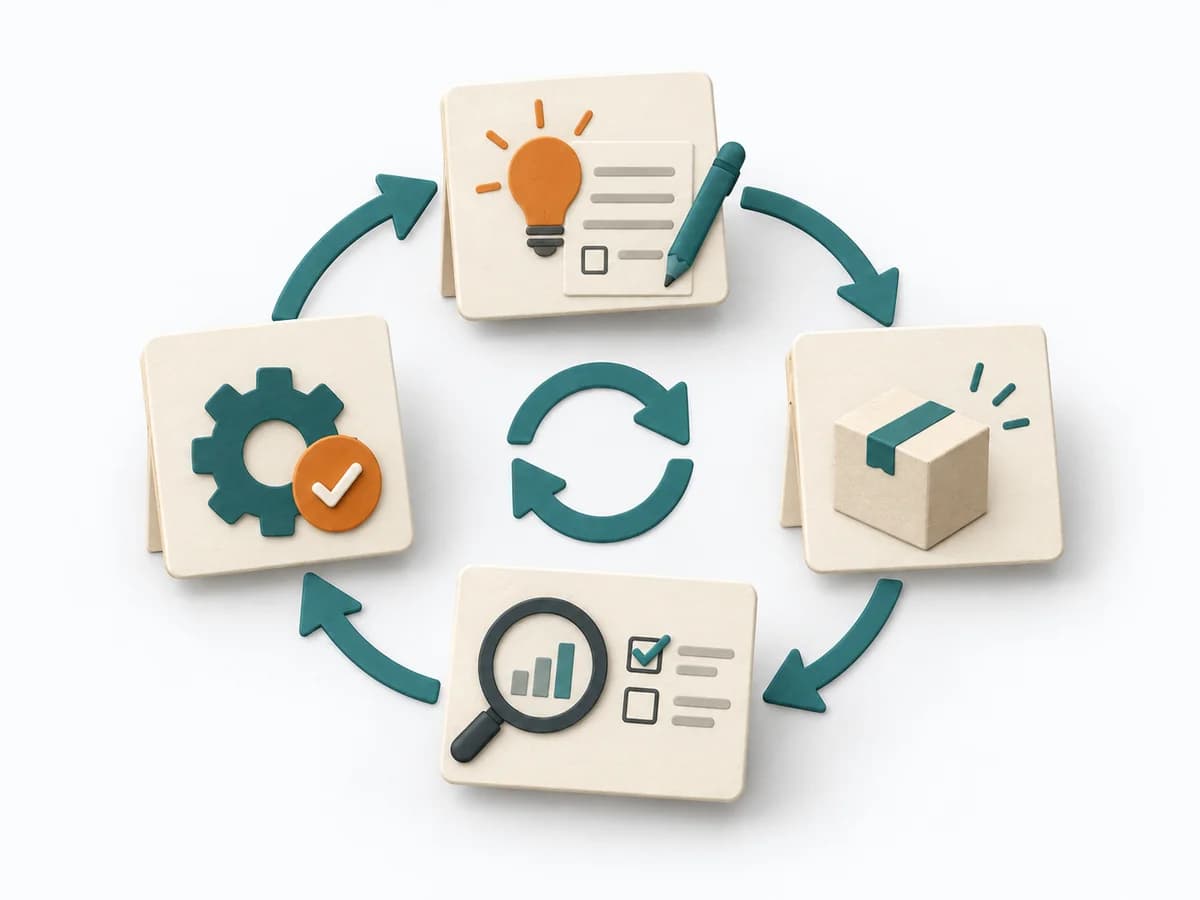 Operations PDCA Cycle |  Operations After-Action Review | 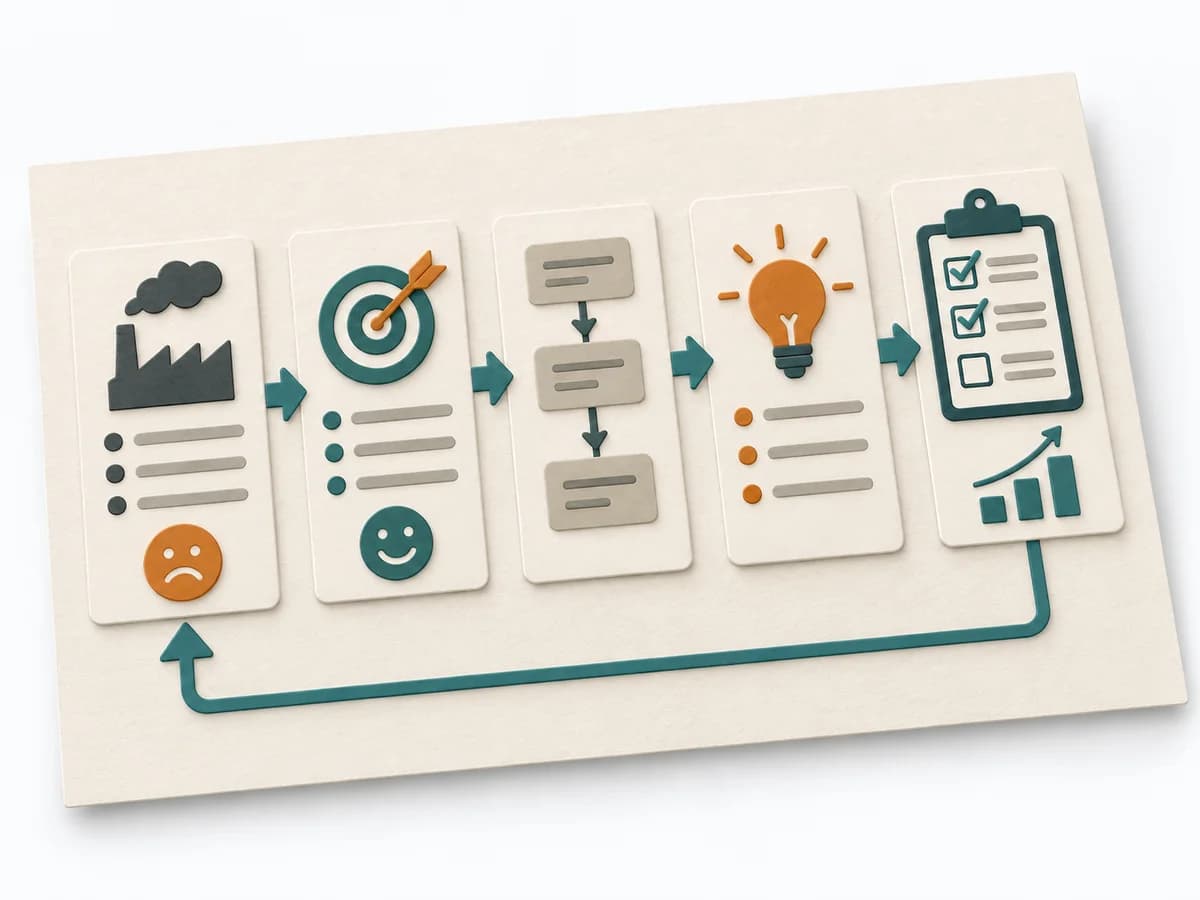 Operations A3 Problem Solving |  Operations 5 Whys |
|---|---|---|---|---|
Purposedifferent | For an improvement that still has to prove itself in everyday work, the method runs it through small learning loops. It connects planning, checking, and standardization into a repeatable learning mode. | After missions or project phases with unclear outcomes, the method makes visible what actually happened and what can be learned from it. It separates course, effect, and causes so experience turns into solid improvement. | For a complex deviation with several people involved, the method bundles problem, analysis, and decision onto one page. It creates a shared working space where causes, countermeasures, and follow-up fit together. | For a single, hard-to-explain deviation, the method exposes the causal chain behind the visible symptom. It keeps the cause open until a controllable condition emerges instead of a mere description. |
Complexitydifferent | Low | Low | Medium | Low |
Timedifferent | 1 h bis mehrere Wochen | 20-45 min | 45-90 min | 15-30 min |
Participantsdifferent | 1-8 | 3-12 | 2-5 | 2-6 |
Formatdifferent | Workshop + async | Workshop + async | Workshop + async | Workshop |
Outputdifferent | PDCA Log, Experiment Plan, Learning Outcome, Standard Change | Lessons learned, Action items, Event summary | A3 Report, Action Plan, Root Cause Analysis | Root cause notes, Countermeasures |
Tagsno overlap | Continuous improvementLeanExperiments | LearningOperationsImprovement | LeanProblem solvingCoachingOperations | Root causeIncidentLeanProblem solving |