View methods side by side.
Choose up to four methods. Add them using the search and share the comparison by copying its link.
| Criterion | 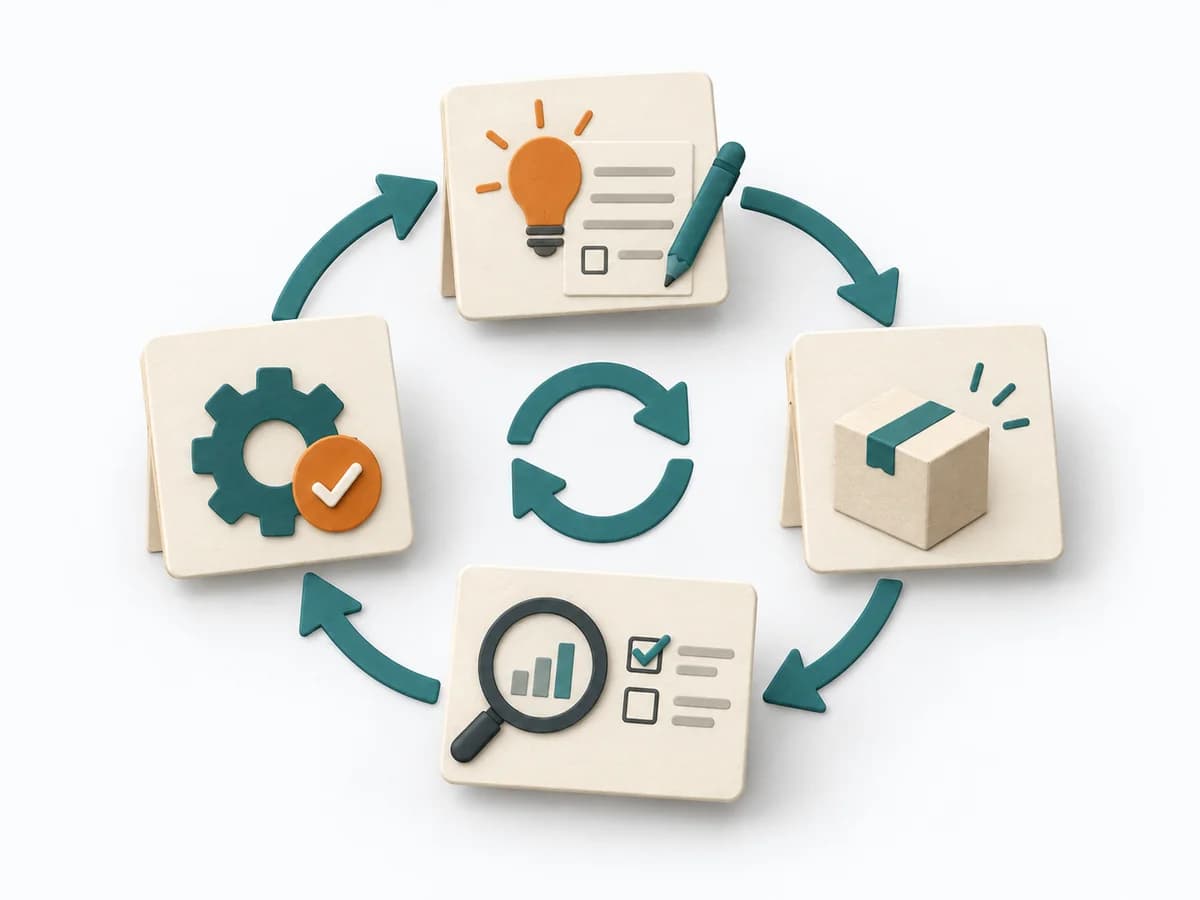 Operations PDCA Cycle |  Operations 5 Whys | 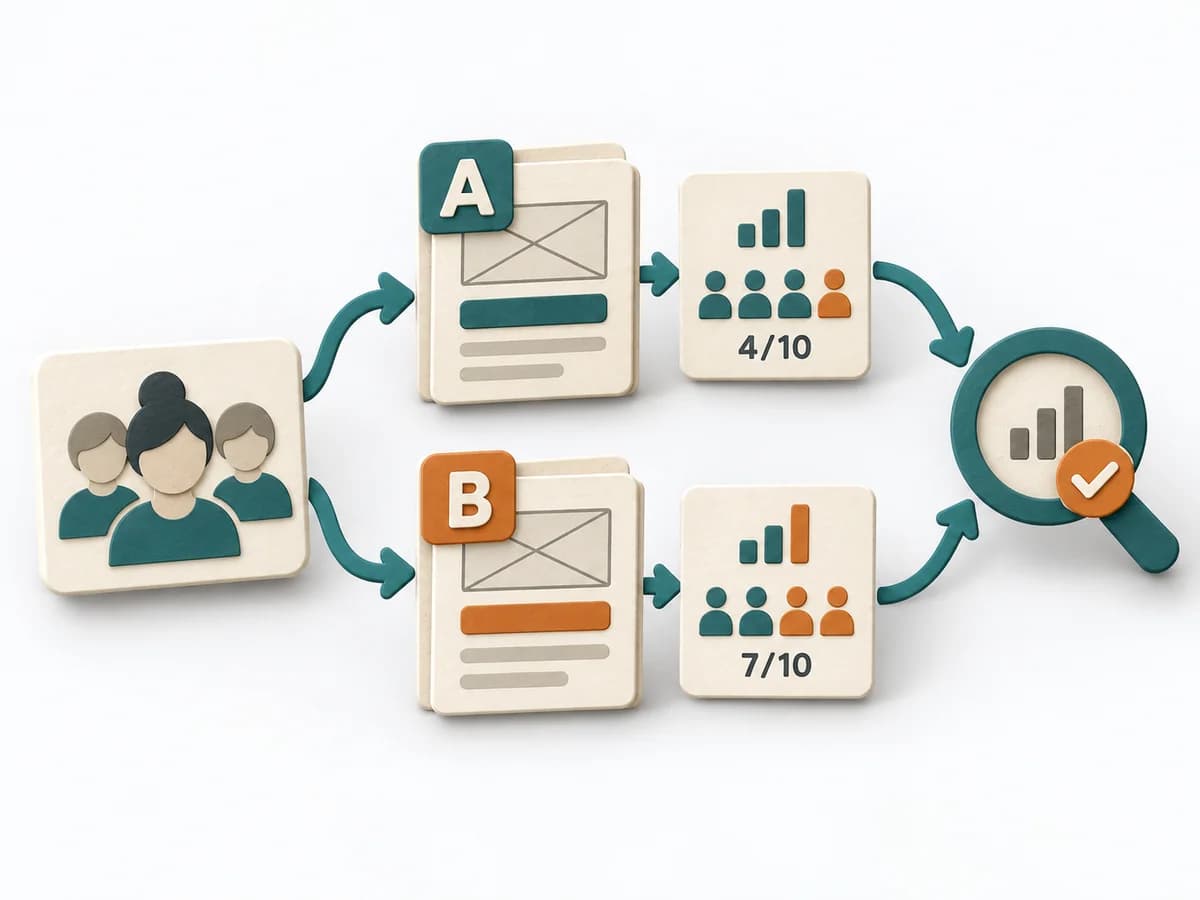 Growth A/B Testing |  Product Discovery Smoke Test |
|---|---|---|---|---|
Purposedifferent | For an improvement that still has to prove itself in everyday work, the method runs it through small learning loops. It connects planning, checking, and standardization into a repeatable learning mode. | For a single, hard-to-explain deviation, the method exposes the causal chain behind the visible symptom. It keeps the cause open until a controllable condition emerges instead of a mere description. | When two variants compete, discussions quickly decide by taste rather than effect. A/B Testing checks behavior under controlled conditions and separates real improvement from chance or expectation effects. | When demand only needs to be roughly verified, it tests interest with minimal effort. It measures whether people would take a next step at all. |
Complexitydifferent | Low | Low | High | Low |
Timedifferent | 1 h bis mehrere Wochen | 15-30 min | 1-4 Wochen | 1-5 Tage |
Participantsdifferent | 1-8 | 2-6 | 1-6 | Nutzertraffic |
Formatdifferent | Workshop + async | Workshop | Async | Async |
Outputdifferent | PDCA Log, Experiment Plan, Learning Outcome, Standard Change | Root cause notes, Countermeasures | Experiment results, Decision log, Learning summary | Interest Metrics, Conversion Signal, Learning Note |
Tagsno overlap | Continuous improvementLeanExperiments | Root causeIncidentLeanProblem solving | ExperimentsGrowthAnalyticsValidation | ValidationExperimentsDemandGrowth |