View methods side by side.
Choose up to four methods. Add them using the search and share the comparison by copying its link.
| Criterion | 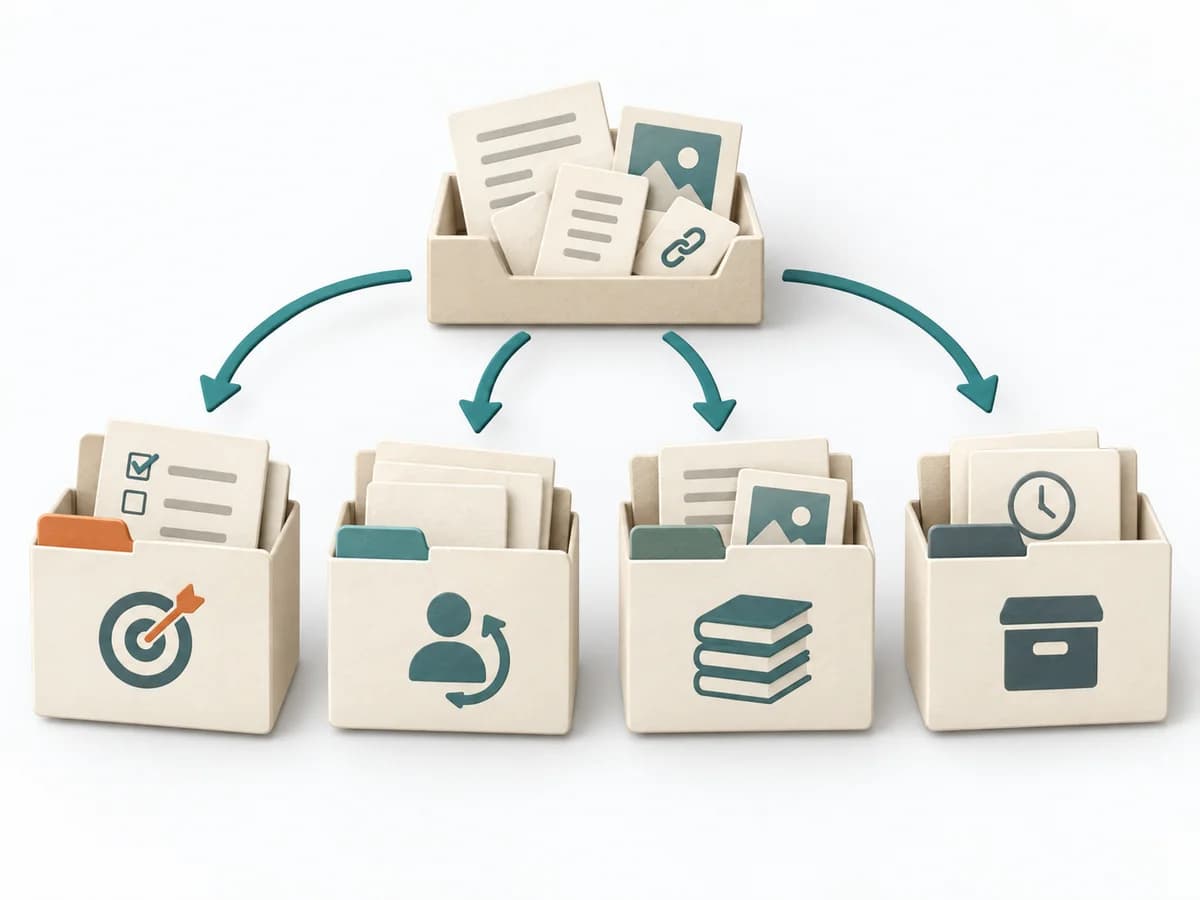 Knowledge Modeling PARA Method | 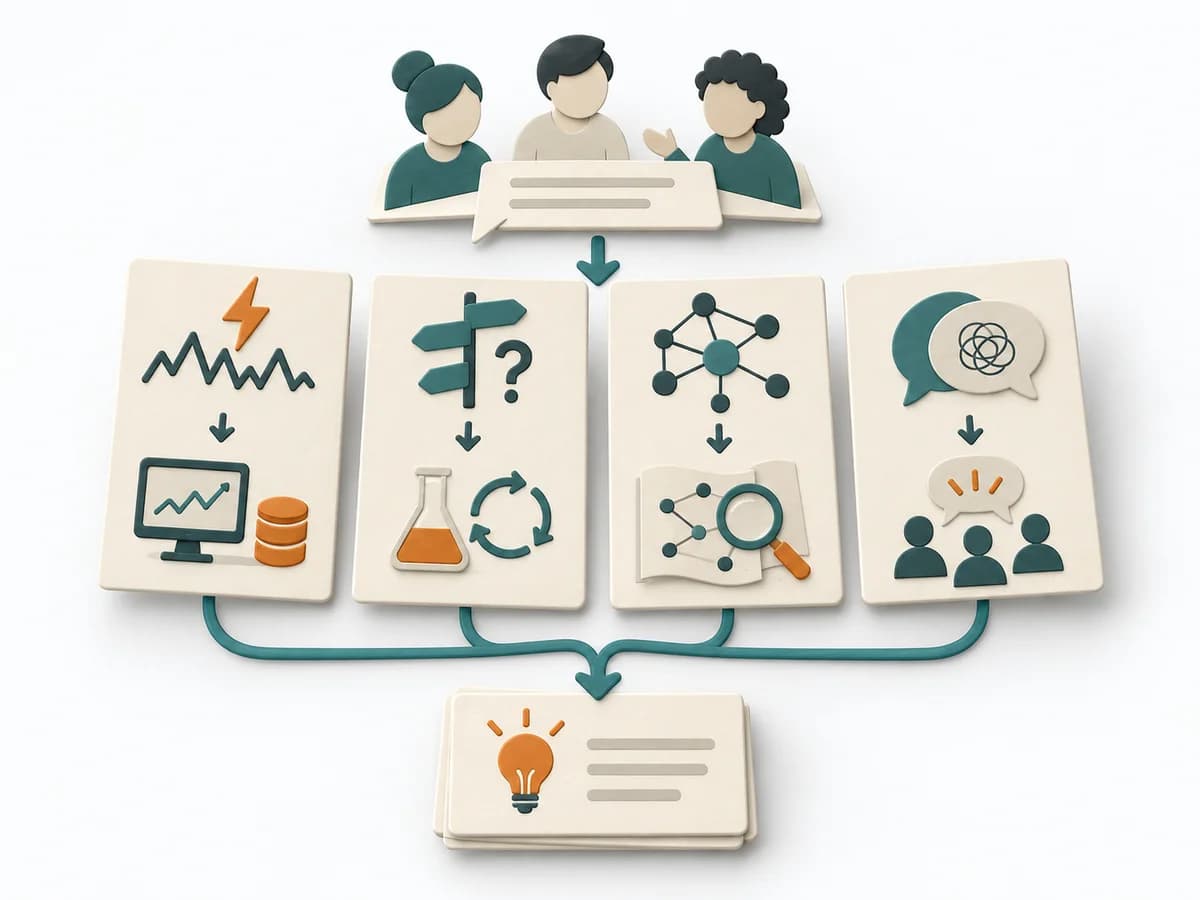 Systems Thinking VUCA Scan | 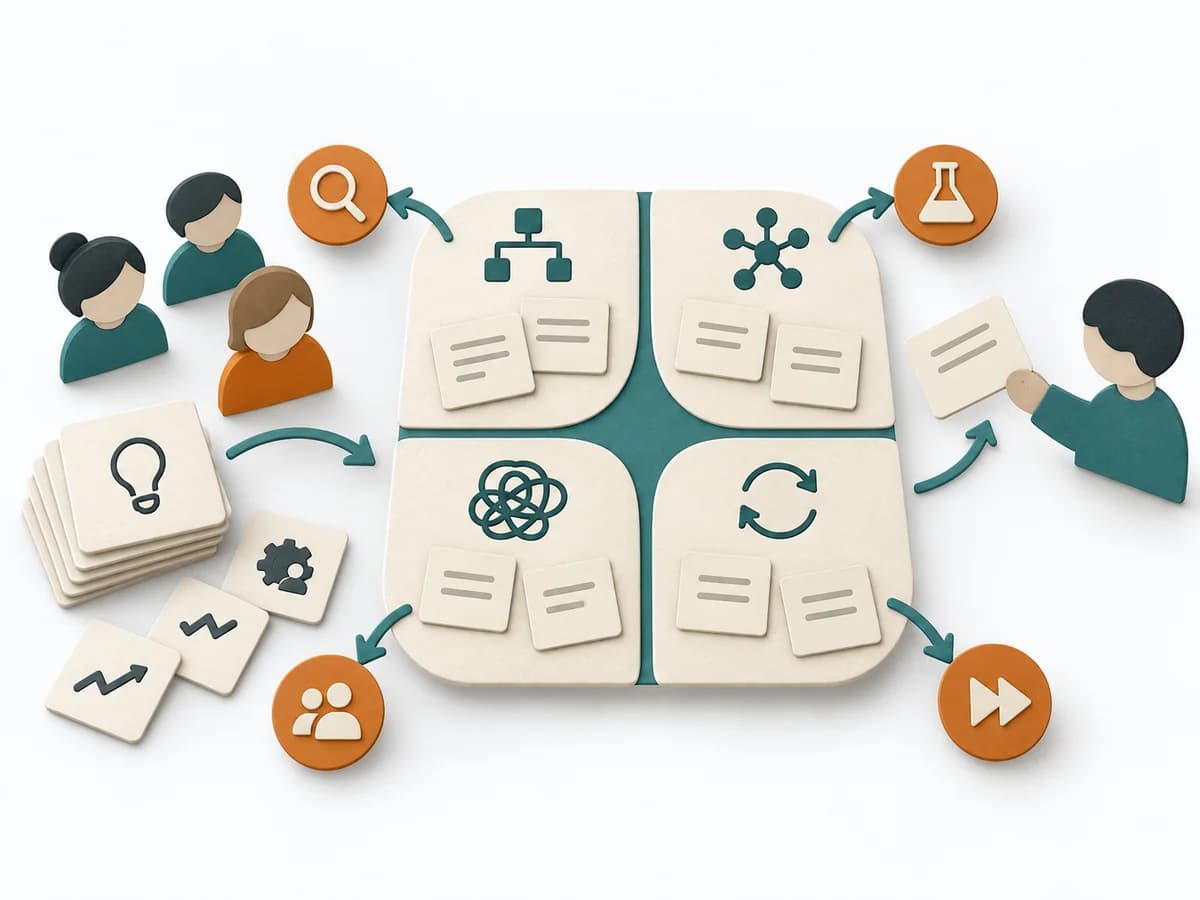 Decision Making Cynefin Workshop |  Knowledge Modeling Concept Mapping |
|---|---|---|---|---|
Purposedifferent | The PARA Method organizes knowledge into Projects, Areas, Resources, and Archives. It creates order when digital notes, files, and tasks no longer cleanly fit current work. | The VUCA Scan helps read difficult situations more precisely. Instead of treating unclarity as generally complicated, the method separates fast change, missing knowledge, systemic entanglement, and ambiguous interpretation. | When problems are unclear, chaotic, or only seemingly familiar, standard recipes fall short. A Cynefin Workshop sorts situations by the nature of their problem and connects them with matching action logic. | Concept Mapping arranges terms and relationships in a network that makes subject-matter connections tangible. It fits when a topic needs to be understood structurally rather than linearly. |
Complexitydifferent | Medium | Low | Medium | Medium |
Timedifferent | 1-3 h Setup, laufend | 30-90 min | 60-180 min | 1-2 h |
Participantsdifferent | 1 | 1-10 | 4-20 | 1-8 |
Formatdifferent | Async | Workshop + async | Workshop | Workshop + async |
Outputdifferent | PARA Structure, Project Notes, Knowledge Archive | VUCA Map, Response Options, Signal and Learning Plan | Cynefin Map, Domain-specific Actions, Sensemaking Notes | Concept Map, Relationship Labels, Knowledge Gaps |
Tagsno overlap | KnowledgeProductivityOrganization | SensemakingUncertaintyComplexityStrategyForesight | ComplexitySensemakingDecision | KnowledgeConceptsMappingSensemaking |