View methods side by side.
Choose up to four methods. Add them using the search and share the comparison by copying its link.
| Criterion |  Knowledge Modeling PARA Method |  Agile Three Amigos | 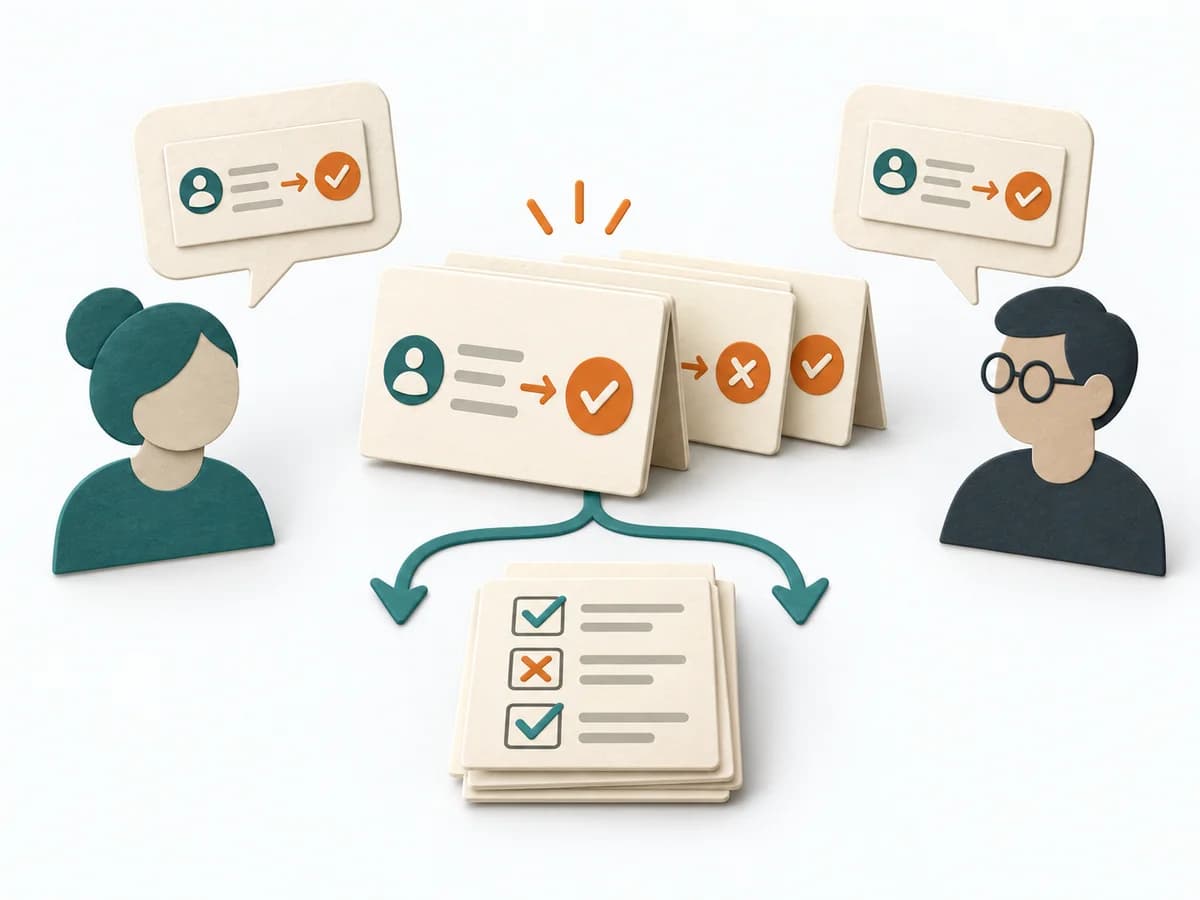 Agile Specification by Example | 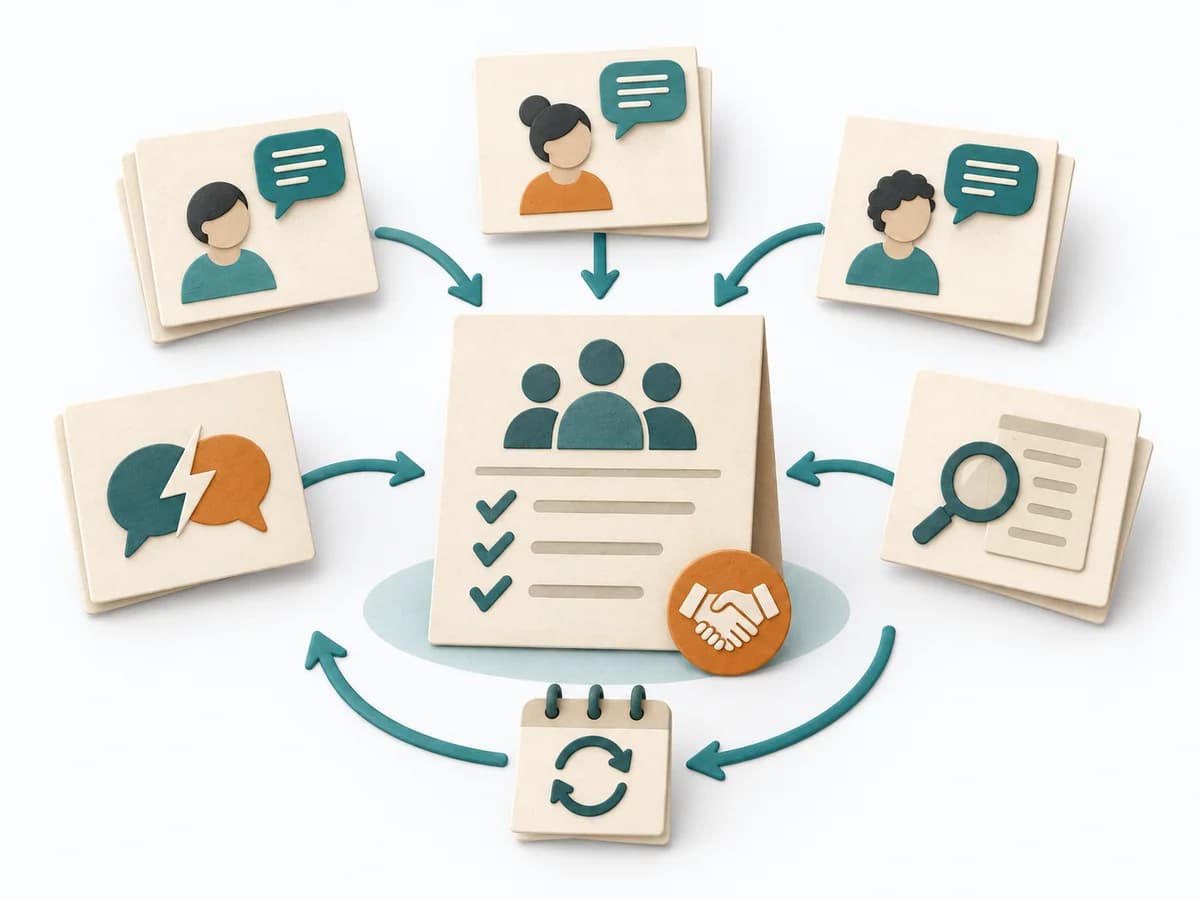 Agile Working Agreements |
|---|---|---|---|---|
Purposedifferent | The PARA Method organizes knowledge into Projects, Areas, Resources, and Archives. It creates order when digital notes, files, and tasks no longer cleanly fit current work. | When story, test, and implementation could drift apart, it brings business perspective, engineering, and quality together early. It prevents a story from being read differently only late in the process. | When business rules need to become precise, it ties language, example, and test together. It sorts work by value, risk, and delivery ability. The result is captured as an Example Table and Acceptance Tests. | When collaboration needs more than implicit expectations, it lays out shared ground rules openly. It creates reliability for conduct, availability, and decision paths. |
Complexitydifferent | Medium | Low | Medium | Low |
Timedifferent | 1-3 h Setup, laufend | 15-30 min | 60-90 min pro Feature | 45-90 min |
Participantsdifferent | 1 | 3 | 3-6 | 3-12 |
Formatdifferent | Async | Workshop + async | Workshop | Workshop |
Outputdifferent | PARA Structure, Project Notes, Knowledge Archive | Clarified Story, Test Examples, Open Questions | Example Table, Acceptance Tests | Working Agreements, Team Norms, Review Cadence |
Tagsno overlap | KnowledgeProductivityOrganization | CollaborationBehavior-Driven DevelopmentQualityRefinement | AgileRequirementsExamplesBehavior-Driven Development | TeamCollaborationAgile |