View methods side by side.
Choose up to four methods. Add them using the search and share the comparison by copying its link.
| Criterion |  Knowledge Modeling PARA Method |  Business Strategy Strategy Map | 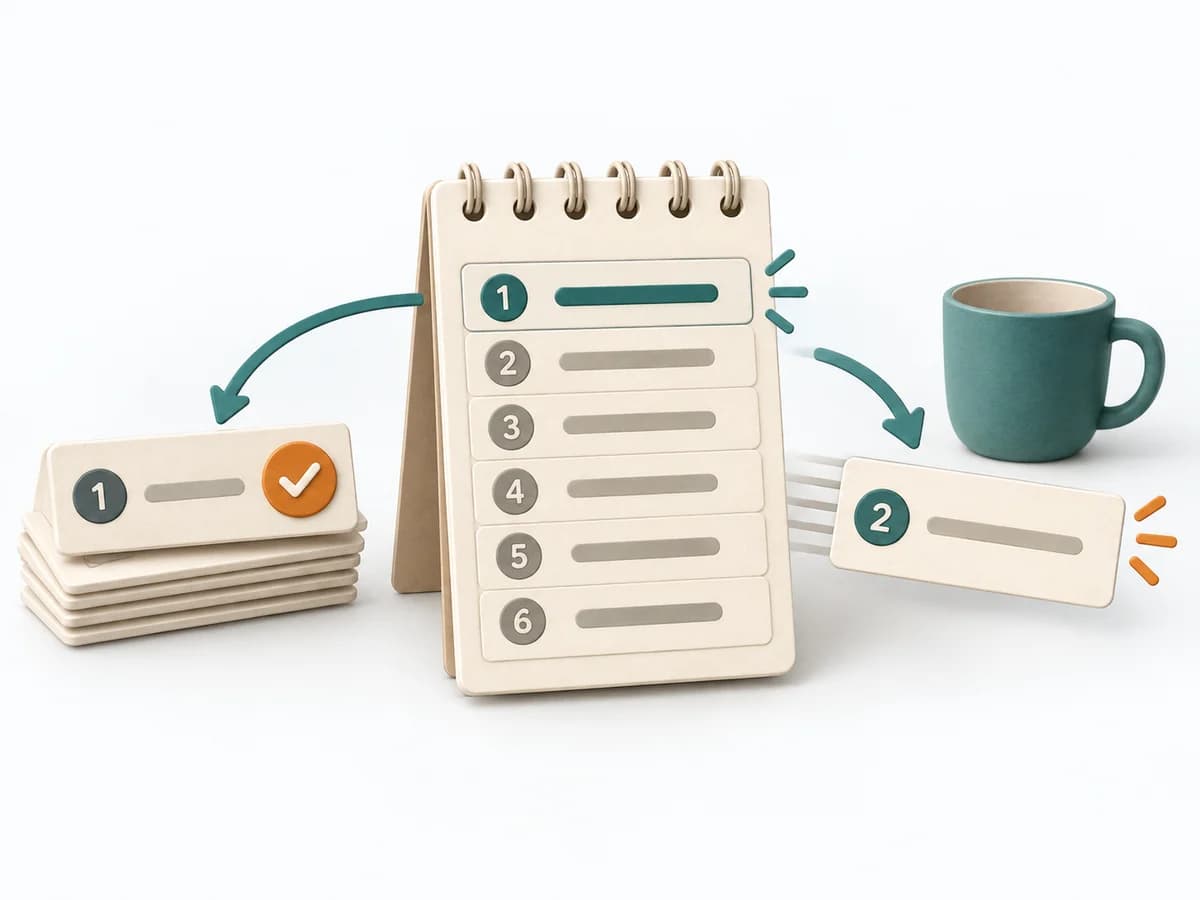 Operations Ivy Lee Method |  Product Strategy OKRs |
|---|---|---|---|---|
Purposedifferent | The PARA Method organizes knowledge into Projects, Areas, Resources, and Archives. It creates order when digital notes, files, and tasks no longer cleanly fit current work. | A Strategy Map translates strategy into a few connected objectives across perspectives such as finance, customers, processes, and learning. This makes visible which capabilities and activities are meant to drive which results. | With a restless workday full of too many open items, the method creates radical simplicity. It directs attention to a short sequence instead of a broad, still-open field. | When strategic direction needs to become measurable, it connects ambition with checkable results. It makes goals connectable to focus and review. |
Complexitydifferent | Medium | Medium | Low | Medium |
Timedifferent | 1-3 h Setup, laufend | 2-4 h workshop plus review | 5-10 min daily | 1-2 h Setup |
Participantsdifferent | 1 | 4-10 | 1 | 2-20 |
Formatdifferent | Async | Workshop | Async | Workshop + async |
Outputdifferent | PARA Structure, Project Notes, Knowledge Archive | Strategy Map, Objective Set, Cause-Effect Hypotheses | Daily Priority List, Completion Notes | OKR set, Measurement plan, Review cadence |
Tagsno overlap | KnowledgeProductivityOrganization | AlignmentExecutionGoalsCausality | PrioritizationProductivityExecution | GoalsAlignmentOutcomesMeasurement |