View methods side by side.
Choose up to four methods. Add them using the search and share the comparison by copying its link.
| Criterion |  Knowledge Modeling PARA Method | 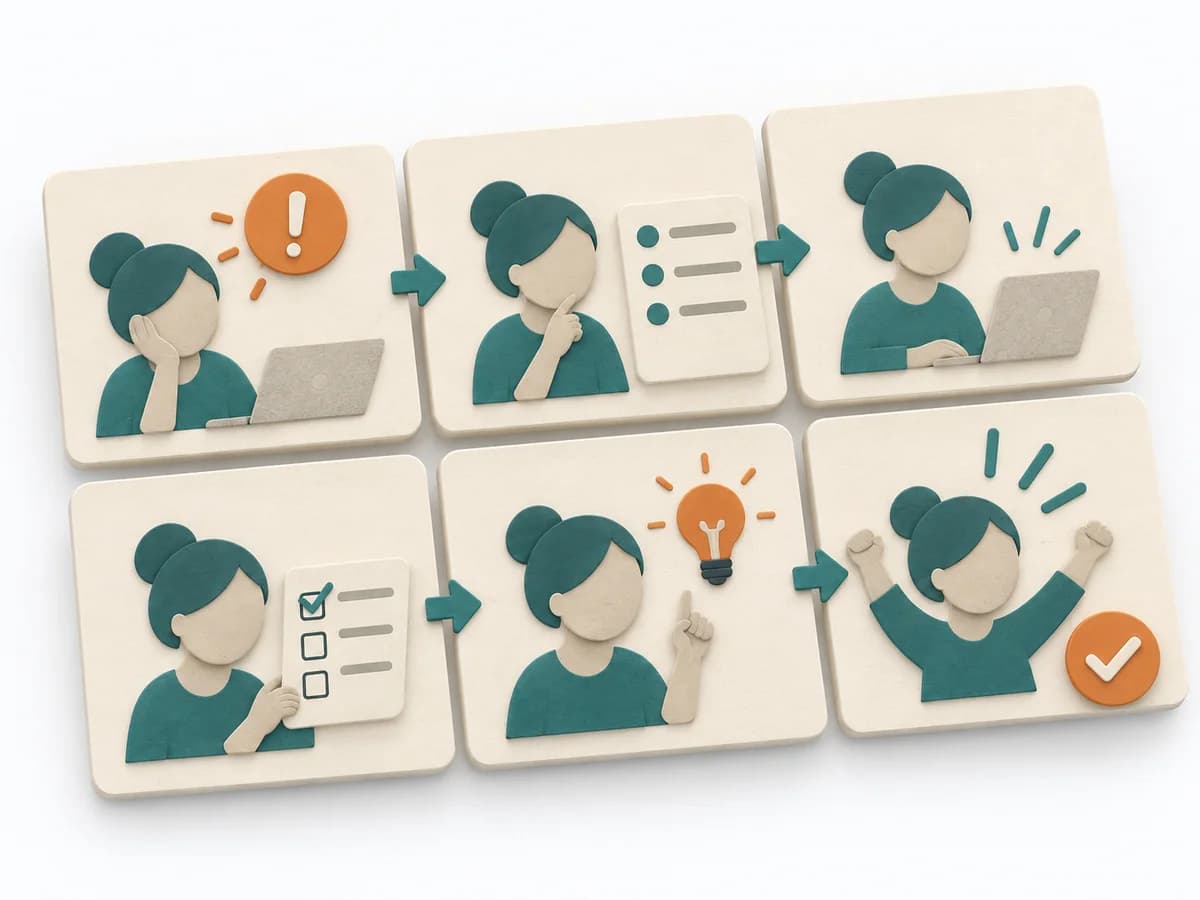 UX Design Storyboarding | 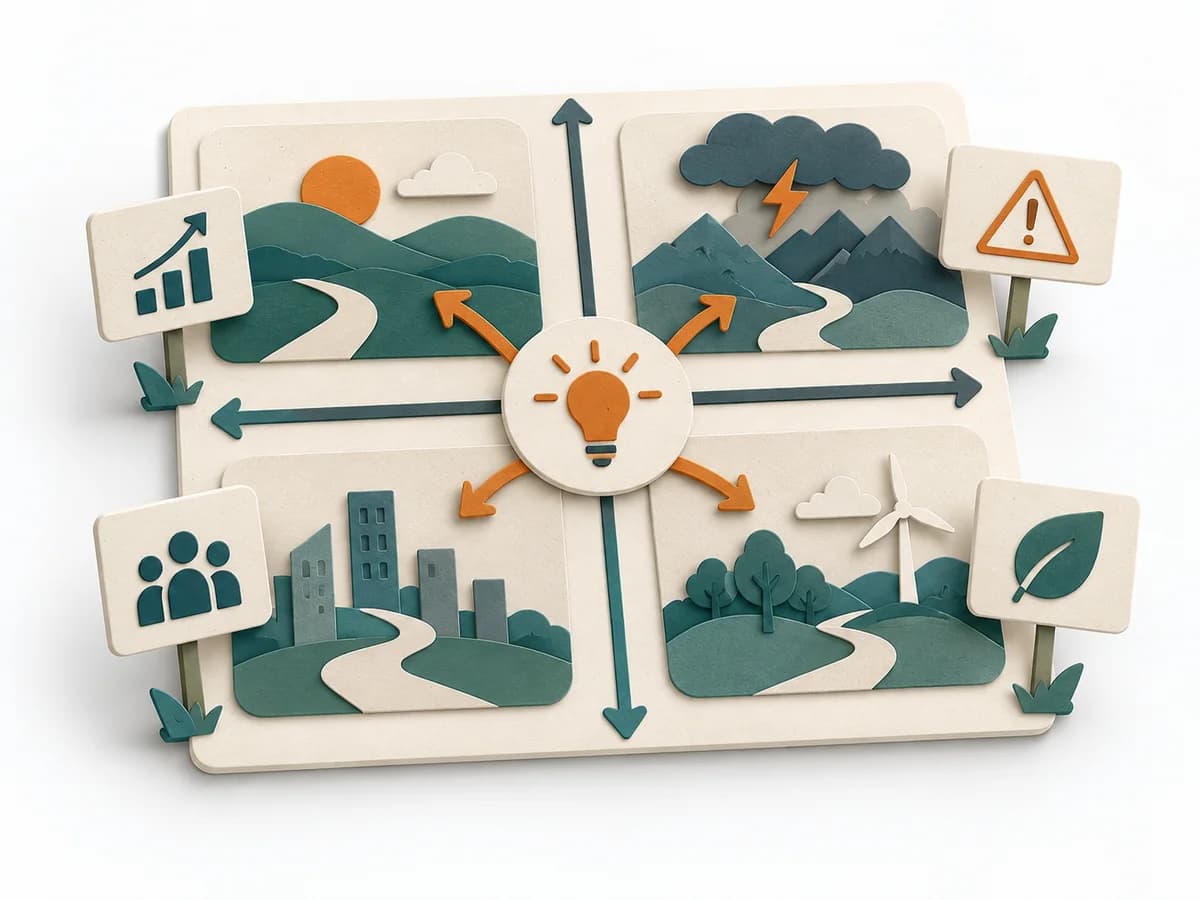 Business Strategy Scenario Planning | 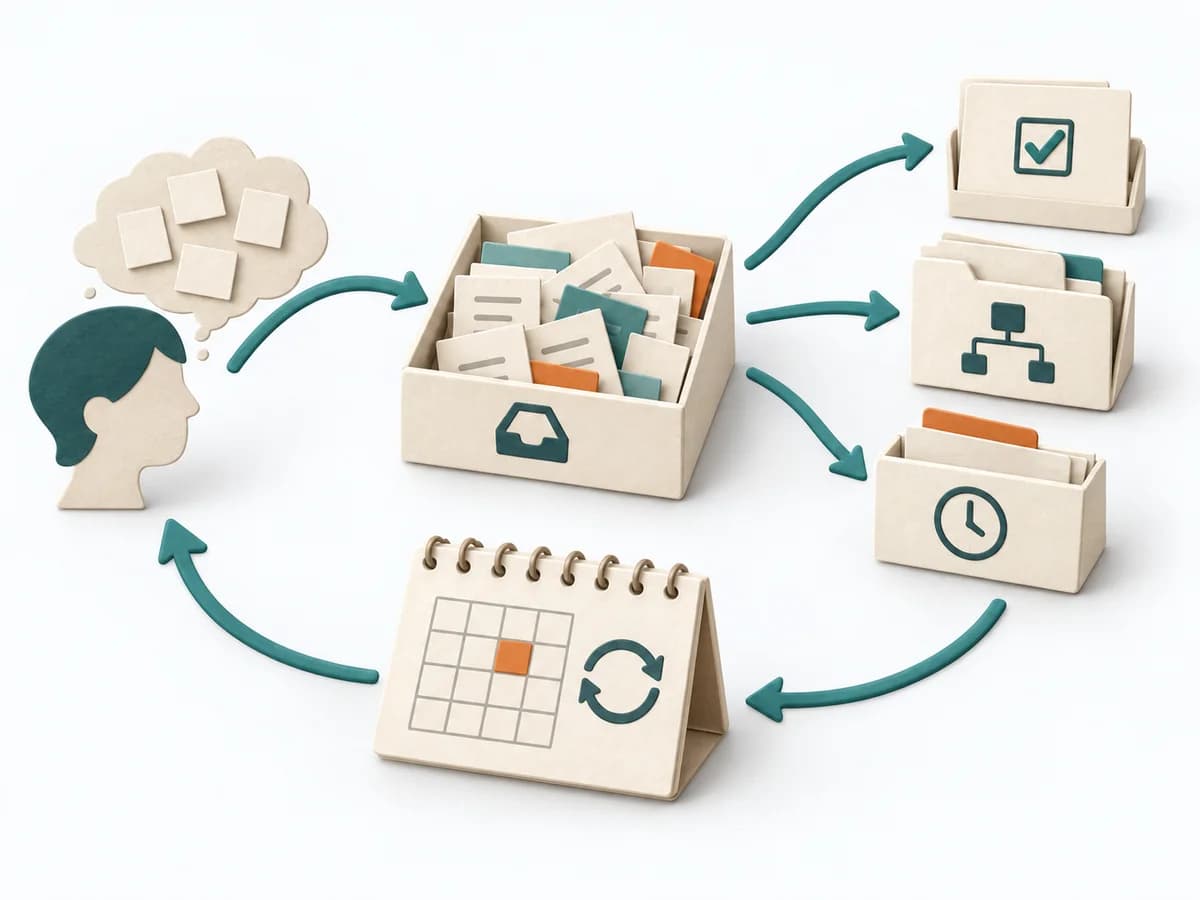 Operations Getting Things Done |
|---|---|---|---|---|
Purposedifferent | The PARA Method organizes knowledge into Projects, Areas, Resources, and Archives. It creates order when digital notes, files, and tasks no longer cleanly fit current work. | When a usage scenario needs to become understandable early, it condenses situations, context, and flow into a legible sequence. It helps check concept ideas before anything gets built. | Scenario Planning opens the view to several plausible futures instead of a single forecast. The method protects strategies from depending on too narrow an expected path. | With many open commitments and ideas in daily life, a reliable external storage system emerges. The method relieves the mind so priority and context don't have to compete in memory. |
Complexitydifferent | Medium | Medium | High | Medium |
Timedifferent | 1-3 h Setup, laufend | 30-90 min | 0.5-2 Tage | 1-2 h Setup, laufend |
Participantsdifferent | 1 | 1-8 | 4-12 | 1 |
Formatdifferent | Async | Workshop + async | Workshop | Async |
Outputdifferent | PARA Structure, Project Notes, Knowledge Archive | Storyboard, Concept Narrative, Testable Assumptions | Scenario Set, Strategic Implications, Robust Options | Action Lists, Project List, Review Routine |
Tagsno overlap | KnowledgeProductivityOrganization | VisualizationConceptsSequencePrototype | StrategyUncertaintyPlanning | ProductivityPlanningTasksExecution |