View methods side by side.
Choose up to four methods. Add them using the search and share the comparison by copying its link.
| Criterion |  Knowledge Modeling PARA Method | 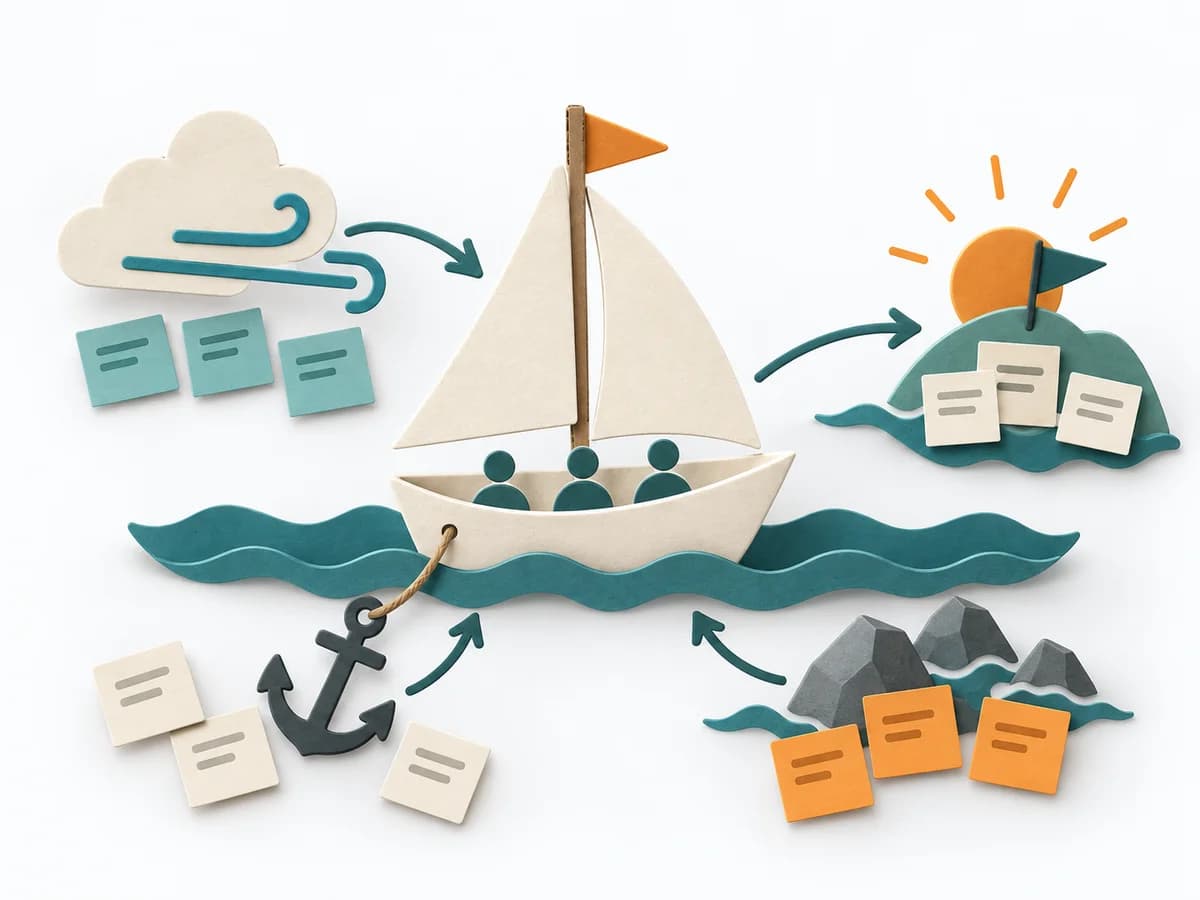 Agile Sailboat Retrospective |  DevOps Blameless Postmortem | 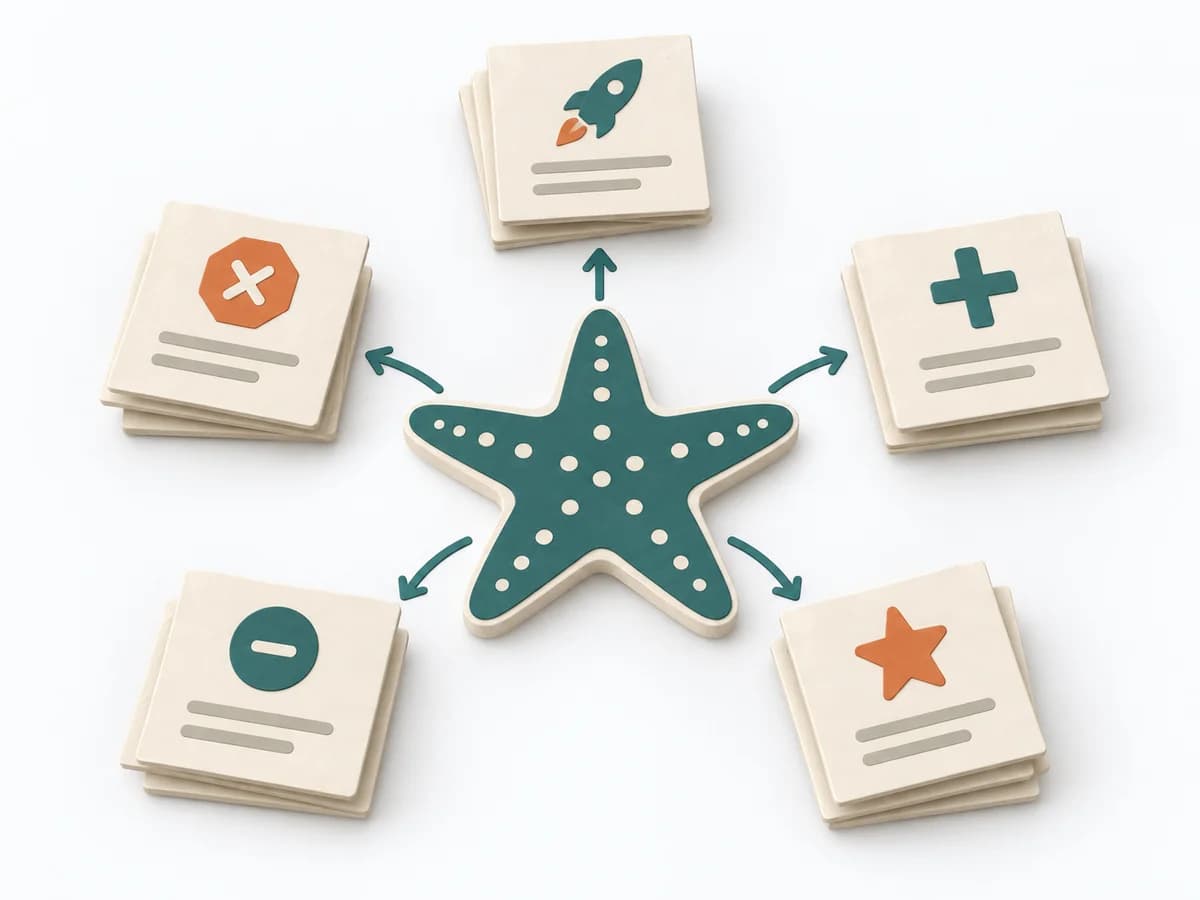 Agile Starfish Retrospective |
|---|---|---|---|---|
Purposedifferent | The PARA Method organizes knowledge into Projects, Areas, Resources, and Archives. It creates order when digital notes, files, and tasks no longer cleanly fit current work. | When a team wants to read momentum, brakes, and risks together, it offers an easily understandable picture of the situation. It makes drive, obstacles, and headwind visible in the same picture. | After an incident with damage or a near miss, the method creates a sober field for learning without assigning blame. It directs attention to the course of events, conditions, and effective countermeasures. | When improvement options need to be sorted more finely than just start and stop, it brings observations into clear kinds of action. This makes visible what should be done more, less, newly, or continued. |
Complexitydifferent | Medium | Low | Medium | Low |
Timedifferent | 1-3 h Setup, laufend | 45-90 min | 30-90 min | 45-90 min |
Participantsdifferent | 1 | 4-12 | 3-12 | 4-12 |
Formatdifferent | Async | Workshop | Workshop + async | Workshop |
Outputdifferent | PARA Structure, Project Notes, Knowledge Archive | Sailboat Board, Risks, Improvement Actions | Postmortem Doc, Action Items, Timeline | Starfish Board, Practice Changes, Experiments |
Tagsno overlap | KnowledgeProductivityOrganization | RetrospectiveTeamImprovement | Site Reliability EngineeringIncidentLearningReliability | RetrospectiveImprovementExperimentsTeam |