View methods side by side.
Choose up to four methods. Add them using the search and share the comparison by copying its link.
| Criterion |  Knowledge Modeling PARA Method |  Agile ROAM Board | 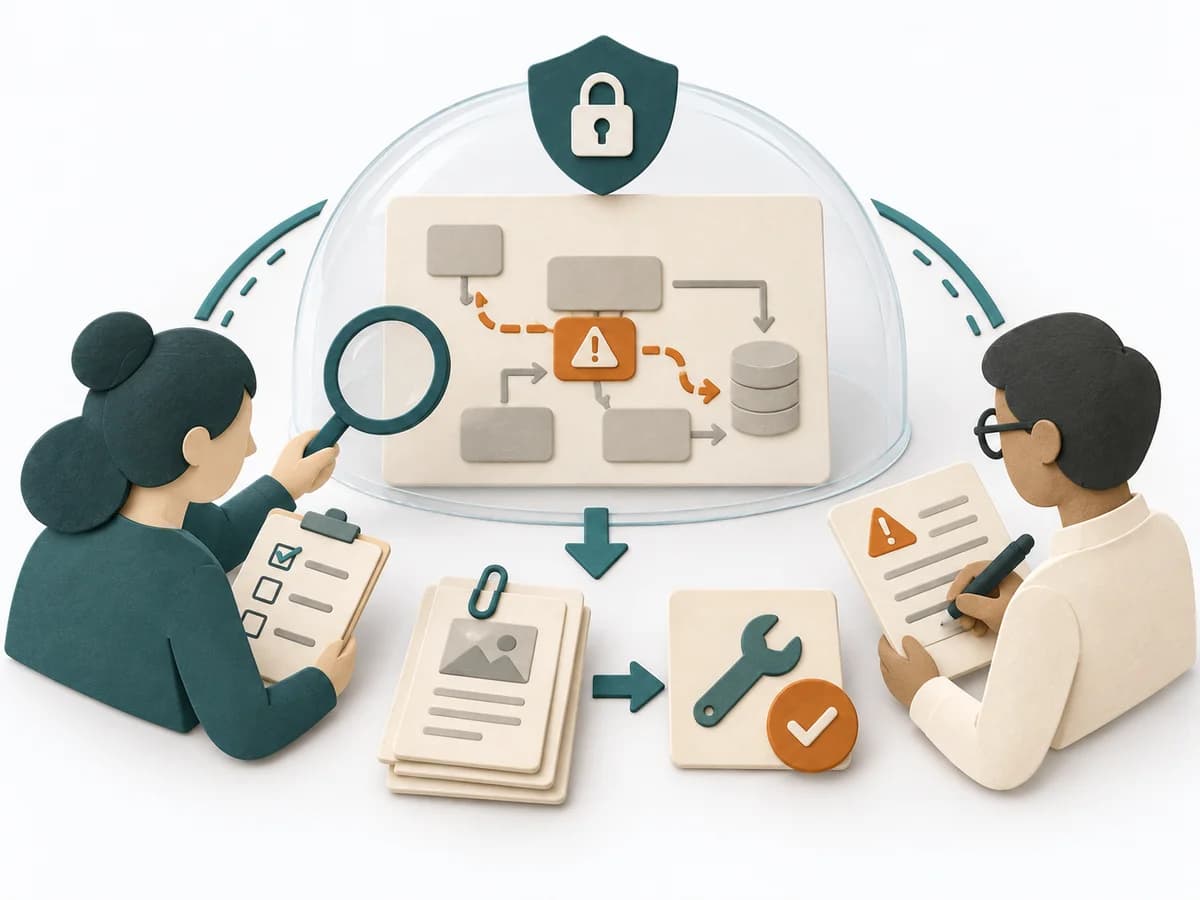 Decision Making Red Teaming |  Knowledge Modeling Concept Mapping |
|---|---|---|---|---|
Purposedifferent | The PARA Method organizes knowledge into Projects, Areas, Resources, and Archives. It creates order when digital notes, files, and tasks no longer cleanly fit current work. | When work needs to move between different states or columns, it makes that movement and its handoffs legible. It sorts work by value, risk, and delivery ability. The result is captured as a ROAM Board and an Owner List. | For strategic decisions with high reach, agreement and gut feeling are often not enough. Red teaming brings deliberate opposition into the situation and tests where a plan breaks under real counterarguments. | Concept Mapping arranges terms and relationships in a network that makes subject-matter connections tangible. It fits when a topic needs to be understood structurally rather than linearly. |
Complexitydifferent | Medium | Low | High | Medium |
Timedifferent | 1-3 h Setup, laufend | 20-40 min initial, dann laufend | 1-4 h | 1-2 h |
Participantsdifferent | 1 | 3-15 | 3-8 | 1-8 |
Formatdifferent | Async | Workshop + async | Workshop | Workshop + async |
Outputdifferent | PARA Structure, Project Notes, Knowledge Archive | ROAM Board, Owner List | Challenge Findings, Risk Register, Mitigation Plan | Concept Map, Relationship Labels, Knowledge Gaps |
Tagsno overlap | KnowledgeProductivityOrganization | RiskAgileTrackingAlignment | RiskDecisionSensemaking | KnowledgeConceptsMappingSensemaking |