View methods side by side.
Choose up to four methods. Add them using the search and share the comparison by copying its link.
| Criterion |  Knowledge Modeling PARA Method |  Decision Making Risk Matrix | 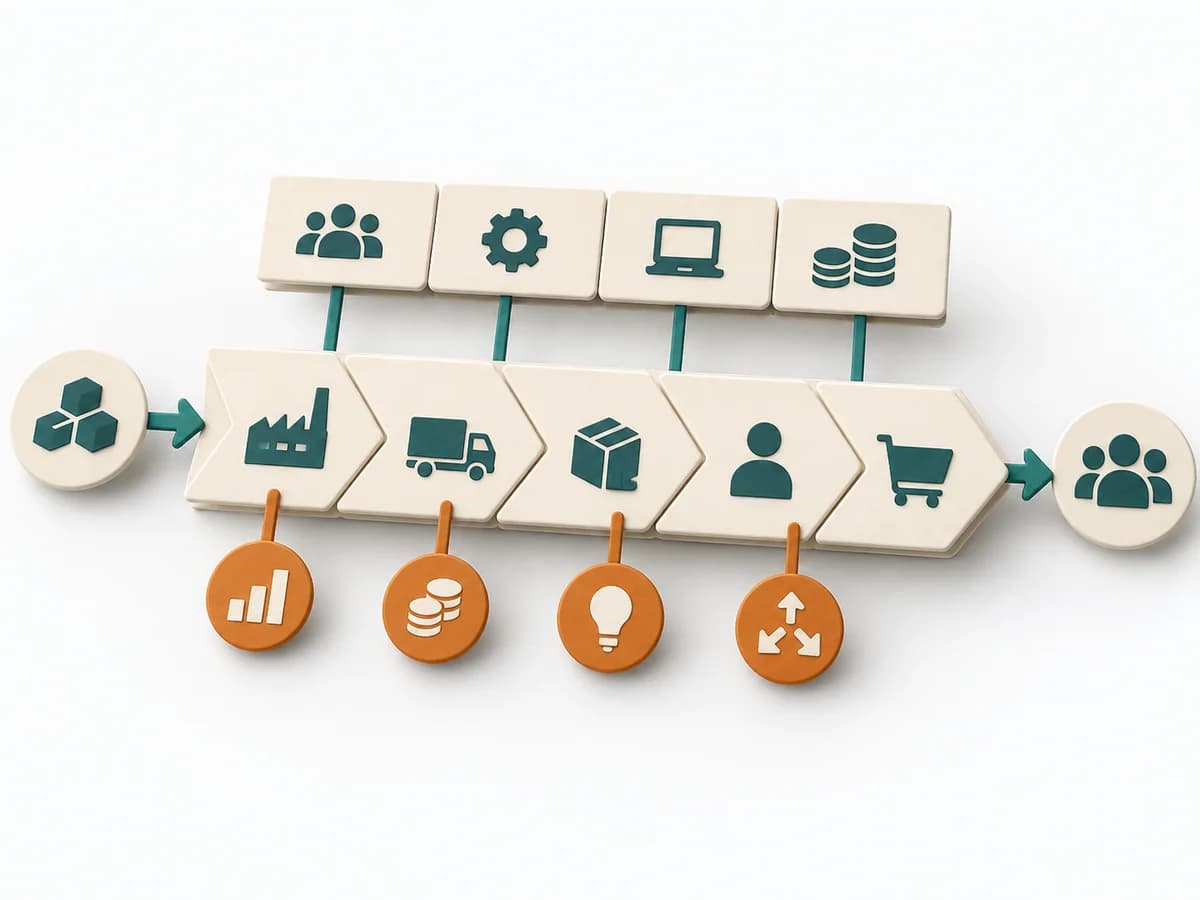 Business Strategy Value Chain Analysis | 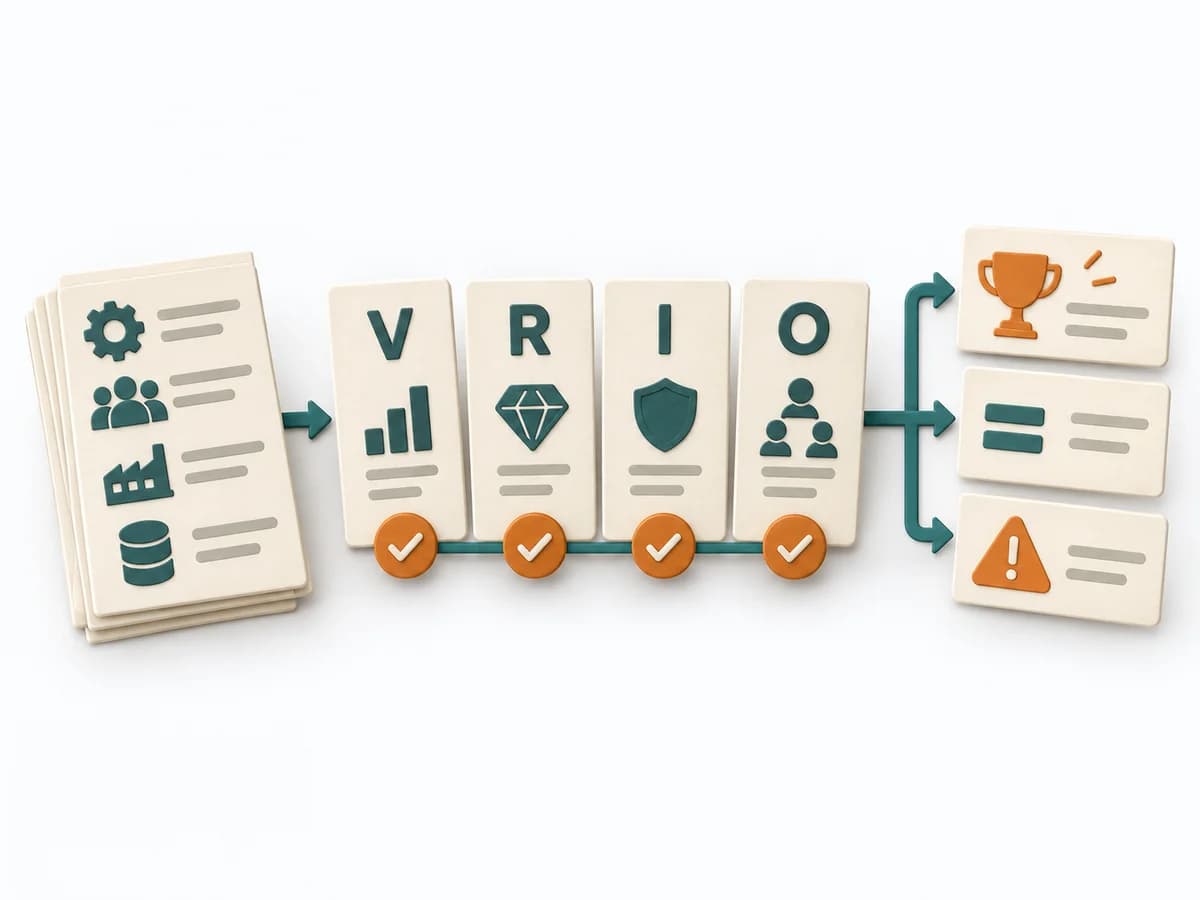 Business Strategy VRIO Framework |
|---|---|---|---|---|
Purposedifferent | The PARA Method organizes knowledge into Projects, Areas, Resources, and Archives. It creates order when digital notes, files, and tasks no longer cleanly fit current work. | When a project faces many possible disruptions, it quickly becomes unclear which risks deserve attention first. It separates options, evaluation criteria, and open risks. The result is captured as a Risk Matrix and a Top Risk List. | Value Chain Analysis shows where value is created, costs accrue, and differentiation becomes possible along the process. It compares strengths, risks, market logic, and courses of action. The result is captured as a value-chain map and lever list. | The VRIO Framework rates resources and capabilities on whether they are Valuable, Rare, Inimitable, and Organized. It compares strengths, risks, market logic, and courses of action. The result is captured as a VRIO table and strategic actions. |
Complexitydifferent | Medium | Low | High | Medium |
Timedifferent | 1-3 h Setup, laufend | 30-60 min | Half day | 90-180 min |
Participantsdifferent | 1 | 3-10 | 3-8 | 3-6 |
Formatdifferent | Async | Workshop + async | Workshop | Workshop |
Outputdifferent | PARA Structure, Project Notes, Knowledge Archive | Risk Matrix, Top Risk List | Value Chain Map, Lever List | VRIO Table, Strategic Actions |
Tagsno overlap | KnowledgeProductivityOrganization | RiskDecisionPrioritizationAssessment | StrategyBusiness modelDiagnosisAnalysis | StrategyDiagnosisBusiness modelCapability |