View methods side by side.
Choose up to four methods. Add them using the search and share the comparison by copying its link.
| Criterion |  Knowledge Modeling PARA Method | 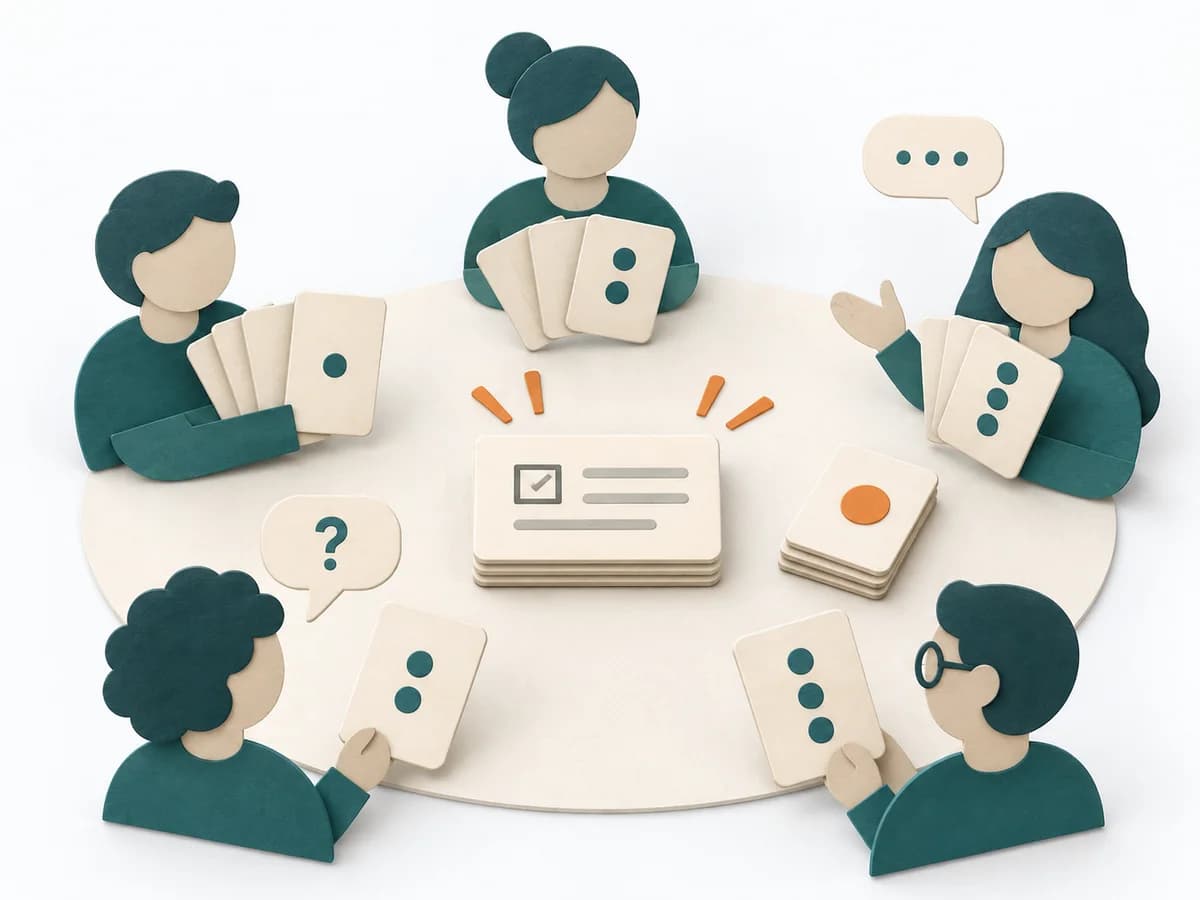 Facilitation Responsibility Poker |  Facilitation Stakeholder Mapping |  Facilitation Expectation Mapping |
|---|---|---|---|---|
Purposedifferent | The PARA Method organizes knowledge into Projects, Areas, Resources, and Archives. It creates order when digital notes, files, and tasks no longer cleanly fit current work. | When it stays unclear who carries responsibility and who only contributes, Responsibility Poker makes the distribution of responsibility explicit. It sharpens the boundaries between weighing in, deciding, and bearing consequences. | When an initiative depends on many people, interests, and power dynamics, Stakeholder Mapping systematically orders the environment. It shows who influences, who is affected, and where relationship management or safeguarding matters first. | When roles, interfaces, or projects fail because of differing expectations, Expectation Mapping surfaces these differences. It shows what each side takes for granted and where the pictures diverge. |
Complexitydifferent | Medium | Low | Low | Low |
Timedifferent | 1-3 h Setup, laufend | 45-90 min | 60–90 min | 45-90 min |
Participantsdifferent | 1 | 3-10 | 2-8 | 3-12 |
Formatdifferent | Async | Workshop | Workshop + async | Workshop |
Outputdifferent | PARA Structure, Project Notes, Knowledge Archive | Responsibility Map, Role Agreements, Open Questions | Stakeholder Map, Engagement Plan, Risk Notes | Expectation Map, Alignment Notes, Agreements |
Tagsno overlap | KnowledgeProductivityOrganization | RolesResponsibilityTeamFacilitation | StakeholdersAlignmentFacilitationChange | AlignmentStakeholdersTeam |