View methods side by side.
Choose up to four methods. Add them using the search and share the comparison by copying its link.
| Criterion |  Knowledge Modeling PARA Method | 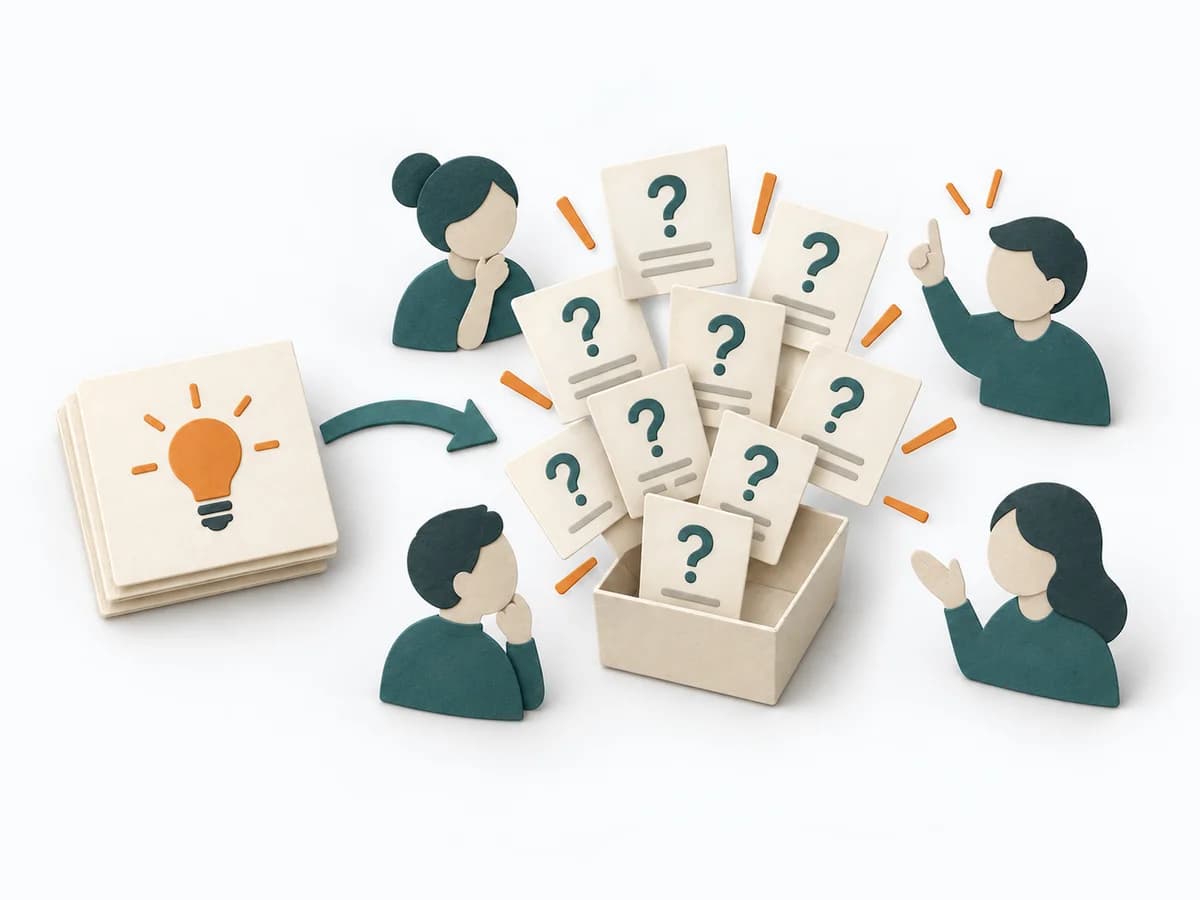 Facilitation Question Burst | 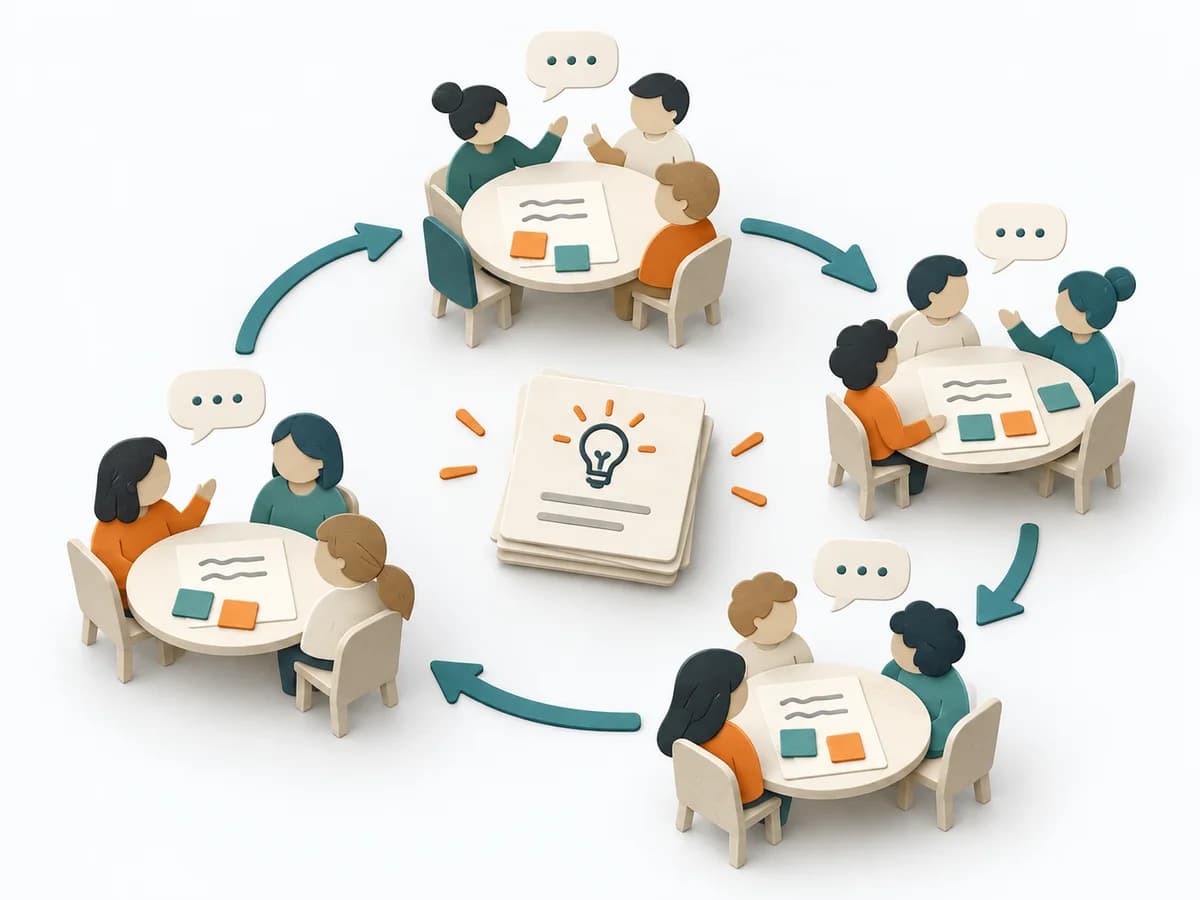 Facilitation World Café |  Knowledge Modeling Concept Mapping |
|---|---|---|---|---|
Purposedifferent | The PARA Method organizes knowledge into Projects, Areas, Resources, and Archives. It creates order when digital notes, files, and tasks no longer cleanly fit current work. | When a problem gets covered up too quickly with answers, Question Burst puts the better question at the center. The format opens the thinking space before the group commits to an interpretation. | When a group needs to connect many viewpoints in a short time, World Café creates a calm alternation between closeness and rotation. It sets thinking in motion without forcing the conversation into full-plenary rigidity. | Concept Mapping arranges terms and relationships in a network that makes subject-matter connections tangible. It fits when a topic needs to be understood structurally rather than linearly. |
Complexitydifferent | Medium | Low | Medium | Medium |
Timedifferent | 1-3 h Setup, laufend | 15-30 min | 60-180 min | 1-2 h |
Participantsdifferent | 1 | 2-8 | 12-100+ | 1-8 |
Formatdifferent | Async | Workshop | Workshop | Workshop + async |
Outputdifferent | PARA Structure, Project Notes, Knowledge Archive | Question List, Reframed Challenge, Learning Prompts | Table Notes, Emergent Themes, Shared Questions | Concept Map, Relationship Labels, Knowledge Gaps |
Tagsno overlap | KnowledgeProductivityOrganization | QuestionsReframingFacilitationSensemaking | FacilitationDialogueLarge groupSensemaking | KnowledgeConceptsMappingSensemaking |