View methods side by side.
Choose up to four methods. Add them using the search and share the comparison by copying its link.
| Criterion |  Knowledge Modeling PARA Method | 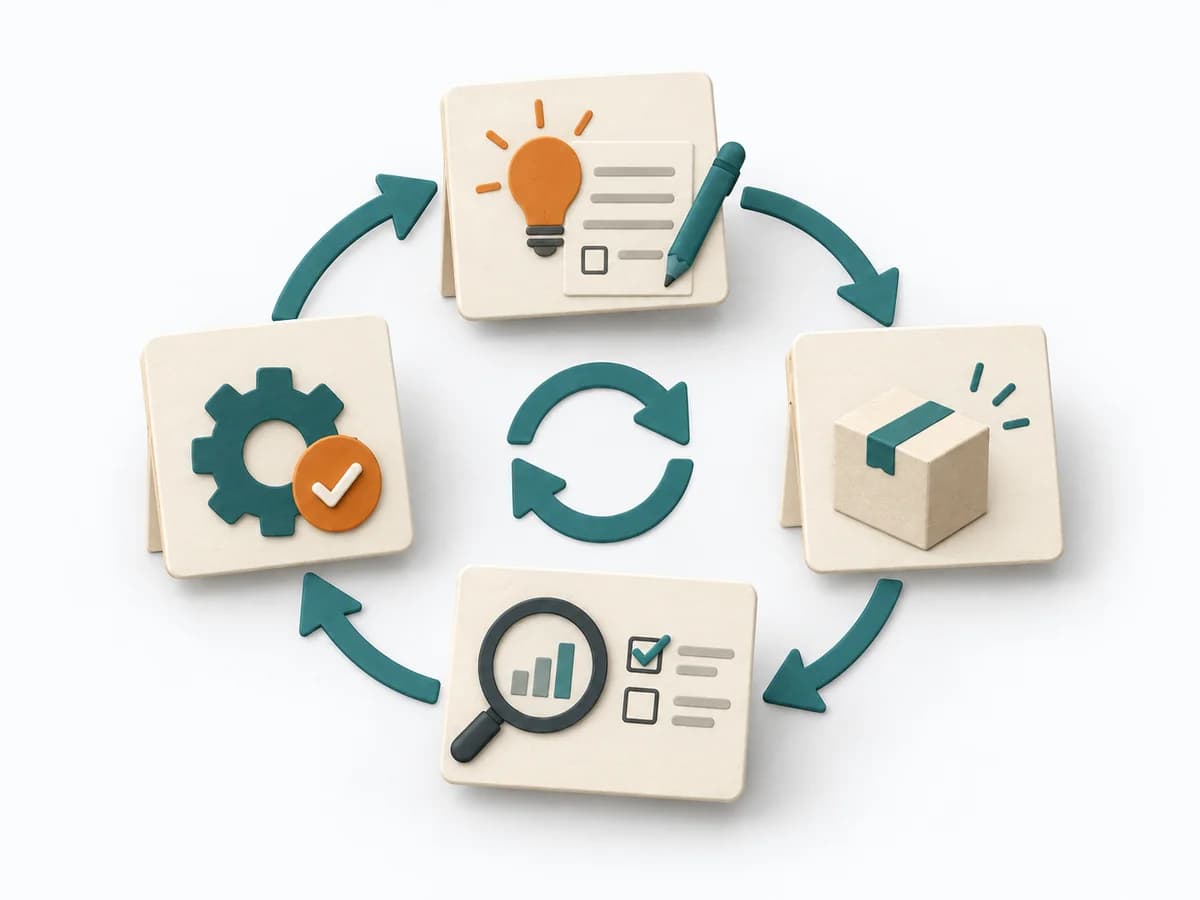 Operations PDCA Cycle |  Decision Making Force Field Analysis |  Business Strategy McKinsey 7S |
|---|---|---|---|---|
Purposedifferent | The PARA Method organizes knowledge into Projects, Areas, Resources, and Archives. It creates order when digital notes, files, and tasks no longer cleanly fit current work. | For an improvement that still has to prove itself in everyday work, the method runs it through small learning loops. It connects planning, checking, and standardization into a repeatable learning mode. | In change initiatives, supporting and restraining forces sit at the table at the same time. Force Field Analysis makes these tensions explicit and shows where change can be pushed forward by strengthening or relieving. | McKinsey 7S checks whether Strategy, Structure, Systems, Shared Values, Skills, Style, and Staff fit together. Organizational misalignments become visible across multiple levers as a result. |
Complexitydifferent | Medium | Low | Low | Medium |
Timedifferent | 1-3 h Setup, laufend | 1 h bis mehrere Wochen | 45-90 min | 2-4 h |
Participantsdifferent | 1 | 1-8 | 3-12 | 3-12 |
Formatdifferent | Async | Workshop + async | Workshop | Workshop |
Outputdifferent | PARA Structure, Project Notes, Knowledge Archive | PDCA Log, Experiment Plan, Learning Outcome, Standard Change | Force Field Map, Change Levers, Risk Notes | 7S Assessment, Alignment Gaps, Change Actions |
Tagsno overlap | KnowledgeProductivityOrganization | Continuous improvementLeanExperiments | ChangeDecisionStrategy | OrganizationStrategyAlignmentChange |