View methods side by side.
Choose up to four methods. Add them using the search and share the comparison by copying its link.
| Criterion |  Knowledge Modeling PARA Method | 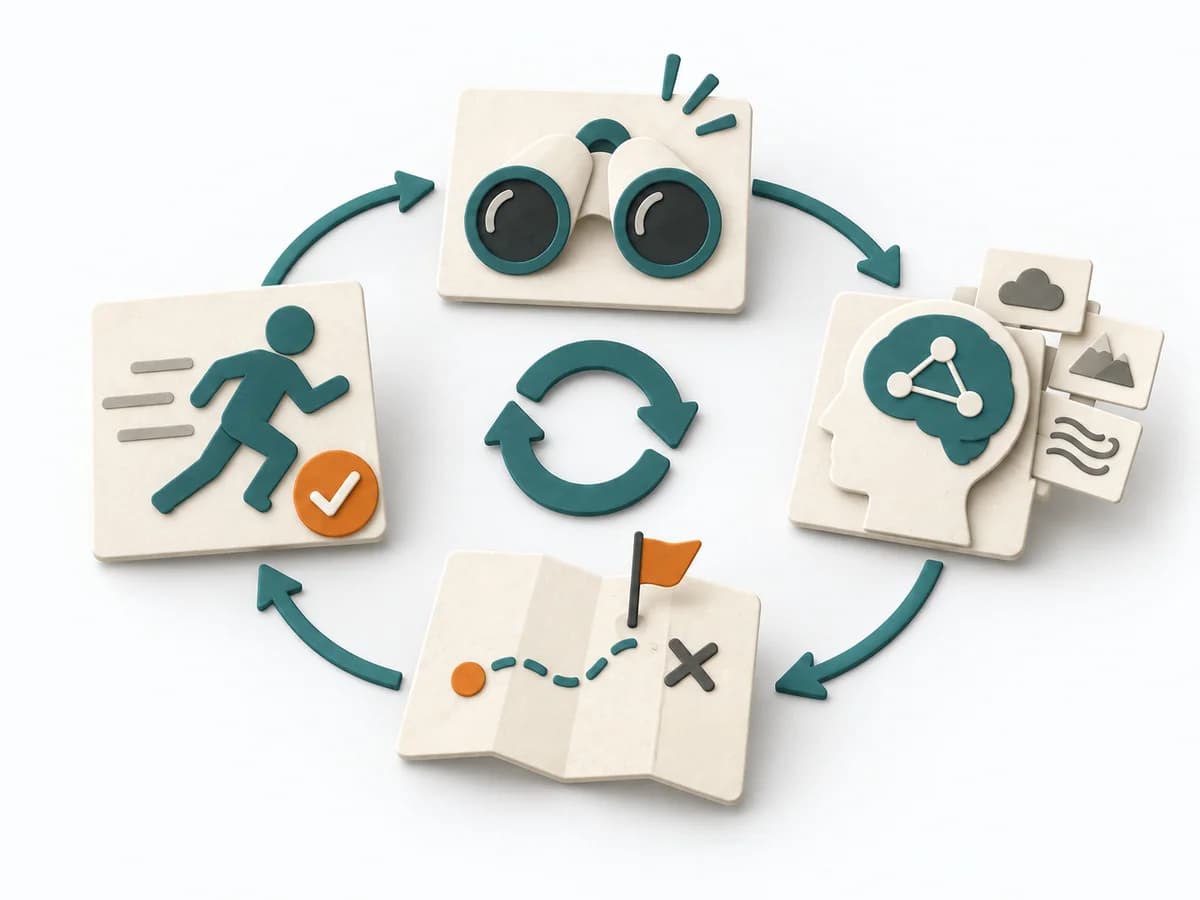 Decision Making OODA Loop |  DevOps Blameless Postmortem |  Decision Making Delphi Method |
|---|---|---|---|---|
Purposedifferent | The PARA Method organizes knowledge into Projects, Areas, Resources, and Archives. It creates order when digital notes, files, and tasks no longer cleanly fit current work. | In dynamic situations, decisions become outdated faster than they can be prepared. The OODA Loop holds observing, orienting, deciding, and acting together as a recurring rhythm so reaction does not slide into inertia. | After an incident with damage or a near miss, the method creates a sober field for learning without assigning blame. It directs attention to the course of events, conditions, and effective countermeasures. | When knowledge is distributed and direct dominance should be avoided, groups quickly fall under the sway of their opinion leaders. The Delphi Method gathers assessments iteratively and gradually brings expert judgments closer together. |
Complexitydifferent | Medium | Medium | Medium | High |
Timedifferent | 1-3 h Setup, laufend | 15-60 min je Zyklus | 30-90 min | 1-4 Wochen |
Participantsdifferent | 1 | 1-8 | 3-12 | 6-30 Experten |
Formatdifferent | Async | Workshop + async | Workshop + async | Async |
Outputdifferent | PARA Structure, Project Notes, Knowledge Archive | Situation Assessment, Decision Loop, Action Updates | Postmortem Doc, Action Items, Timeline | Expert Forecast, Consensus Range, Assumption Notes |
Tagsno overlap | KnowledgeProductivityOrganization | DecisionChangeLearningStrategy | Site Reliability EngineeringIncidentLearningReliability | ForecastingExpertsDecisionStrategy |